Varicose veins: causes and remedies
Varicose veins and heavy legs are very common problems, often associated with circulation difficulties. Find out how to remedy them
Varicose veins and heavy legs are common complaints that affect men and women and can undermine their wellbeing.
In this article, we will explore in depth the causes, symptoms and effective solutions for tackling these problems. With a combination of medical knowledge and self-care strategies, it is possible to find relief and restore the wellbeing of your legs.
Varicose veins and heavy legs: understanding the disorder in order to treat it
Before setting out the practical tips for managing these leg problems and pointing out the possible treatments, it is worth understanding the nature of the disorders we are talking about.
Varicose veins (or varices) are dilated, twisted veins, visible to the naked eye beneath the surface of the skin, mainly in the lower limbs, that is, the legs.
They are certainly unsightly, so much so that people with varicose veins are often embarrassed to show their bare legs and prefer not to expose them to other people's eyes.
But this is not just a cosmetic problem!
This condition is in fact associated with venous insufficiency, a chronic disease caused by difficulty in returning blood to the heart.
Let us explain.
Among the different types of blood vessels, veins are the ones whose job is to carry blood “back” from the tissues to the heart. In the legs, veins have to make an “extra effort” because they have to carry blood upwards, against the force of gravity that would make it flow the opposite way.
In this, they are helped by the many valves along the vessel, which open and close as needed. When, however, the valves inside the veins do not work properly, blood flows backwards and builds up.
This pooling causes the vein walls to dilate and varices to form.
As a result, the veins become visible, often with a bluish or purplish appearance.
This condition can go hand in hand with heavy legs, a feeling of tiredness and fatigue that can accompany varicose veins but can also occur independently of them.
This discomfort can make normal movement difficult and have a negative effect on quality of life.
Varicose veins and heavy legs: watch out for the symptoms
It is important to know the symptoms associated with varicose veins and heavy legs so that you can act early and manage your condition effectively.
Among the most common symptoms of varicose veins is swelling of the legs and ankles, caused by the build-up of fluid resulting from venous insufficiency.
A feeling of heaviness in the legs is another common sign, often described as a sense of fatigue and oppression. Then there are muscle cramps, involuntary contractions of the leg muscles that occur mainly at night, causing discomfort and pain and disturbing normal rest.
Itchy skin is another possible consequence of varicose veins. It is caused by irritation of the skin in the area of the varix, where blood has built up and is creating pressure.
Recognising the disorder, also on the basis of the symptoms you experience, is essential in order to take the necessary steps and improve the comfort and health of your legs.
Main causes of varicose veins
Varicose veins and heavy legs can be caused by a combination of factors:
- female sex
- genetics
- sedentary lifestyle
- overweight or obesity
- jobs that require standing for many hours a day
- age
In general, women are more likely to develop varicose veins than men.
According to studies, this is thought to be due to female hormones (oestrogen and progesterone), which are believed to influence venous tone (that is, the propulsive capacity of the veins).
Also, genetic predisposition plays a significant role, since some people may inherit a tendency to develop varicose veins because of defects in the venous valves or in the structure of the vein walls.
A sedentary lifestyle, characterised by long periods of inactivity and lack of exercise, can be another trigger, considerably increasing the risk of developing circulation problems and varicose veins.
Other causes may include obesity, prolonged exposure to heat and medical conditions that affect blood flow, such as deep vein thrombosis.
Preventing varicose veins and tired legs
Preventing varicose veins and heavy legs starts with adopting a healthy lifestyle.
First of all, it is a good idea to exercise regularly in order to promote vascular health and improve blood circulation. Simple, not too strenuous activities such as walking, swimming or yoga can help to tone the leg muscles and support blood flow through the lower limbs.
Sport also helps you achieve another important result: maintaining your ideal body weight, which reduces pressure on the veins and therefore helps prevent varicose veins from forming.
Adopting healthy eating habits, following a diet rich in fruit, vegetables, wholegrains and lean proteins that limits or completely avoids processed, nutrient-poor and high-fat foods, can also help keep the scales in check, keeping us away from conditions such as overweight or obesity, which harm the health of the cardiovascular system.
Building these strategies into your daily routine can significantly reduce the risk of developing varicose veins and heavy legs, promoting general wellbeing and vitality.
However, having these kinds of habits does not mean completely preventing varicose veins or heavy legs. As we have seen, some factors (genetics first and foremost) are beyond our control.
So we would now like to explain the modern therapeutic approaches to these problems together with the products and supplements you can use to relieve discomfort and improve the wellbeing of your legs.
Always bear in mind that, before choosing a particular treatment for varicose veins and heavy legs, it is advisable to consult a doctor. After carefully assessing your specific case, the healthcare professional will be able to point you towards the most suitable treatment.
Treating varicose veins and heavy legs: surgical and non-surgical treatments, products and supplements
There is a wide range of effective treatments to improve vascular health and relieve the symptoms associated with varicose veins and heavy legs.
Non-surgical treatment options include:
- compression therapy using elastic stockings or bandages, which are applied to the affected area to create graduated pressure in order to support blood flow and fluid drainage. This reduces swelling in the legs
- so-called sclerotherapy, a medical procedure that involves injecting a chemical solution called a “sclerosant” into the varicose veins, causing the veins to collapse and be gradually reabsorbed by the body.
- laser therapy, in which laser energy is used to close the dilated veins, improving circulation and reducing the associated symptoms.
In more serious cases, or those resistant to non-invasive treatments, surgical procedures are often recommended, such as:
- vein stripping is a traditional surgical procedure in which varicose veins are removed through small incisions in the skin.
- endovenous ablation is a more recent and less invasive procedure, in which thermal or laser energy is used to close the diseased veins from the inside, without the need for external incisions. These procedures aim to remove or close the problematic varicose veins, thus improving circulation and reducing the associated discomfort.
Finally, physiotherapy is also an option for improving the condition of people with varicose veins and heavy legs.
Techniques such as leg elevation, lymphatic drainage massage and training the calf muscle pump can be an integral part of a programme aimed at improving leg wellbeing. They can be combined with specific exercises to support circulation and strengthen the muscles, so as to improve blood flow and reduce the discomfort felt.
Supplements and products for leg wellbeing
It is also possible to relieve the symptoms associated with varicose veins and heavy legs by choosing the right supplements and products, to be combined with any treatment prescribed by your doctor.
Several plant extracts have beneficial effects in this respect.
Think, for example, of Bilberry extract, a natural vasoprotector that can strengthen capillaries and improve the tone of blood vessels. Or of Red Vine, Birch, Horse Chestnut and Pineapple, which have a draining action on fluids.
Or again Vitamin E, a powerful antioxidant that can help protect cells from damage caused by free radicals, thus promoting vein health.
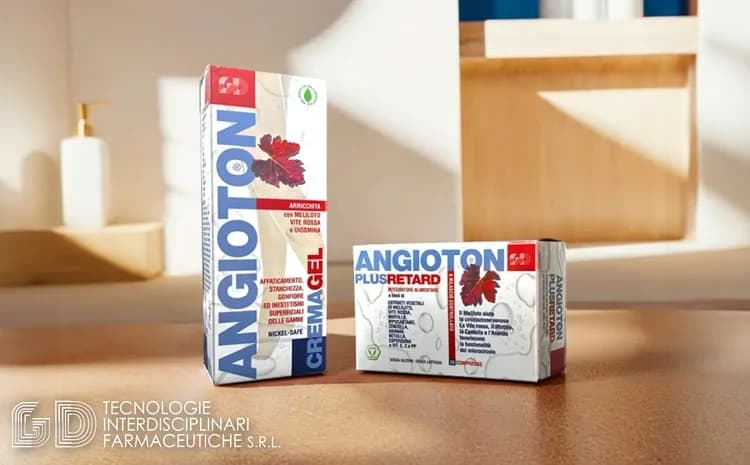
All these natural remedies are combined in the formulation of Angioton Plus Retard, our food supplement with 100% plant-based ingredients.
If you suffer from swollen legs, heaviness and tension, fatigue, night cramps and tingling, but also sprains, strains, injuries and oedema of various origins, often linked to poor blood and lymphatic circulation, with a build-up and pooling of fluids, you can ask your doctor or pharmacist whether Angioton PLUS integratore could help relieve your discomfort.
Angioton Plus Retard can be used on its own or together with Angioton Crema Gel, the solution created by the GD laboratories to bring relief to tired, weary legs, easing the feeling of swelling and heaviness experienced either on its own or together with varicose veins. It is a gel based on plant extracts rich in bioflavonoids to be used whenever that feeling of tension and pain stops you from feeling well and comfortable.
It is important to note that while supplements and natural remedies can offer temporary relief from symptoms, it is always advisable to consult a healthcare professional before starting any new treatment regime.
A doctor can provide personalised advice and make sure that the chosen remedies are safe and appropriate for the patient's individual needs. By combining these natural options with other therapeutic approaches, it is possible to achieve lasting relief and improve the overall wellbeing of your legs.
Please note:
Information provided for informational purposes only, which cannot constitute a diagnosis, the prescription of a treatment, or a substitute for a direct relationship with your doctor or a specialist visit. We always recommend asking for the advice of your own doctor and/or specialists.
For any reports or complaints, please contact the owner of this website at the email address gdtif@gditalia.biz