Psoriasis in winter: why do symptoms get worse?
Why do psoriasis symptoms get worse in winter? Find out how to get relief from itching and discomfort with GD.
For people with psoriasis, the arrival of winter coincides with a worsening of symptoms.
The plaques, often concentrated on the elbows, knees and scalp, become inflamed more easily because of the cold weather and dry air, which make these red patches even more noticeable and painful.
Itching becomes persistent, making it hard to ignore the discomfort that comes with this condition.
Simple things like going out for a walk or spending time in a heated room can intensify skin dryness and increase the risk of new irritation.
However, there are effective strategies for managing psoriasis even in the coldest months.
In this article, we will try to explain the causes of this worsening but, above all, offer practical suggestions for keeping psoriasis symptoms under control.
From deep hydration to small changes in your daily routine, it is possible to reduce the impact of winter on the fragile skin of people with this inflammatory disease and face this difficult season with a little more peace of mind.
What makes psoriasis worse? The environmental factors that aggravate symptoms in winter
Winter is the worst time of year for psoriasis for several reasons, some of them environmental. During the coldest months (from December to March) the skin is exposed to conditions that encourage dryness and inflammation, aggravating the typical symptoms of the condition:
- little sun exposure and reduced vitamin D production
- harsh weather, with cold, dry air
- heated rooms
Without vitamin D, psoriasis gets worse
The sun is a valuable ally for people with psoriasis.
UVB rays, in fact, have a natural anti-inflammatory effect that can help reduce the skin lesions caused by psoriasis.
How?
This radiation penetrates the upper layers of the skin and stimulates the production of vitamin D, which can slow down the accelerated renewal cycle of skin cells, one of the main causes of the thickening and scaling typical of psoriatic plaques.
In winter, however, the beneficial effect of the sun is greatly reduced for a number of reasons.
The days get shorter and shorter, so we have fewer hours of daylight. In addition, the angle of the sun's rays changes, and the light is less intense and less effective. We spend more time indoors and, when we go out, we cover up more to protect ourselves from the cold, exposing less skin to sunlight.
All this contributes to reduced vitamin D production, depriving people with psoriasis of a natural remedy for managing their symptoms.
Cold, dry air: the worst enemy of psoriatic skin in winter
The dry cold typical of the winter months, together with lower atmospheric humidity, encourages skin dehydration, which leads to a weakening of the skin's protective barrier.
In people with psoriasis, this barrier is already severely compromised because of the accelerated cell renewal cycle and ongoing inflammation, which are characteristic of this skin condition.
Dehydration makes the skin even more vulnerable and prone to irritation, dryness and scaling, aggravating psoriatic plaques.
In addition, dehydrated skin loses elasticity and becomes more fragile, encouraging new lesions to form.
Home heating and low humidity: an unfavourable environment for psoriasis
But if the cold damages the skin and accentuates psoriasis symptoms, should we take refuge indoors?
The answer, unfortunately, is not the most obvious one.
Going from one extreme to the other, from the biting cold outdoors to the dry air of heated homes, does not solve the problem; in fact, it makes it worse.
Heating systems, particularly radiators, lower the relative humidity of the air, creating an environment that dries out the skin and makes it even more prone to irritation and inflammation.
What makes psoriasis worse in winter? Risky habits and behaviours
Winter is the worst season for psoriasis not only because of its particular environmental conditions, but also because of certain habits and behaviours that we tend to adopt at this time of year:
- higher stress levels
- changes in eating habits
- less physical activity
How winter stress affects psoriasis
Stress has a direct relationship with psoriasis, being both a trigger and a "side effect" of it, so to speak.
During periods of severe stress, in fact, the body releases hormones such as cortisol, which can alter the immune system and stimulate inflammation, one of the key elements of this chronic inflammatory disease.
At the same time, psoriasis itself is a source of severe emotional stress. The visibility of the lesions and the constant itching and irritation can cause embarrassment, frustration and anxiety, further increasing the patient's stress levels, which in turn worsens the condition of the skin, creating a vicious circle.
This difficult situation becomes more complicated in winter.
During this period, in fact, commitments pile up, the workload increases and we struggle to keep up with tight deadlines.
This greatly reduces the time available for relaxation, while there are also fewer opportunities for outdoor leisure and less chance to be in contact with nature, which usually helps reduce stress and improve mood.
All this leads to increased emotional tension, which becomes even harder to manage during the Christmas period. The holidays often bring a psychological burden linked to family expectations and social gatherings, causing a further increase in stress.
Winter eating. Fatty foods and overindulgence make psoriasis worse
Winter is often synonymous with hearty, not to say heavy, food. The cold leads us to seek comfort in rich, high-calorie dishes such as stews, soups and traditional desserts, which appear on the table especially during the Christmas holidays.
Although they are ideal for fighting the low temperatures, these foods, often high in saturated fats and refined sugars, can have a negative impact on psoriasis and on skin health in general.
These foods, in fact, encourage the formation of substances that can intensify the inflammatory process underlying psoriasis.
A diet too rich in these nutrients, combined with the influence of the cold, dry climate, can intensify symptoms such as itching, irritation and plaque formation.
Physical activity and psoriasis. How lack of exercise affects the course of the disease
In winter, as well as eating more, we also tend to move less.
The cold, the lack of sunlight and the grey skies that characterise this season do not make us want to exercise.
This can have a negative effect on the course of psoriasis for several reasons.
Sport, in fact, has positive effects on the body that also help in managing this chronic inflammatory condition:
- it stimulates circulation and keeps the heart and blood vessels healthy, reducing the risk of developing cardiovascular diseases, which are often associated with psoriasis;
- it helps control weight, preventing overweight and obesity, conditions which, as studies show, are risk factors for psoriasis and can heavily affect its course;
- it encourages the production of endorphins, the so-called happiness hormones, which have an anti-stress effect and help reduce systemic inflammation
Managing psoriasis in winter. Tips for facing the cold season
Winter is a critical time for people with psoriasis.
That is why, during the coldest months of the year, it is important to take precautions that help protect the skin. A good daily care strategy can make a difference, helping to reduce itching, dryness and inflammation and improving general wellbeing.
So here are our tips for keeping psoriasis symptoms under control in winter:
- Step up hydration: as we have seen, cold and heated rooms are harmful to skin affected by psoriasis, because they cause dehydration, compromising the skin's natural barrier. It is therefore helpful to apply a moisturiser formulated for dry, sensitive skin, ideally straight after showering to lock in moisture;
- Use specific products: when the skin itches and turns red, all we want is to scratch it for relief, but this often makes psoriasis symptoms worse. Applying a soothing product is essential to calm and hydrate irritated skin. A cream such as GD's AVEC Crema Lenitiva Decongestionante is an excellent option: with ingredients specially formulated for dry, sensitive and inflamed skin, it helps reduce itching and redness. As well as immediate relief, Avec Crema also offers effective protection, wrapping the skin in a barrier that defends it from irritating stimuli.
- Wear comfortable clothes in natural fabrics: In winter, choosing the right clothing can also make a difference for people with psoriasis.
Clothes that are too tight and close-fitting can cause rubbing and worsen inflammation in the most sensitive areas. It is better to opt for natural fabrics such as cotton and linen, which allow the skin to breathe properly. Avoid synthetic fibres and wool, which cling to the skin, increase sweating and can make irritation worse; - Make your home more humid: The dry air of heated rooms intensifies skin dehydration and psoriasis symptoms. One solution, at least at home, may be to use a humidifier to help maintain a good level of humidity;
- Watch your diet: A diet high in fat and sugar, typical of the winter months, can increase inflammation and aggravate psoriasis. But food is not our enemy, quite the opposite. If chosen carefully, it can also become a valuable ally for people with this chronic skin condition. Try to add anti-inflammatory foods to your diet such as fresh fruit and vegetables, wholegrains and sources of healthy fats such as olive oil and nuts. These foods help keep the immune system stable and can help reduce symptoms;
- Exercise every day: sport, like food, is a natural medicine. Moving a little every day will help you not only stay fit but also reduce stress, one of the main triggers of psoriasis. Do simple activities such as walking outdoors or a few short exercise sessions at home, and your skin will benefit greatly;
- Strengthen your immune system: A well-balanced immune system can help reduce inflammation and prevent psoriasis flare-ups.
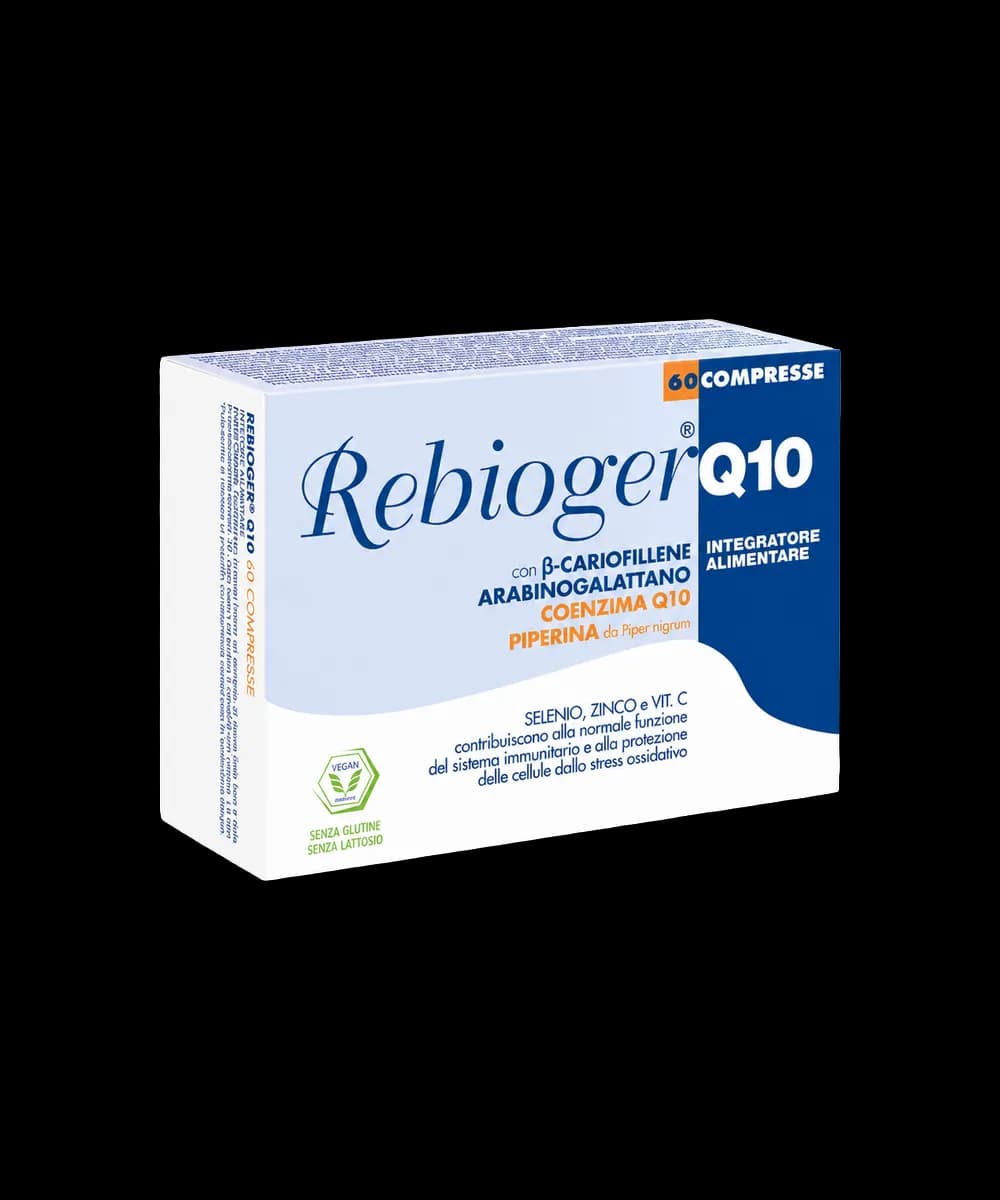
As well as a diet rich in antioxidant and anti-inflammatory nutrients and physical activity, you can ask your doctor whether taking a supplement such as REBIOGER Q10 could help you.
REBIOGER Q10 is formulated with plant-based actives, vitamins and minerals such as:
• Coenzyme Q10 and Hesperidin
• β-caryophyllene from Cloves and Black pepper, antioxidants
• Arabinogalactan from Larch extract
• Echinacea that supports the body's natural defences
• Omega 6 unsaturated fatty acids, from Borage oil, which support the integrity and function of cell membranes and skin trophism
• Vitamins C, B6, D2, Selenium and Zinc, which contribute to the normal function of the immune system
◦ Vitamins C and E: which contribute to the protection of cells from oxidative stress
Vitamin C also contributes to collagen formation for the normal function of skin and bones
• Magnesium, Pantothenic acid (Vit. B5) and Niacin (Vit. PP): contribute to the reduction of tiredness and fatigue:
• Biotin and Zinc: contribute to the maintenance of healthy skin and hair
• Vit. D2: contributes to the maintenance of healthy bones
- Use adequate sun protection: Even though sunlight is less intense during the cold months, sun exposure can still have both positive and negative effects on psoriatic skin, which is more delicate and sensitive than healthy skin.
It is therefore advisable to use a high-protection sunscreen in winter too, to avoid damage and continue to benefit from sunlight safely.
We at GD recommend TANNISOL SPF 25 URBAN PROTECTION, an innovative product that provides effective protection against UV rays and environmental pollution, without hindering the absorption of vitamin D. TANNISOL is particularly useful for people undergoing phototherapy, thanks to its ability to filter radiation and prevent skin damage.
Please note:
This information is provided for informational purposes only and cannot constitute a diagnosis, the prescription of a treatment, or a substitute for direct contact with a doctor or a specialist visit. Always ask for the advice of your doctor and/or specialists.
For any reports or complaints, please contact the owner of this website at gdtif@gditalia.biz