Skin and sleep: why sleeping well is the first step to beautiful, healthy skin
Sleeping well is the first step to beautiful, healthy skin. But why is sleep so important for our skin?
Have you ever looked in the mirror in the morning, shortly after waking up, and noticed dark circles, pale and dull skin, deeper wrinkles?
Your sleepy eyes are not deceiving you.
That reflection shows you the image of skin that has not had enough time to regenerate overnight.
In this article you will discover that creams, serums and masks are not enough on their own.
The real beauty secret lies in combining a good night's rest with a targeted evening routine, which can amplify the benefits of sleep and give your skin a brighter, more relaxed look.
Beauty Sleep. What happens to your skin while you sleep
But why is sleep so important for our skin?
What happens while we sleep?
When we close our eyes and drift off to sleep, the skin begins its "night maintenance shift".
On the outside, everything seems silent and still but... inside us, the cells get to work like tireless little labourers:
- they repair the damage built up during the day from sun, smog and other external agents;
- they rebuild the collagen and elastin fibres (the invisible scaffolding that gives the skin elasticity and tone);
- they stimulate microcirculation, improving the supply of oxygen and nutrients to the tissues and so encouraging a more even, radiant complexion;
- they recharge the tissues with new energy;
- they restore the right level of hydration.
In short, a genuine process of regeneration takes place, known in the jargon as "Beauty Sleep".
When we wake up, if we have rested well, the benefits of Beauty Sleep are clear: the face looks more relaxed and radiant, the complexion more even, fine lines less pronounced. The eyes also look less tired, because restorative sleep has allowed the microcirculation to work at its best, bringing oxygen and nutrients to the tissues and helping eliminate toxins accumulated during the day.
The most common problems on waking (bags, dark circles, dull skin, spots) and their causes
And what if, instead, we sleep badly or for too few hours?
A night of poor rest leaves visible marks on our face: a dull complexion, pronounced dark circles, bags under the eyes, even a spot or two appearing out of nowhere.
These are the direct consequences of insufficient, poor-quality or broken sleep.
If we sleep too little, in fact, the cell regeneration process cannot be completed. So the microcirculation slows down and the skin does not receive the oxygen and nutrients it needs to carry out its night-time "tasks".
In addition, poor rest can increase skin stress, upset the water balance and encourage inflammation, making signs of tiredness and blemishes such as spots more visible when we wake up.
Of course, a sleepless night happens to everyone sooner or later and is not an irreparable problem.
Who hasn't stayed up late to finish an important piece of work, or because a special evening with friends went on a bit too long?
When, however, night after night, we struggle to rest, we build up a real sleep debt, which, according to science, cannot be paid back quickly.
Studies show, in fact, that in cases of chronic sleep deprivation, neither a nap nor a long 10-hour sleep is enough to catch up: the debt needs to be repaid gradually, by adopting good night-time sleep habits.
The body needs regular rhythms to truly restore energy and vitality.
The consequences of all this are visible on the skin too.
When lack of sleep becomes chronic, the effects go well beyond a simple dull complexion in the morning. Cell regeneration slows down, the microcirculation works less efficiently and the water balance is upset, encouraging dryness, puffiness and a less toned, less elastic appearance.
The skin looks more tired, dark circles and bags under the eyes become more noticeable, and blemishes may appear more often. In addition, insufficient sleep affects inflammatory processes: this means that any irritation or skin rash tends to last longer and the face loses its radiance.
In a nutshell, sleeping too little makes us age faster.
But the good news is that, by changing a few simple evening habits, this process can be slowed down.
In the next section we will look at the 5 night-time habits that make your skin worse and how to correct them, so you can wake up every morning with a fresher, brighter, more relaxed face.
5 night-time habits that make your skin worse (and how to correct them)
Sleep makes us more beautiful.
But for sleep to be a true beauty ally, we need to pay attention to some small daily habits which, in the long run, compromise the quality of our rest and its beneficial effects on the skin.
Let's look together at these 5 night-time habits that worsen the health and appearance of the skin.
Bad sleep habit no. 1. Going to bed too late (or at irregular times)
As we have seen, our body needs regularity and consistency to complete the processes of cell regeneration during the night. Going to bed too late or at constantly changing times interferes with these mechanisms and compromises the skin's balance.
How to correct this habit: try to go to bed and wake up at the same time every day, on both working days and weekends. This small measure helps the skin regenerate better, reduces dark circles and bags under the eyes and encourages a brighter complexion on waking.
Bad sleep habit no. 2. Neglecting your evening skincare and going to bed with your make-up still on
Sleep is a very powerful remedy for small skin imperfections and the daily stress the skin is exposed to.
But it isn't magic.
It is a biological process that needs a few small measures to work at its best.
If we neglect our skin before going to bed, for example by going to sleep with our make-up still on, we are unknowingly sabotaging the night-time regeneration processes.
To breathe freely, in fact, the skin needs to be free of make-up residue, dust, sweat and pollution. These substances can clog pores, encourage irritation and blemishes, and slow down the natural processes of hydration and repair.
How to correct this habit: devoting a few minutes to your evening skincare makes a big difference. Gently cleanse your face, apply a serum or specific treatment if needed, and finish with a moisturiser. This way the skin will be able to regenerate overnight, looking brighter, more relaxed and fresh when you wake up.
Bad sleep habit no. 3: sleeping in the wrong positions
The position we sleep in also directly affects how our skin looks when we wake up.
Sleeping on your stomach or with your face pressed into the pillow, for example, can encourage bags, dark circles and pressure lines on the face. In addition, poor posture can interfere with the microcirculation and slow down fluid drainage, worsening puffiness and accentuating a dull complexion.
How to correct this habit: everyone has their own favourite sleeping position. But if you want to protect your skin, try to fall asleep on your back, lying face up, perhaps with an ergonomic pillow that keeps your head and neck aligned. This way you will spare your skin the stress of rubbing against the pillow.
If you sleep on your side, try to alternate sides and use a soft but supportive pillow, so as to reduce pressure on the face and encourage fluid drainage.
Bad sleep habit no. 4: a less than ideal sleeping environment
Going to bed early and always waking up at the same time helps our body regulate its biological rhythms.
But this is not the only condition needed for proper rest.
The characteristics of the room we sleep in also matter a great deal. A room that is too hot or too cold, lit by LEDs that are always on or by street lamps, and reached constantly by night-time noise can compromise the quality of sleep and prevent the body from entering the deepest, most regenerative phases. In this way, even after sleeping enough hours, we can wake up tired, with dull, tired-looking skin.
How to correct this habit: the bedroom should be our personal refuge, where calm and relaxation reign.
To turn it into the ideal place to sleep, try to keep the room at a temperature of around 18 to 20 °C. Use blackout curtains to limit light coming in from outside and switch off any electronic devices with annoying LEDs. If noise from outside disturbs you, consider solutions such as double glazing or soft silicone earplugs. Your choice of fabrics also makes a difference: breathable sheets and ergonomic pillows contribute to truly regenerating sleep.
Bad sleep habit no. 5. Using your smartphone before sleeping
Admit it. You too lie in bed in the evening with your smartphone, scrolling through your Facebook feed and Instagram stories until your eyelids feel heavy.
It is one of the most common habits, and not only among the very young.
Unfortunately, however, it is also one of the most harmful for sleep and, as a result, for the skin.
Exposure to the blue light emitted by screens, in fact, affects the production of melatonin, the hormone our body naturally releases in the evening hours to regulate the sleep-wake cycle.
As a result, falling asleep is delayed and rest is less deep and restorative. In addition, the constant stimuli from the smartphone in the form of videos, messages and images stimulate the brain and keep alertness high, making it harder to relax.
How to correct this habit: switching off or putting away your devices at least an hour before going to bed is the best choice for optimal rest.
Instead, you can opt for relaxing activities such as reading a book, doing breathing exercises or a short skincare routine: small rituals that promote relaxation and prepare the body (and the skin) for a truly regenerating night
The ideal evening routine to wake up with regenerated skin
Beautiful skin does not depend only on what we apply from the outside, but also on how we prepare the body for rest.
Creating a relaxing, consistent evening routine is the best way to encourage deep sleep and, as a result, brighter, healthier skin.
To help you create your ideal routine, we at GD have selected some products designed to enhance the skin's natural regenerative processes during the night: targeted treatments which, combined with good-quality sleep, give the face a fresh, relaxed and radiant look on waking.
✨ Step 1: Cleansing
Rebioger Detergente Detossinante
- Deep-cleans the skin of the face and body.
- Turns daily cleansing into a real anti-ageing treatment.
- Counteracts the first signs of ageing thanks to its detoxifying action.
✨ Step 2: Night cream
- Rebioger Crema 5 (30 to 50 years)
- Soft peeling effect thanks to fruit alpha-hydroxy acids and urea.
- Stimulates cell renewal and leaves the skin smoother and firmer.
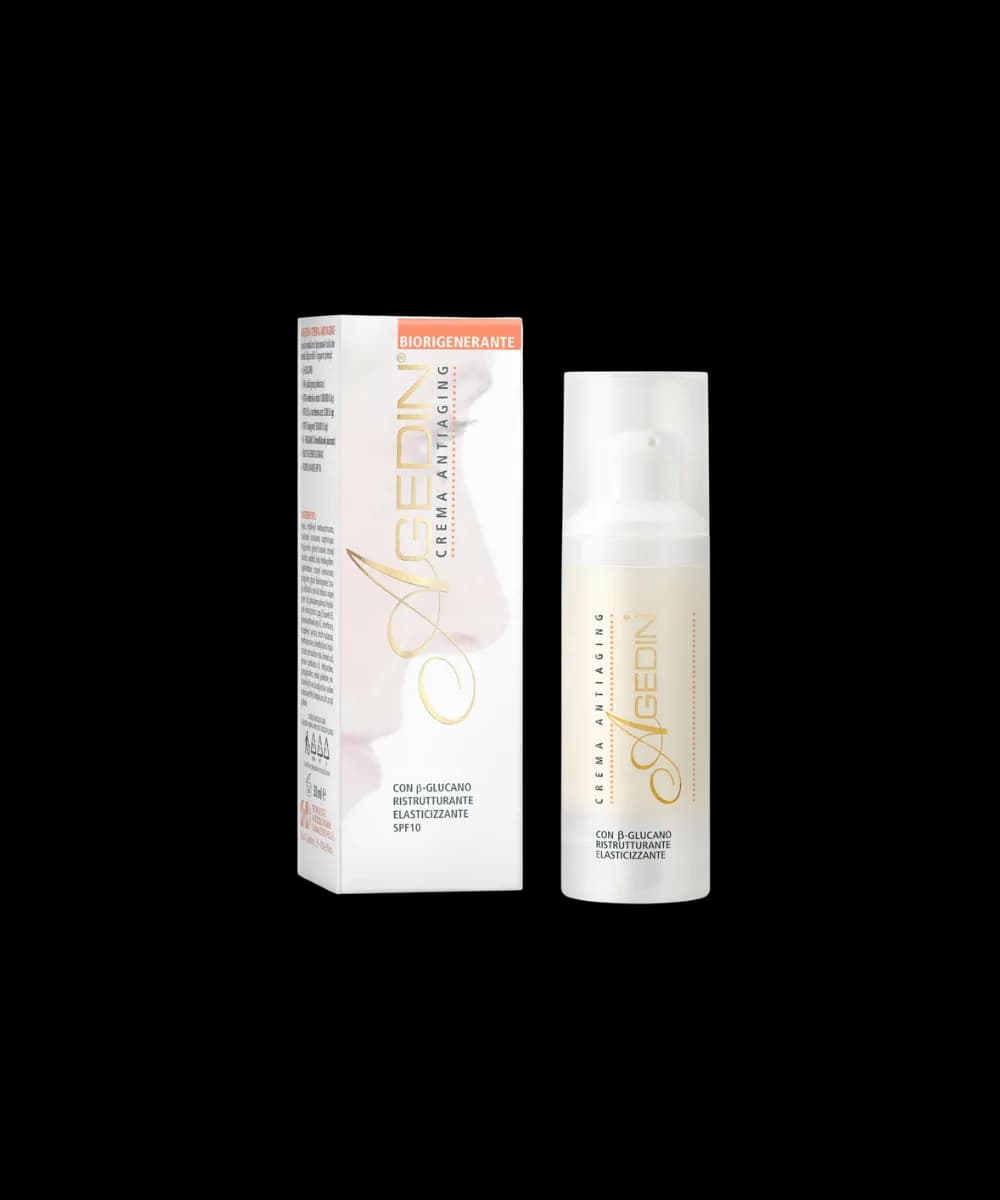
- Agedin Crema Anti-Aging (50+)
- With restructuring, elasticising beta-glucan.
- Helps prevent and treat ageing and photoageing.
- Strengthens the skin's defences against free radicals.
With small, consistent gestures, evening skincare becomes a true wellbeing ritual: the skin regenerates, sleep becomes deeper and every morning you wake up with a more radiant, vital face.
For any reports or complaints, please contact the owner of this website at gdtif@gditalia.biz