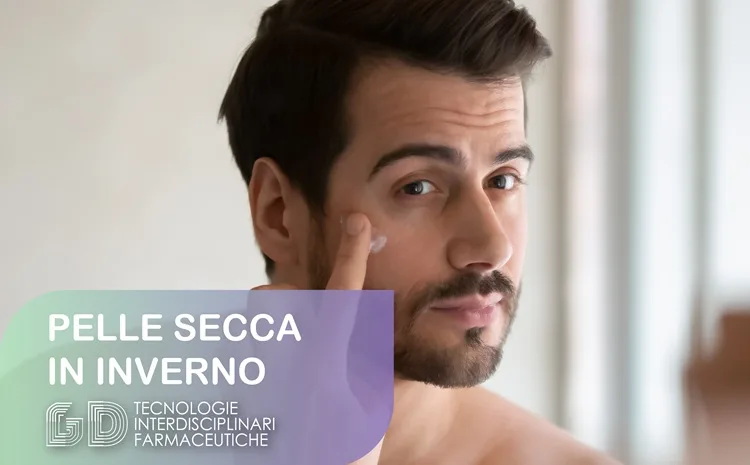
Dry skin in winter: why the cold means you need more hydration (even if you don’t sweat)
Dry skin in winter: why the cold means you need more hydration (even if you don’t sweat)
Have you ever noticed, in winter, your skin feeling tight after a shower or a little dryness to the touch on your cheeks, nose or other areas of your face, even though you have not changed anything in your skincare routine?
Well, it is not just your imagination.
Your skin, drier, tighter and more fragile, is signalling a problem: the skin barrier is losing water faster than usual.
Perhaps you think that dryness and skin dehydration are linked only to the warm seasons.
In summer, of course, we sweat, losing fluids which, as they evaporate through the pores, allow us to lower our body temperature.
This is why we are always advised to drink plenty in summer, so as to replace the water lost and keep the skin supple and radiant (as well as keeping the body working perfectly).
Sun exposure also contributes to this, since UV rays can penetrate deep into the skin, compromising the integrity of our skin barrier and encouraging water loss from the surface layers of the skin.
So it is natural to think that in winter the skin is safe, right?
In reality, the coldest months of the year bring other dangers for our skin, which can suffer from dryness (xerosis) and cracking.
Dry, chapped skin in winter. Why does it happen?
Imagine that your skin is like a small village that draws its water from a nearby lake.
Protecting this precious water reserve there is a dam, which holds back the water and, at the same time, acts as a bulwark against enemy raids.
The dam is our skin barrier, the outermost layer of the skin, which works like a protective shield, preventing loss of hydration and protecting us from attack by germs, bacteria, pathogens and pollutants.
In winter, however, it is as if it were under siege by an army of invisible enemies: cold, wind, sudden changes in temperature, the dry air from heating, the sun.
Each of these elements helps to trigger skin dryness, weakening the skin’s natural defences.
How?
The biting cold makes blood vessels contract, slowing the flow of blood, oxygen and nutrients to the skin. This slows down cell turnover and impairs the skin’s ability to regenerate and retain hydration, leaving it drier, tighter and more vulnerable to environmental stress.
To make matters worse, during winter there is also a reduction in sebum production, sebum being a lipid substance that helps keep the skin barrier intact, creating a protective coating that reduces water evaporation.
When low temperatures slow down the activity of the sebaceous glands, this film becomes thinner: the skin loses its natural lubrication and becomes duller, rougher and more sensitive to external aggressions.
The icy wind brushes across the surface of the skin, stealing moisture and leaving the skin more fragile and red. The temperature changes we frequently undergo in winter, moving from one environment to another, create continuous stress that puts the “resilience” of our skin barrier at risk.
The sudden shift from the cold outside to the dry heat of heated rooms causes micro-cracks in the hydrolipidic film that coats the skin, encouraging water loss and increasing the feeling of tightness and discomfort.
On top of all this comes the dry air produced by radiators and heating systems, which further reduces ambient humidity and speeds up the evaporation of water from the surface layers of the skin.
Even the winter sun, often underestimated because it is thought to be too weak, penetrates the surface layers, further encouraging water loss and increasing skin sensitivity.
When all these enemies act together, the skin barrier can give way: water levels drop rapidly and the skin becomes dry, tight and more susceptible to irritation and chapping, especially in the most delicate areas of the face, such as the lips and eye area.
Who is most at risk of dry skin in winter
Not all skin reacts in the same way to the winter cold.
Some skin types can maintain their balance more easily, while others are more susceptible and exposed to external aggressions.
Skin that is naturally dry or sensitive, for example, already starts from a condition of greater fragility: it produces less sebum and has a thinner, more delicate skin barrier that dehydrates easily. People with dermatitis, psoriasis or rosacea may also notice their symptoms getting worse in the cold months, when the skin tends to lose elasticity and become inflamed more easily.
Both children and older people are two other groups particularly exposed to skin dryness caused by harsh weather. In young children, the skin barrier is still developing and is therefore less efficient at retaining water and lipids. In the over-50s, on the other hand, the reduced production of collagen, elastin and sebum linked to the normal processes of skin ageing makes the skin thinner and drier.
Naturally, lifestyle is also a risk factor for skin dehydration. Some habits and everyday behaviours can contribute to weakening the skin barrier:
- showering with water that is too hot
- using harsh cleansers
- drinking too little
- a diet low in “good” fats
Hydration and protection. How to strengthen the skin barrier in winter and avoid dry, chapped skin
Taking care of your skin during the cold months means helping it keep its natural defence barrier strong.
The skin barrier is made up of the stratum corneum, formed of cells (corneocytes) arranged in an orderly way and embedded in a lipid matrix made of ceramides, cholesterol and fatty acids.
The cells act like bricks, while the lipids act as mortar, sealing the gaps and preventing water from evaporating too quickly.
As long as this structure remains intact and cohesive, the skin is supple, soft and able to defend itself against external agents. But if the barrier weakens, water escapes and irritants can penetrate more easily.
This is why, even in winter, the skin needs hydration and protection: not only to look radiant, but to maintain its balance and its ability to regenerate day after day.
To strengthen it, it is essential to adopt a routine that combines deep hydration and effective protection.
Cutil Crema Idratante is the cream designed to meet these needs: a formula that restores and maintains the right level of hydration, protects against environmental aggressions and preserves the skin from premature ageing.
Enriched with Jaluramina, Cutil Idratante improves the appearance and texture of the skin, making it more toned, supple and firm. It is a cream that is easily absorbed, perfect as a daily care gesture and as a make-up base. Thanks to its built-in sun filter, it also helps protect the skin from damage caused by ultraviolet rays, even in the winter months.
Alongside hydration, it is essential to shield the skin from the environmental factors that threaten its balance: cold, wind, smog, UV rays and blue light.
TANNISOL SPF 25 Urban Protection is formulated precisely to offer this complete defence. Its DNA REACTIVATOR COMPLEX® helps counteract oxidative stress and the damage caused by external agents, supporting the skin’s natural repair mechanisms. A “smart” protection that strengthens the skin barrier and prepares it to face the daily challenges of urban life, even in the coldest months.
For any reports or complaints, please contact the owner of this website at the email address gdtif@gditalia.biz