Understanding vitiligo
Vitiligo is a chronic skin condition linked to the loss of or damage to melanocytes, the cells that produce melanin.
Recently, thanks in part to the greater exposure and visibility of public figures such as supermodel Winnie Harlow and actress Kasia Smutniak, vitiligo has become a topic of discussion and closer attention.
It is no longer a taboo, or at least there are efforts to talk about it more and to break the wall of silence surrounding those who live with this condition. There are, in fact, many prejudices and clichés going around about this particular condition.
“Years ago a Tibetan doctor told me that I am like a snake, I am transforming, I am changing my skin. At the time I did not want to ‘transform’, I thought it all depended on my will. But at the same time I was attracted to other people's uniqueness. Mine is not a sad story, nor a tragic one, let alone a horrifying one. It has been a long but beautiful journey, at times even comical. I have shared only a small part of it, carrying a positive message and hoping that my story could give strength to many people, with or without the same particularity as me”.
This is what the Polish actress wrote in a long post, describing her personal experience with the condition.
But what is vitiligo and what causes it?
Vitiligo: an autoimmune disease?
One of the immediately recognisable symptoms of vitiligo is patches. Suddenly, white patches appear on the skin, lighter than normal.
It is as if the skin had lost its colour in certain areas.
Vitiligo is a chronic skin condition linked to the loss of or damage to melanocytes, the cells that produce melanin, the pigment responsible for the colour of the skin, hair and some parts of the eye.
It is not a contagious disease, it is not a skin cancer, and it does not actually harm the body.
However, people with vitiligo are more exposed to damage caused by solar radiation, such as redness and sunburn, because the melanin produced is too scarce to protect the skin.
In addition, the psychological burden of such a condition should not be overlooked. As those who experience it first-hand testify, it is not easy to accept having to live with vitiligo, partly because of the sense of exclusion and the way other people perceive the condition. You have to come to terms with a self-image that is changing. You look in the mirror and see your body change, without being able to do anything to reverse the situation.
There is, in fact, no definitive cure for vitiligo.
The causes of vitiligo
In truth, it is not even clear what the underlying causes of this skin disease are.
Through studies and research, experts have put forward a number of factors that could contribute to triggering the problem.
Vitiligo may be an autoimmune disease.
Diseases of this kind originate from a dysfunction of the immune system.
Our defence system is wrongly activated, attacking and destroying our own healthy cells and tissues because it does not recognise them and identifies them as a foreign body, something potentially harmful that must be prevented from damaging the body.
There is also the possibility that vitiligo is linked to oxidative stress and the build-up of free radicals and hydrogen peroxide. These substances may be able to interfere with melanin production.
Other evidence also points the finger at stressful events. We are talking about situations that cause severe stress, both psychologically (accidents, trauma, bereavement etc.) and physically (cuts, burns, injuries etc.). Vitiligo may also be caused by situations of this kind.
Diagnosing vitiligo
If you suspect you have vitiligo, you should see your GP or a dermatologist, a skin specialist, for a diagnosis, which is made by means of a physical examination.
The specialist may use a Wood's lamp, a device that emits ultraviolet rays, which makes it possible to distinguish the patches caused by vitiligo from those caused by other conditions (for example pityriasis versicolor)
As well as looking directly at the skin, the specialist may gather other information by asking:
- Whether there are other cases of vitiligo among your relatives
- Whether there is a family history of autoimmune diseases (parents or other relatives with disorders of this kind)
- Whether there have been traumas or injuries in the areas of skin affected by depigmentation
- How the skin reacts to the sun
- Whether you are following any treatments or therapies, which ones, and what effects they are having
How is vitiligo treated?
Every individual is a case in their own right.
Consequently, the most suitable therapy for vitiligo should be discussed and prescribed by an experienced dermatologist, after a thorough examination that takes into account the overall situation, how far the disease has progressed and how severe it is.
The aim of therapy is to restore the original appearance of the skin as far as possible and to stop the depigmentation process from progressing.
UVB phototherapy
One of the most widely used therapeutic strategies for vitiligo is narrowband UVB phototherapy. Specifically, special machines are used that emit ultraviolet rays able to stimulate melanocytes, promoting repigmentation of the affected areas.
When undergoing this type of treatment, it is very helpful to take Pigmadin, a 100% vegan food supplement with eupigmenting, immunomodulating and antioxidant functions.
Pigmadin improves the skin's response to phototherapy. It prevents and limits the side effects of UV rays, enhancing the beneficial effects of light exposure. The piperine contained in the supplement stimulates pigmentation, helping the skin regain its natural colour.
The formulation of Pigmadin contains powerful latest-generation natural antioxidants, which counteract the damage caused by free radicals, protecting cells from oxidative stress.
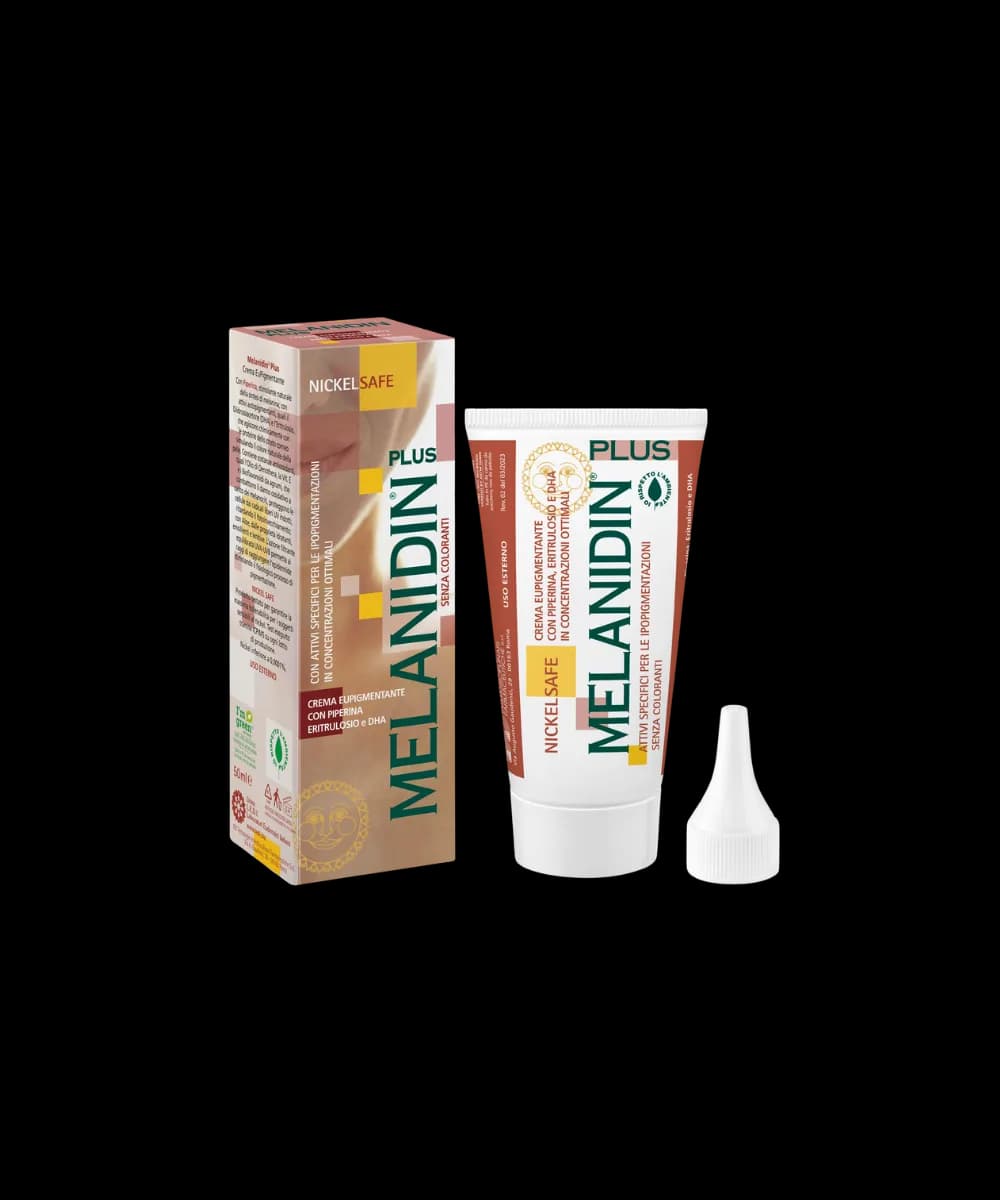
This supplement can be combined with Melanidin, a cream that helps promote the skin's natural pigmentation process, particularly useful in cases of vitiligo, hypomelanosis or the after-effects of Pityriasis Versicolor, giving the skin a colour very similar to its natural one.
Drug therapy
Although there are no specific medicines for vitiligo, the condition is also treated with topical corticosteroids, that is, by applying cortisone-based creams directly to the patches.
This type of treatment, however, is only recommended for localised vitiligo.
In addition, medicines of this kind must only be used under close medical supervision. Indiscriminate use, without proper supervision, can do more harm than good.
Treatment for vitiligo often also involves the prescription of immunosuppressants.
For any reports or complaints, please contact the owner of this website at gdtif@gditalia.biz