The sun: friend or foe of the skin?
Some say the sun is good for the skin. Others claim the exact opposite. What is the truth? Over to the experts at GD Italia.
“E il sole che ci fa bene, alle pelle, agli occhi alle ossa e non ci fa pensare” (“And the sun that does us good, for the skin, the eyes, the bones, and stops us thinking”), sings Tommaso Paradiso in one of the most famous songs by Thegiornalisti. This verse, with its feel of lightness and summer, expresses what at first sight seems an obvious, almost absolute truth.
The sun is good for our health and brings good mood with it.
Often, however, we also hear the opposite: we need to protect ourselves from the sun's rays, which can be extremely harmful to our skin. Sunburn and redness after a day at the seaside without protection are there to remind us.
What is the truth?
We could say that, as in so many other situations, the truth lies somewhere in between.
Let's see why.
The beneficial effects of the sun
First of all, it is absolutely true that the sun can lift our mood, playing an important antidepressant role.
It is not magic, of course, but science.
Sunlight stimulates the production of serotonin, the so-called happy hormone, a neurotransmitter synthesised by the hypothalamus and involved in a great many biological functions.
It has been observed that on brighter days, when the sun is shining in the sky, blood serotonin levels are higher than on dull days. It is no coincidence that, as highlighted by the Fondazione Veronesi, light therapy is used to treat and prevent so-called seasonal depression (SAD, seasonal affective disorder), which shows itself through symptoms of depression, difficulty concentrating, a feeling of fatigue or low energy.
In addition, exposing your skin to sunlight stimulates the synthesis of vitamin D, also called the “sunshine vitamin”, a fundamental substance for our body that helps maintain proper calcium metabolism.
Heliotherapy (literally, sun therapy) has been used since the days of ancient Greece, including to prevent and counteract certain skin diseases such as psoriasis, atopic dermatitis and prurigo nodularis.
Sun damage to the skin
However, despite these undoubted benefits, the sun's rays also bring harmful consequences for the skin, especially if we forget to protect ourselves properly, both in summer and throughout the year.
An old saying of our grandparents goes: “Beware of the sun in the months with an R”. As often happens, this proverb, born of common sense and popular wisdom, contains a truth. We should not fear the sun only when it is hotter and exposure is more direct and intense, as when we go to the beach or high up in the mountains. Even in the months when we seem to run fewer risks, solar radiation actually acts more insidiously, causing short- and long-term damage.
The skin does not forget.
Sunburn (or solar erythema)
Sunburn is something we have all experienced on our skin at least once. Perhaps as children, because we played too long in the sun. Or when we were young, when we are more careless and think that even if we get burnt, it will pass. It is true that sunburns are lesions affecting the most superficial layer of the skin, with redness, burning, skin oedema (that is, swelling) and sometimes itching.
But that does not mean they should be underestimated.
Several studies have shown that sunburn can also have delayed effects and that it increases the risk of skin cancer. Solar erythema causes a type of skin damage that, even when it heals, does not disappear over time but adds to the damage caused by other sunburns we get during our lives. In this way, as time goes by, the likelihood of developing melanoma increases.
Photoageing
When we are continually exposed to the sun without protection, our skin ages faster because of what experts call photoageing. This is progressive damage, caused by the build-up of ultraviolet radiation, which leads to an overproduction of free radicals that can interfere with the skin's normal biological processes and damage collagen and elastin fibres, the substances that determine the skin's tone and elasticity.
The consequences? Loss of tone and elasticity, wrinkles, dry, dull and thinned skin, but also discolouration, that is, skin spots such as solar lentigines (age spots).
Actinic keratoses
Among the harmful consequences of ultraviolet rays are also actinic keratoses, which are defined as precancerous skin lesions. They appear mainly after the age of 40, as a result of years of incorrect sun exposure.
These Actinic keratoses appear as areas of flaky, rough, dry skin, sometimes raised, varying in colour from red to light or dark brown, white or even flesh pink. They usually form on the parts of the body that are most exposed, that is, on the face, in particular the nose, forehead and lips, on the neck, forearms and backs of the hands, but also on the ears and the scalp in people who are bald.
In some cases, actinic keratoses can progress into genuine skin cancers.
Skin cancer
According to the International Agency for Research on Cancer, ultraviolet radiation is among the main carcinogens and contributes to the development of skin cancers. The fact is that the sun's rays can damage the DNA of skin cells and trigger a degenerative process that can lead to various forms of cancer.
It is not only melanoma, the best-known form of skin cancer because of its aggressiveness.
When the damage affects the squamous cells of the epidermis, so-called squamous cell carcinoma can develop, characterised by lesions whose appearance varies from person to person. Squamous cell carcinoma can look like a reddened nodule, an open sore or even a wart. It is a less serious form of cancer which, if diagnosed early, can be treated.
Then there are basal cell carcinomas, which originate from the basal cells in the deepest layer of the epidermis.
The importance of protecting yourself all year round
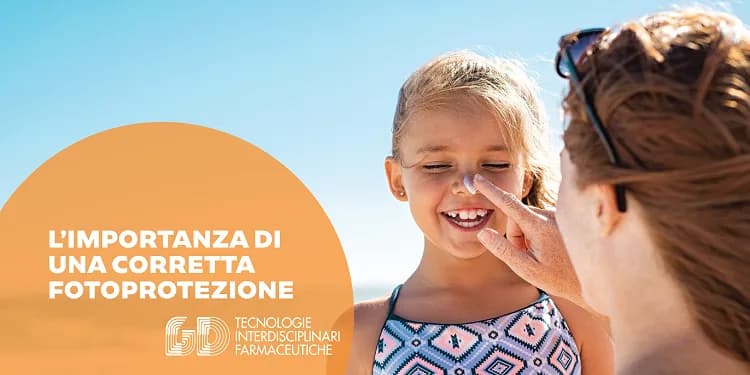
So the sun certainly has beneficial effects for our body, but only in small doses, without overdoing it. As experts point out, we should abandon the old idea that creams and sprays are only to be used in summer. Careful, consistent use of sun filters suited to your phototype is the right strategy to protect your skin from all the effects caused by ultraviolet radiation.
This advice applies in particular to people most at risk, such as children and the elderly, who have more sensitive and delicate skin, but also those who spend many hours in the sun for work (builders, gardeners, petrol station attendants, lifeguards, postmen etc.).
Sun protection, however, is not our only ally in this battle for the health of our skin. To help the body counteract the formation of free radicals caused by sun exposure, you can also take food supplements that strengthen your natural defences.
That is exactly why we at GD developed TANNIDIN PLUS, the food supplement free of animal-derived ingredients, formulated with active ingredients of
plant origin, vitamins and minerals such as:
- Lycopene
- Polypodium, an antioxidant that helps the trophism and functionality of the skin
- Lutein and Zeaxanthin from Tagetes erecta, an antioxidant that contributes to the wellbeing
of eyesight - Vitamin E, which contributes to the protection of cells from oxidative stress;
Selenium, which contributes to the normal function of the immune system
For complete protection, you can also use TANNISOL CREMA SPF 25 URBAN PROTECTION, with protective and antioxidant action.
This innovative product defends delicate and sensitive skin from the harmful effects of UV rays and environmental pollution, without interfering with the absorption of vitamin D, which is precious for our body.
Its extraordinary effectiveness, proven by numerous laboratory tests, is due to DNA REACTIVATOR COMPLEX®, an advanced repair, prevention and protection system.
For any reports or complaints, please contact the owner of this website at gdtif@gditalia.biz