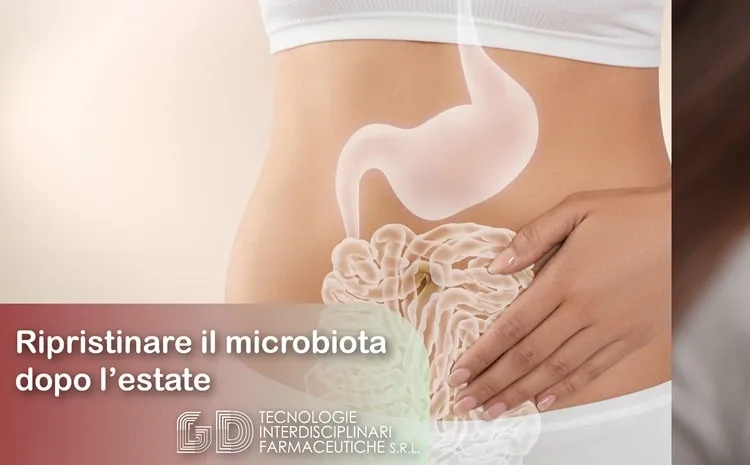
How to restore your gut microbiota after the summer
Restoring the balance of your gut microbiota after the summer is essential for coping with the change of seasons...
Summer is now a sweet memory, even if your tanned skin still tells of days spent on the beach sunbathing and swimming, of dinners outdoors, aperitifs and sleepless nights.
With the end of the holidays, you have said goodbye to the slow pace and relaxation and gone back to your old routine of work and commitments.
The summer season that has just passed, however, has probably left you with something more than a tan: a gut microbiota that is out of balance.
Days without schedules, irregular meals and the usual holiday excesses have put a strain on that delicate ecosystem living in your gut, which is essential for your health.
As you get ready for the change of season, with the first cold days bringing autumn ailments with them, it is time to think not only about getting back into the right rhythm, but also about restoring the balance of your intestinal flora.
In this article you will find out how to do it, so you can face autumn in top form.
Let's start from the beginning: what is the microbiota, what does it do and what happens to it during the summer?
The gut microbiota: the bacteria that help us stay healthy
The gut microbiota is a complex and vital ecosystem made up of billions of bacteria, viruses, fungi and other microorganisms that live inside our digestive tract and play a crucial role in the overall health of our body.
This complex microbial balance (also called bacterial flora) is essential for digestion, but not only that.
The gut microbiota:
- influences immunomodulation, regulating the development and activity of the immune system from early infancy. In fact, it teaches our natural defences to prevent diseases, infections and allergies by recognising potentially harmful substances;
- synthesises vitamins essential for health (such as folic acid and several B vitamins) and enables the absorption of nutrients, in particular trace elements such as iron, calcium and magnesium
- influences cognitive and mental functions, through the so-called gut-brain axis
For all this to happen, however, the gut microbiota needs to be in a state of eubiosis (that is, a balance between the different organisms it is made of).
When that delicate balance breaks down because of the uncontrolled growth of pathogenic bacteria, we face a series of problems that can compromise our overall wellbeing.
Summer is one of those times of year when we risk upsetting the harmony that reigns in our gut.
Let's see how.
What happens to the gut microbiota during the summer?
Summer holidays mean freedom, sunshine and fun. After a whole year of stress at the office, you cannot wait to enjoy those days when you can take a well-deserved, carefree break.
At last, you can slow down, wake up late in the morning and bend the rules a little.
The strict diet we followed faithfully all winter gets postponed until September. How can you resist the generous hotel breakfasts, the ice creams, the desserts, the aperitifs?
After all, we are on holiday!
It is also hard to keep up a regular training routine. With gyms closed and temperatures rising ever higher, the desire to move and exercise (apart from the odd refreshing swim) fades away.
We often have no set times: you skip lunch or replace it with just an ice cream, you snack constantly, you have dinner late…
All this upsets your gut microbiota, which struggles to adapt to so many consecutive changes.
Imagine this small ecosystem as a garden that keeps a delicate balance during the year, allowing the “good” bacteria to flourish in harmony with one another. The excesses of summer hit this oasis of peace like a storm, throwing it into turmoil.
Too much sugar, fat and alcohol acts like a weedkiller, encouraging the growth of less beneficial bacteria, which disturb the ecosystem.
Irregular schedules confuse the biological rhythms of our gut, a bit as if we were constantly resetting our body clock.
Reduced physical activity also affects metabolism.
While regular exercise promotes microbiota diversity and stimulates digestion, a lack of movement can slow down intestinal transit, contributing to symptoms such as bloating or constipation.
And then there is travel: every new place brings changes in climate and eating habits, which further upset the intestinal flora.
All these factors combined can compromise our gut health and weaken the immune system.
So, at the end of the summer, we find ourselves less ready to cope with the seasonal changes.
Our body tells us that something is wrong through symptoms such as a bloated stomach, digestive difficulties and a sense of lethargy, a tiredness that does not seem to go away.
What can we do?
The good news is that we can take action to restore the lost balance.
How to restore a healthy gut microbiota after the summer.
Once the holidays are over, it is time to listen to our gut, nourish it and rebalance it after so many excesses.
To do this, the first step is to review our diet, adding fibre-rich foods, which feed the good bacteria in our microbiota and support intestinal transit.
What should you choose?
Fresh seasonal fruit, vegetables and wholegrain cereals, together with pulses, fish and nuts. Foods to avoid, on the other hand, are ready meals, processed products and those containing refined sugars, as well as red meat.
Hydration plays an equally important role in maintaining a healthy microbiota that can work efficiently.
If you find it hard to drink enough water, you can also have tea and herbal teas, but remember not to sweeten them.
Try to limit fizzy drinks, fruit juices and alcohol, which take hydration away from the body.
For recovery, it is also key to re-establish a routine.
Going back to eating at set times, exercising regularly and getting the right number of hours of sleep each night will help you restore the natural rhythms of your stressed gut.
PLENUM INTEGRATORE for the wellbeing of your microbiota
After the summer holidays, you can ask your doctor or pharmacist whether, to replenish your gut microbiota, you might benefit from Plenum Integratore.
Its active ingredients (9 billion tyndallised lactic ferments, Lactoferrin, FOS, vitamins and Zinc) act directly on intestinal function, helping to counter common post-summer complaints such as dysbiosis, acute gastroenteritis and cystitis.
The effects of these active ingredients also extend to skin health, since problems linked to excess sebum production, acne and rosacea are often made worse by intestinal imbalances.
In addition, Zinc and Vitamin B6 contribute to the normal function of the immune system, reducing inflammation and improving our ability to resist seasonal ailments.
Please note:
Information provided for informational purposes only, which cannot constitute a diagnosis, the prescription of a treatment, or a substitute for a direct relationship with your doctor or a specialist visit. We always recommend asking for the advice of your own doctor and/or specialists.
For any reports or complaints, please contact the owner of this website at the email address gdtif@gditalia.biz