Postpartum hair loss and hair loss while breastfeeding: why it happens, how long it lasts and what to do
Postpartum hair loss and hair loss while breastfeeding: why it happens, how long it lasts and what to do
“My hair is falling out in clumps”: the fear of losing your hair after giving birth
Since you became a mum, a lot of things have changed.
Not just your body, which during pregnancy transformed itself to welcome the baby you now hold in your arms.
What has changed is your priorities, routines and sleep.
At first you may not notice anything different about your face in the mirror, apart from slightly darker circles under your eyes, which tell of the joy and tiredness of motherhood. Then, however, a couple of months after giving birth, you realise you are losing much more hair than usual.
You find a lot of it on your brush after combing, in the shower tray, on your pillow when you wake up, between your fingers as you absent-mindedly arrange it.
It is not just a few strands. It really seems to be falling out heavily, in clumps.
And the first thing you think is: “Am I at risk of going bald?”
If after giving birth your head seems to have “less hair”, especially near the temples or along the hairline, we can reassure you: you are not the only one this is happening to.
Many new mums, starting around the second or third month after giving birth, go through a period of heavy hair loss, which can naturally be frightening and worrying, especially because it comes after pregnancy, a time when hair often looks thicker, shinier, almost “stronger”.
What is happening to my hair?
Is it normal for it to fall out after giving birth?
Can I do anything to stop it getting worse?
These are all normal and legitimate questions, and it is important to give them a clear and reassuring answer.
Why does hair fall out after giving birth?
The effect of oestrogen on hair during pregnancy
To understand why hair falls out after giving birth, it helps to take a step back and look at what happens to our body (and our hair) during pregnancy.
Over those nine months of waiting, the mother's body adapts profoundly and continuously to support the development of the foetus.
What regulates this delicate interplay of adaptations is the hormonal balance.
In particular, gestation is promoted and supported by oestrogens, whose levels rise significantly. This increase is essential to maintain the endometrium, promote the development of the placenta and support the growth of the uterus.
The rise in oestrogens, however, does not only concern the organs directly involved in pregnancy but also affects the hair life cycle, which has three phases:
- growth phase (anagen),
- transition phase (catagen)
- resting phase (telogen), which ends with the hair falling out.
Pregnancy oestrogens can prolong the hair's growth phase and delaying its entry into the resting phase.
As a result, a greater amount of hair stays in the anagen phase for longer and daily hair loss is noticeably reduced.
That is why, while expecting, you may have noticed thicker, shinier, fuller hair.
Postpartum telogen effluvium. Why hair loss starts 2-4 months after giving birth
After giving birth, however, the hormonal balance changes again.
With the end of pregnancy, the amount of oestrogen in circulation falls rapidly and significantly, returning to pre-pregnancy levels.
So the effect of prolonging the growth phase that characterised the previous months disappears.
Many hairs that had stayed in anagen for longer enter the resting phase, telogen, almost at the same time.
However, this transition does not mean immediate hair loss.
A hair does not fall out at the exact moment it enters the resting phase but stays anchored to the follicle for a variable period, usually a few weeks (or even a few months).
At a certain point, however, two or three months after giving birth, the heavy hair loss known as postpartum telogen effluvium occurs.
Many new mums start to notice it almost suddenly: more hair between their fingers in the shower, on the brush, on the pillow in the morning.
It is a disconcerting experience that can cause concern, especially at a time that is already so emotionally intense as the postpartum period.
But it is important to know that, in most cases, it is a physiological and temporary phenomenon, the delayed outcome of a process that began weeks earlier. It is not a sign that “something is wrong”, nor does it mean that your hair will keep falling out non-stop.
How long does postpartum hair loss last
Once you understand the cause of postpartum hair loss, it is natural to wonder: “But when will it end?”.
Many new mums fear that the problem will last a long time, leaving them with increasingly thin hair and a sparse head of hair.
In most cases, however, this is not so.
Postpartum telogen effluvium is a temporary phenomenon: after the peak of hair loss, which may last a few weeks or a few months, the cycle gradually tends to settle again and regrowth begins, even if gradually at first.
With a little patience, the new hair becomes more and more visible.
In most cases, hair loss tends to ease spontaneously within 6-12 months of the baby's birth.
If hair loss is very heavy, lasts more than a year or comes with other symptoms, it is always advisable to talk to your doctor for a personalised assessment. But in the vast majority of cases, it is a passing phase that resolves on its own.
Hair loss and breastfeeding: does it make things worse?
Another very common question among new mums dealing with postpartum hair loss is: “Does breastfeeding have anything to do with it?” or “If I breastfeed, will I lose more hair?”
When hair loss starts during breastfeeding, it is natural to link the two and assume cause and effect, since they happen almost at the same time.
It is an understandable thought.
Breastfeeding takes energy, involves further hormonal adjustment and often goes hand in hand with tiredness and broken sleep. All things that make the body feel “under strain”.
However, in most cases, breastfeeding is not the direct cause of hair loss.
The main mechanism behind postpartum telogen effluvium remains the hormonal readjustment that follows pregnancy.
That said, a phase of fatigue, stress or any nutritional deficiencies due to an unbalanced diet may make hair loss more noticeable or prolong it slightly.
For this reason, if hair loss seems very heavy or comes with other signs such as marked tiredness or general fragility, it may be helpful to talk to your doctor
What to do about hair loss after giving birth
As we have seen, heavier hair loss after the birth of a child is a normal phenomenon, shared by new mums of all ages, which resolves on its own after a few months.
However, this does not mean you simply have to “wait and see”, especially if hair loss worries you or makes you feel uncomfortable.
Even though time remains your main ally, there are a few extra things you can do to regain some peace of mind and support your body during this phase of change.
A healthy diet to strengthen hair and counteract hair loss
After giving birth you first of all need to look after your diet to help your body regain balance and energy.
A varied and complete diet helps provide hair follicles with the nutrients needed to support the normal hair growth cycle. Protein, iron, zinc, B vitamins and vitamin D are essential for healthy hair.
So it is important to make sure you get enough:
- Protein, because hair is mainly made of keratin, a protein. Protein requirements during breastfeeding are usually around 1.5 g of protein per kilo of body weight. This intake can be reached by spreading protein across your meals, through foods such as eggs, fish, lean meat, dairy products, pulses and nuts.
- Iron, essential especially if your levels are low after giving birth, a fairly common condition in women. Good amounts are found in meat, pulses and green leafy vegetables.
- Zinc, found in seeds, nuts, wholegrains and meat, is involved in cell growth and repair processes.
- B vitamins, in particular biotin and folic acid, important for cell metabolism and tissue growth. They are found in eggs, pulses, wholegrains, green leafy vegetables, nuts and dairy products.
- Vitamin D, which contributes to the body's general wellbeing and to the proper functioning of the hair cycle. It is found in oily fish (such as salmon and mackerel), eggs and fortified dairy products, but is mainly produced through exposure to sunlight.
If you suspect deficiencies or feel particularly tired, talk to your doctor before taking supplements, so you can consider any tests and supplementation that is truly targeted and compatible with breastfeeding.
Hair loss supplements that are safe while breastfeeding
When you are breastfeeding, every choice comes with a silent question: will it be safe for my baby? It is a legitimate question that deserves clear and responsible answers.
In the case of postpartum hair loss, especially when it is telogen effluvium, the approach should always be cautious and agreed with your doctor. Not all anti-hair loss supplements are suitable at this stage, and it is important to avoid DIY solutions.
Among the most innovative options available today is APTODIN®ESO, the food supplement developed by Gd that introduces, for the first time in Italy, the oral use of plant exosomes for hair loss.
Its formulation is designed to support the normal physiological processes of the scalp and hair follicle during periods of greater fragility, such as the postpartum period and breastfeeding, when hormonal imbalances can temporarily interfere with the hair growth cycle.
The heart of the formula is Exocomplex, with 5 billion plant exosomes of certified organic origin.
Exosomes act on the scalp and hair follicle by releasing bioactive molecules, including growth factors, which help support the cellular balance of the hair follicle and protect against oxidative stress.
Alongside this technology, the formulation includes nutrients and active ingredients traditionally used for hair wellbeing:
- Biotin, which contributes to the maintenance of normal hair
- Zinc and Selenium, useful for protection against oxidative stress
- Iron and Vitamin B6, supporting the immune system and hormonal regulation
- Vitamin B5, involved in the metabolism of steroid hormones
- Grape seed extract (Vitis vinifera L.), a source of polyphenols with antioxidant activity
- Horsetail extract (Equisetum arvense L.), a natural source of silica, involved in processes linked to collagen and keratin synthesis
- Taurine, L-Arginine and Melatonin, substances known for their role in maintaining cellular balance
- L-cystine and L-methionine, components of the keratin found in the
structure of hair
Anti-hair loss treatments: acting directly on the scalp to counteract postpartum hair loss
Alongside nutritional support, in the case of postpartum telogen effluvium it can also be helpful to act locally, working right at the “root” of the problem.
Topical treatments have the advantage of acting directly on the scalp, improving the environment in which hair grows.
Gently stimulating microcirculation, promoting tissue oxygenation and supporting the normal life cycle of the follicle can help hair regain strength and vitality over time.
During breastfeeding, however, it is essential to pay attention to ingredients for the safety of mother and baby.
Some active ingredients commonly used in anti-hair loss products, such as Serenoa repens, are not recommended at this stage because they may have hormonal activity.
However, products containing Serenoa Repens are considered safe for women who are not pregnant or breastfeeding and can be considered when hair loss is associated with androgenetic alopecia or dysfunctional alopecia.
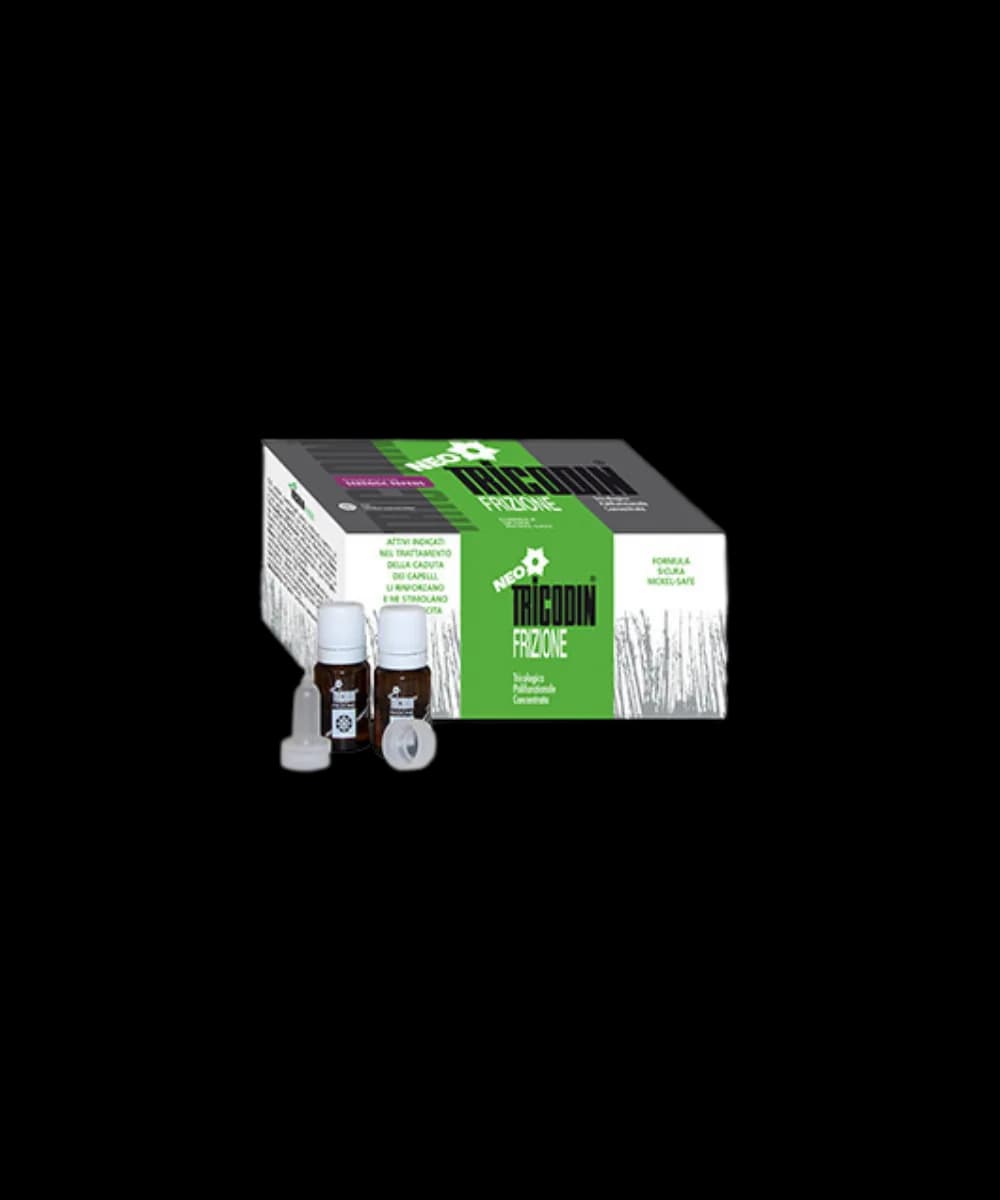
In these cases, the GD range includes products such as Aptodin Plus and Neo Tricodin Frizione Idroalcolica, designed to support the hair, promote the normal follicle cycle and contribute to the wellbeing of the scalp.
Managing stress and sleep to take care of yourself and your hair
Dealing with hair loss after giving birth is unsettling for many new mums, who often look for support and reassurance from women who have been through this experience before them.
Looking after your diet, supporting your hair with targeted supplements and using safe local treatments are three key steps to caring for the wellbeing of your hair.
But we would like to add one last piece to the picture: managing stress and sleep.
The postpartum period is an intense one, marked by hectic routines, night feeds and new responsibilities that can make us feel under a lot of pressure.
Stress and lack of rest affect general wellbeing and, indirectly, the health of your hair too.
You may not manage to sleep through the night for many months, because newborns' sleep-wake rhythm is still irregular, but you can still carve out small moments of rest during the day, handing over to your partner or family.
Allowing yourself short breaks, sleeping when possible, asking for help and creating more regular daily routines helps not only to support the new mum's general wellbeing, but also to reduce the stress that can indirectly affect the health of your hair.
For any reports or complaints, please contact the owner of this website at gdtif@gditalia.biz