Acne therapy: raised triglycerides among the side effects
Isotretinoin is effective against acne but can raise triglycerides and cholesterol. Find out how to counter this problem
Acne: causes and types
Adolescent acne
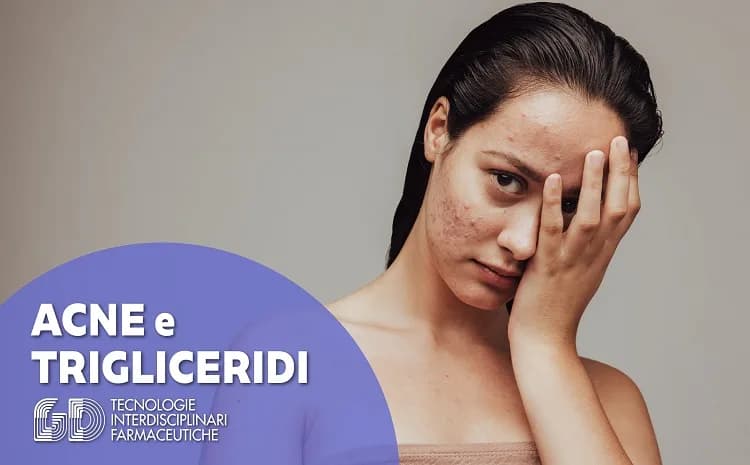
When we think of acne, the first image that comes to mind is a teenager with a face covered in spots. It is precisely during puberty, between the ages of 12 and 18, that we see the first signs of adolescent acne, the most common form of acne vulgaris, characterised by the appearance of comedones (blackheads and whiteheads), papules (inflamed lesions) and pustules, what we commonly call spots.
Among the factors that predispose to adolescent acne are a certain family history (if a parent suffered from it as a young person, you are more likely to develop adolescent acne), the use of covering cosmetics, overly harsh cleansers and stress…
The main causes also seem to include hormones, which cause a sudden increase in sebum production by the glands. Excess sebum blocks the follicle, paving the way for infection by the bacteria at the root of this inflammatory skin disease.
Acne that begins during puberty usually clears up on its own at around 20-30 years of age. But if it is not treated properly, there is a risk of carrying its marks for ever in the form of scars.
But acne comes in different forms and types, some of them severe.
Nodulocystic acne or acne conglobata
Nodulocystic acne, as the name suggests, is characterised by the appearance of nodules, that is, red and painful pus-filled cysts beneath the surface of the skin. Sometimes abscesses and draining fistulas form which, when they heal, leave permanent scars on the skin of the face and body. It is a particularly disfiguring form of acne if it is not diagnosed and treated in time.
Acne fulminans
A less well-known form of acne, because it is very rare, is acne fulminans, which shows itself not only through very marked skin eruptions (spots, nodules, ulcerated lesions) but also through symptoms such as fever and muscle and joint pain.
Acne therapy
The best strategy, when you have an acne problem, is always to consult your trusted dermatologist to obtain a specialist diagnosis. It will be the doctor who prescribes any therapy and gives advice and suggestions on good practices to follow in caring for skin with spots and comedones.
In cases of mild acne, the patient is usually advised to use specific cleansers, with a neutral or acidic pH, and suitable creams. In pharmacies you can find Pentadin, our broad-spectrum bio-cleanser suitable for the hygiene of skin and scalp affected by seborrhoeic dermatitis, but also for gentle cleansing of oily and acne-prone skin.
Thanks to its special formulation, Pentadin Plus is able to regulate the skin's ecosystem. This means that it prevents the proliferation of the germs that cause acne and acts on sebaceous secretions, limiting oiliness of the skin.
In cases of moderate acne, on the other hand, the dermatologist uses therapies based on topical drugs (in particular retinoids) and antibiotics taken orally by the patient.
Those who suffer from very severe acne are prescribed by their trusted dermatologist a therapy based on Isotretinoin. This is a drug derived from vitamin A, able to normalise sebum production and change its composition.
But it also has another effect: that of regulating keratin production, preventing the formation of the real occlusive plugs that block the follicle, encouraging the build-up of sebum and subsequent contamination by a bacterium, Propionibacterium Acnes, considered responsible for the onset of acne.
It is precisely for these reasons that Isotretinoin is extremely effective in fighting the most severe forms of acne such as nodulocystic acne, which appears as nodules and cysts of varying size on the face and body, and acne that resists courses of antibacterial therapy.
About 89% of patients who have undergone treatment with this drug have seen complete remission of their acne, whose signs have progressively disappeared.
The risks of Isotretinoin
However, anti-acne therapy based on Isotretinoin cannot be undertaken lightly.
This drug must be taken under the strict supervision of an experienced dermatologist because it can produce serious side effects, some of them long-term, damaging our body and compromising our health.
Possible side effects include:
- dryness of the skin and mucous membranes
- eye disorders such as dry eyes, irritation and reduced night vision
- dizziness
- drowsiness
- hypersensitivity to light
- headache
- hepatobiliary disorders
Isotretinoin and pregnancy
Acne treatment with isotretinoin is absolutely not recommended for pregnant women, breastfeeding mothers and women who are trying to have a baby.
This drug, in fact, is teratogenic, meaning it can alter the development of the foetus, causing serious congenital malformations in the unborn child. In addition, if taken during the first trimester of pregnancy, it is associated with a sharp increase in the risk of miscarriage.
For this reason, the Italian association of hospital dermatologists, in collaboration with AIFA (the Italian Medicines Agency), has drawn up a ten-point guide for prescribing oral isotretinoin for acne.
Isotretinoin and high cholesterol
Isotretinoin must be taken with caution both by healthy patients and by those suffering from diabetes, obesity or disorders such as metabolic syndrome.
This molecule, in fact, can raise the levels of fats in the blood (cholesterol and triglycerides), predisposing to various heart conditions and cardiovascular disorders.
This is why anyone using isotretinoin-based therapy must have regular blood tests. Medical tests must be carried out before starting the therapy, to assess the general health of the patient who intends to take Isotretinoin for acne, and then every three months to monitor the values.
In particular, the following should be kept under control:
- liver values (GOT, ALT, AST, etc.)
- cholesterol
- triglycerides
Values that are too high may lead the doctor to reduce the dosage of the drug or to suspend the therapy.
Countering the rise in cholesterol and triglycerides
To counter the rise in cholesterol and triglycerides in patients using isotretinoin-based drugs, it is possible to work on diet, combining the therapy with the use of supplements.
If your latest tests have shown an increase in cholesterol and/or triglycerides, ask your doctor or pharmacist whether OMEGADIN PLUS can help you.
Omegadin Plus Retard is a food supplement formulated with plant-based active ingredients, vitamins and minerals such as:
UNSATURATED FATTY ACIDS OF THE PLANT-BASED Ω 3, Ω 6 AND Ω 9 SERIES, OBTAINED FROM THE SEED OIL OF THE PLANT BUGLOSSOIDES ARVENSIS AND FROM THE OIL OF OLIVES: REPLACING SATURATED FATS WITH UNSATURATED FATS IN THE DIET CONTRIBUTES TO THE MAINTENANCE OF NORMAL BLOOD CHOLESTEROL LEVELS (MONOUNSATURATED AND POLYUNSATURATED FATTY ACIDS ARE UNSATURATED FATS).
VITAMIN E, VITAMIN C AND SELENIUM CONTRIBUTE TO THE PROTECTION OF CELLS FROM OXIDATIVE STRESS.
IN ADDITION, VITAMIN C CONTRIBUTES TO NORMAL COLLAGEN FORMATION FOR THE FUNCTION OF BLOOD VESSELS AND, WITH SELENIUM, CONTRIBUTES TO THE NORMAL FUNCTION OF THE IMMUNE SYSTEM.
BLOOD ORANGE
Please note
Information provided for informational purposes only, which cannot constitute a diagnosis, the prescription of a treatment, or a substitute for direct contact with a doctor or a specialist visit. You are always advised to seek the opinion of your own doctor and/or specialists.
For any reports or complaints, please contact the owner of this website at the email address gdtif@gditalia.biz
For any reports or complaints, please contact the owner of this website at the email address gdtif@gditalia.biz