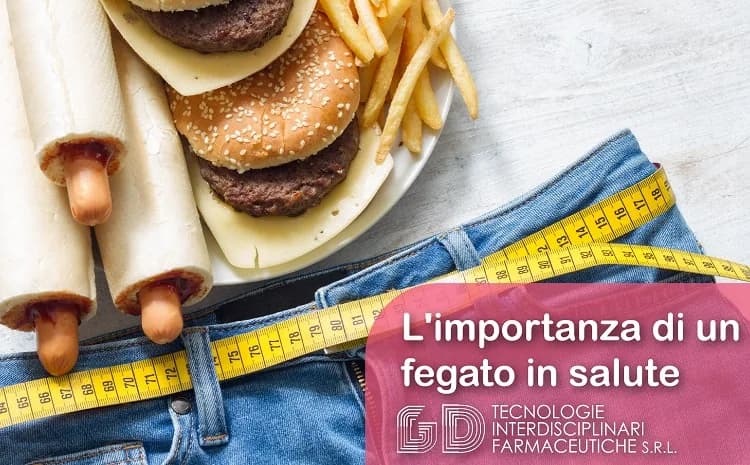
Fatty liver disease: the importance of a healthy liver
Fatty liver (hepatic steatosis) is a medical condition that can pose serious health risks. Find out more, click here
More and more people suffer from fatty liver, a medical condition that exposes them to serious health risks. Hepatic steatosis, in fact, is associated with cardiovascular risk and is the gateway to many disabling diseases such as diabetes.
But what is it?
In this article we will look at what hepatic steatosis, or fatty liver, is, what its causes and consequences for our body are, and above all how to prevent it and stay healthy for longer.
Healthy liver and fatty liver
The liver is one of the most important organs for metabolic functions. Among other things, the liver:
- produces bile, the substance that allows us to digest fats, breaking them down into their smaller components so that they can be absorbed more easily by the intestine;
- synthesises cholesterol and triglycerides, which are a fundamental energy reserve for the body
- is involved in the formation of glucose, needed to nourish the cells of the human body;
- protects the body by destroying the toxic substances that reach it through the blood, metabolising the waste and toxins taken in through food, pollution or medicines and making them harmless.
And much more besides. Even these few lines of explanation are enough to understand how important it is to keep your liver healthy, by following a healthy, balanced diet, avoiding excess and remembering to have targeted check-ups when further investigation is needed.
Liver problems can have various causes, ranging from an unhealthy diet with excessive consumption of alcohol and fats, to infections, right through to the use of medicines that can impair liver function.
One of the increasingly common conditions today is hepatic steatosis, a disorder characterised by an excessive build-up of triglycerides in the liver cells. In particular, fatty liver is diagnosed when the fat in the liver exceeds 5% of the weight of the organ, which then grows well beyond its usual size.
Causes of fatty liver
It is no coincidence that this condition is spreading above all in highly industrialised Western countries, where most people do office jobs, spend hours at the computer or in front of the television, eat plentifully and rarely play sport.
Fatty liver, in fact, is generally associated with an unhealthy lifestyle characterised by two elements: a sedentary lifestyle (that is, little physical activity) and a high-calorie diet, unbalanced in favour of harmful foods such as saturated fats, sugars and processed foods.
Just like metabolic syndrome, fatty liver is mainly a disease of affluence, more frequent where food is widely available.
In an article published in Repubblica in 2018, we read that in the States, home of fast food and junk food, there is a real “fatty liver” emergency, with worrying numbers.
In fact, millions of people in the United States are reported to have reduced liver function.
Among the risk factors for hepatic steatosis are:
- obesity. Between 70 and 90% of obese patients have fatty liver;
- diabetes. It is estimated that as many as 75% of patients with type 2 diabetes have developed this condition;
- dyslipidaemias, metabolic disorders characterised by high levels of cholesterol and/or triglycerides in the blood;
- anaemia;
- alcoholism. Heavy, prolonged drinking causes what is called “alcoholic fatty liver disease”, a reversible condition which, if not treated in time, can develop into even more serious problems such as hepatitis and cirrhosis of the liver;
But this condition, usually due to an overloaded liver, could also result from hormonal imbalances, prolonged fasting, sudden weight loss, extremely excessive physical activity and prolonged use of certain medicines that, unfortunately, can affect liver function and damage the liver, such as corticosteroids or chemotherapy drugs.
Some recent research also highlights the possibility that a new genetic mutation may promote the onset of fatty liver.
Fatty liver: symptoms and consequences
In a sense, hepatic steatosis is a subtle, silent disease because it is hard to realise you have it without undergoing clinical tests. Often, a diagnosis of fatty liver comes unexpectedly, purely by chance, following blood tests or an ultrasound scan carried out for other reasons.
In most cases, in fact, hepatic steatosis is asymptomatic and has no obvious signs that could reveal the presence of the disorder beyond doubt.
Occasionally, at least in its early stages, the condition shows itself through minor, non-specific symptoms such as:
- mild abdominal discomfort or malaise
- a feeling of heaviness after meals
- bad breath
In its more advanced stages, these symptoms can become more pronounced and widespread, with the appearance of other problems such as:
- loss of appetite followed by weight loss
- a feeling of tiredness
- mild confusion and agitation
- jaundice (yellowing of the skin, mucous membranes and sclerae, that is, the “whites” of the eyes)
If not dealt with in time, the condition progresses and gets steadily worse. By the time it is diagnosed, the disease has often already reached an advanced stage.
The second stage of the disease is non-alcoholic steatohepatitis, which causes inflammation and damage to the liver cells. In an attempt to replace those cells and heal the lesions, the liver produces scar tissue, which, however, cannot perform the same functions as healthy tissue.
Its build-up causes fibrosis.
In the long run, this situation can lead directly to cirrhosis of the liver and ultimately, in the most serious and inadequately treated cases, to liver cancer (hepatocellular carcinoma).
Diagnosing fatty liver: which tests are needed to detect hepatic steatosis?
As we have seen, fatty liver is a clinical condition not to be underestimated. Having check-ups and undergoing tests regularly, especially when a problem is suspected, is essential.
A timely diagnosis can really make a difference.
That is why it is also good to know how fatty liver is detected. The main tests used for diagnosis are:
blood tests, which analyse transaminases, gamma GT (an enzyme found in the liver, kidneys and pancreatic cells) and cholesterol and triglyceride values, as well as the markers that signal the presence of inflammation;
diagnostic imaging tests such as liver ultrasound, a non-invasive test that shows the state of health of the liver, which may be followed by further investigations using CT or MRI scans;
liver biopsy, which involves taking a small sample of tissue for laboratory analysis.
Can fatty liver be cured?
As we have seen, as a result of certain unhealthy behaviours, the liver can become diseased and stop working properly. But with the right intervention, it is possible to recover from hepatic steatosis, preventing the disorder from having terrible consequences.
To date, there are no specific medicines for this condition.
So the treatment for fatty liver consists of adopting a more balanced lifestyle based on the right mix of healthy eating and regular physical activity.
Preventing hepatic steatosis. Good practices for liver health
Like the treatment, the prevention of hepatic steatosis too relies on a few good practices that help us keep our liver healthy.
What to eat and not eat to avoid fatty liver
As regards the diet, or rather the eating plan to follow, the classic nutritional advice applies: favour fresh fruit and vegetables in season, without overdoing the tastiest fruit, which is also the most sugary, such as grapes and figs.
This should be combined with complex carbohydrates with a low glycaemic index such as bread, pasta, rice, oats, barley and spelt, preferably wholegrain.
Meat, especially red meat, does not need to be avoided, but its consumption should be limited.
It is also advisable to consume less milk and dairy products and, more generally, fewer foods high in fat, whether of animal or plant origin.
Industrial, refined products full of hydrogenated fats should be banned. We are talking about snacks, snack cakes, biscuits, packaged crisps, packaged fruit juices…
All these little treats are tempting but, in the long run, they do us serious harm.
How we cook the foods we choose also matters a great deal: it is better to steam, grill or use a pressure cooker rather than, for example, frying. Measure oil, butter and other condiments carefully, as they raise the fat content of the dish without our noticing.
There is little point in choosing a grilled chicken breast if we then spread a tasty sauce made with fats and sugars over it to make it more appetising.
Alongside the diet, your doctor may also suggest taking a food supplement such as Omegadin Plus Retard, which combines the beneficial effects of plant-based omega-3, omega-6 and omega-9 unsaturated fatty acids with those of Red Orange extract.
Omegadin Plus Retard contains:
• Plant-based ω 3, ω 6 and ω 9 unsaturated fatty acids obtained from the seed oil of the plant Buglossoides arvensis and from Olive oil: replacing saturated fats with unsaturated fats in the diet contributes to the maintenance of normal blood cholesterol levels (monounsaturated and polyunsaturated fatty acids are unsaturated fats).
- Vitamin E, Vitamin C and Selenium contribute to the protection of cells from oxidative stress.
In addition, Vitamin C contributes to normal collagen formation for the normal function of blood vessels and, with Selenium, contributes to the normal function of the immune system.
• Red Orange
Exercise regularly to counter fatty liver
A recent study of patients with hepatic steatosis showed that just 150 minutes of physical activity a week is enough to reduce fat in the liver.
But even people in perfect health benefit from a good workout.
Regular exercise is true preventive medicine, able to lower the risk of developing metabolic diseases such as hepatic steatosis.
How?
By helping the liver not to absorb too much fat, while also relieving metabolic stress.
So do we need to rush off and join a gym?
No, it is not strictly necessary. All it really takes is being less lazy, choosing to give up a few too many comforts in our daily lives.
A few examples:
- take the stairs instead of the lift
- go for a walk in the park with a friend instead of meeting at the usual café for a coffee;
- avoid taking the car to get somewhere nearby, and walk or cycle instead;
Basically, all you need to do is move and stay active.
Alcohol yes, but in moderation
As we have said, alcohol is one of the factors that can influence the development of liver disease. For this reason, it is advisable to drink it in small amounts, in moderation.
A glass of good wine with your favourite dish is certainly not a problem.
It is excess that puts your health at risk.
Medical monitoring
Of course, prevention also means having regular medical check-ups.
Monitoring the health of your liver with clinical tests and visits will help you realise if something is wrong, so you can take action in time.
Please note
Information provided for informational purposes only, which cannot constitute a diagnosis, the prescription of a treatment, or a substitute for a direct relationship with your doctor or a specialist visit. We always recommend asking for the advice of your own doctor and/or specialists.
For any reports or complaints, please contact the owner of this website at the email address gdtif@gditalia.biz