Why am I losing so much hair? Help from nature, 100% vegan style
From GD research, products specifically formulated to nourish and strengthen your hair, counteracting hair loss.
How many times, after shampooing, do you realise you have left a lot of hair in the shower? Up to a point, there is nothing to worry about. Losing a certain amount of hair every day (roughly between 50 and 100) is entirely normal and physiological. This is because there is continuous turnover on our heads and, in theory, a hair that falls out will immediately be replaced by another.
The hair life cycle
Hair, in fact, has its own life cycle involving a birth, a long growth phase and, finally, a death, which coincides with falling out. None of this, however, would be possible without the structure from which the hair originates, the hair follicle, an extremely complex structure of epidermal origin located within the scalp.
The activity of the hair follicle can be divided into three different phases:
- Anagen phase, or growth phase: the follicle produces the hair, which grows fairly quickly, at roughly one centimetre a month. The length of the anagen phase is not fixed and is also determined by genetic factors. On average, however, the hair growth period can last from 2 to 7 years. Then the second phase takes over, the catagen phase;
- Catagen phase, or regression phase: at this point in the cycle, hair growth stops and regression begins, with a gradual halt of vital functions. This means the hair no longer gets longer. But it is not yet time for it to fall out. The catagen phase is very short, usually lasting about 2 weeks
- Telogen phase, or resting phase: the last period of the hair's life is the resting phase, during which the hair follicle enters a sort of stasis that can last two or three months. During those days, the hair is still inside the follicle, but its vital activities have completely stopped. It is a hair that is already dead, but stays in place on the scalp for a while longer. A light pull (such as that of a brush) is enough for it to come away. If nothing is done, it will fall out naturally, pushed out by the new hair growing beneath it that will replace it.
It seems to us that all our hairs grow at the same speed. But that is not the case at all. On our heads there are from 90,000 to 120,000 hair follicles and each of them is going through one of the phases of the cycle we have just described.
It's just that we can't notice it with the naked eye!
We can see, however, that hair falls out more often in autumn, almost like the leaves. The phenomenon affects women and men of all ages and has to do with that particular time of year. According to studies, from October onwards the change in climate and the drop in temperatures affect the activity of the hair follicles, stimulating them and speeding up the cycle. You can end up losing as many as 150 hairs a day. But this is usually a temporary and reversible condition.
Hair loss: when should you worry?
Thick, strong, shiny hair is certainly a sign of good health and general wellbeing.
So when should you start to worry?
There are a number of small signs to bear in mind, warning signals that should prompt us to look into hair loss with an expert trichologist, who can make a diagnosis and give you the right advice for looking after your hair.
Here's what to look out for
- Thinner hair: if you notice that the hair on some parts of your head seems thinner, you could be facing the beginnings of thinning;
- Change in the hairline: the upper part of the head, around the forehead and temples, is where hair is usually lost most. If your hairline seems higher than normal, it may be time to ask for a consultation;
- Loss of large clumps: when you wash, do you find so much hair in the shower tray that it risks blocking the drain? When you comb your hair, do you find whole clumps between the teeth of the brush? When you get up in the morning, is your pillow covered in hair? In this case, it may be time to see a trichologist and start an anti-hair-loss treatment
Androgenetic alopecia, the hair condition that affects men and women
Androgenetic alopecia is a very common hair condition among both men and women. The likelihood of being affected increases with age. It is estimated that around 80% of adult white men experience this phenomenon during their lifetime.
The first signs of androgenetic alopecia generally appear after the age of 30. The most severe form of this condition, however, can show signs of its presence as early as 18.
Androgenetic alopecia and hair miniaturisation
Many people believe that baldness simply means losing hair.
In reality, however, androgenetic alopecia first of all causes hair thinning: the hair becomes shorter, sparser and so light as to be almost invisible. The hair turns into a sort of fine, short, unpigmented fuzz. When the follicle no longer produces hair, that area of the head is left uncovered, and so baldness occurs.
This thinning results from a process of shrinking of the hair follicle which, being in a state of distress, can no longer produce healthy hair firmly anchored to the head. This process, known as hair miniaturisation, is triggered by the action of androgen hormones and in particular by dihydrotestosterone (DHT).
Hormonal factors and genetics in baldness
It is no coincidence that we speak of androgenetic alopecia.
This scientific term sums up the fundamental aspects of the hair condition.
The term “alopecia” refers to the process of decline in the quality (colour, thickness) and quantity of hair, or even its disappearance. It comes from the Greek “alopex”, meaning “fox”, and refers to the way this animal moults its coat in spring, losing its fur in patches.
“Andro” refers to the typically male androgen hormones, whose presence in the individual, man or woman, is key to causing baldness. Hair loss does not depend on an excessive concentration of male hormones in the blood so much as on the hair's greater sensitivity and response to these hormones.
So it is not at all true that bald men have more testosterone. It is just one of the many myths about hair loss that need to be dispelled.
Then there is “genetic”, which indicates that the other factor identified is genetic, hereditary predisposition. Several researchers have long been studying the question and trying to determine more precisely which genes actually put us in a position to develop baldness. According to a recent study by China Agricultural University, whose results were published in 2019, the key could be a genetic mutation of the Map2 protein which would lead to a reduction in hair follicle density at the embryonic stage.
Direct observation shows that baldness is earlier and more severe the more family members are affected by it.
Other causes and aggravating factors of hair loss (defluvium capillorum)
If you notice your hair thinning, it does not necessarily mean you have androgenetic alopecia. As mentioned earlier, the appearance of our hair is an indicator of the general state of health of the body.
Consequently, if your hair becomes less thick, it could be a sign of the presence of some other condition or of unhealthy lifestyle habits.
Other possible causes of baldness:
- General illnesses
- Surgery
- Very high fever
- Drug therapies
- Nutritional deficiencies
Medicines that can cause hair loss
You also need to pay close attention to the substances you take. Medicines are designed to treat various conditions but their unwanted side effects can include hair loss, known as iatrogenic alopecia or drug-induced alopecia. The best known is that associated with chemotherapy drugs, but many more compounds are involved.
So watch out for blood pressure medicines (antihypertensives), anticoagulants (heparins and dicoumarols), antidepressants, cholesterol-lowering drugs, vitamin A and thyroid drugs (carbimazole, propylthiouracil, thyroxine).
Baldness and seborrhoeic dermatitis: what is the link?
Among the factors that can aggravate hair loss is seborrhoeic dermatitis, an inflammatory condition that affects areas of the body with a high concentration of sebaceous glands (face, scalp) and shows up as yellowish, greasy scales, erythema and itching.
The inflammation associated with this particular skin condition can lead to fibrosis, with the consequent disappearance of the hair follicle. In addition, the inflammation itself can speed up baldness because it causes the follicle to move quickly into the telogen phase (resting phase), which is followed by hair loss.
Androgenetic alopecia: how does it show itself?
Androgenetic alopecia, as we have seen, is a hormone-based condition caused by the action of androgens on the hair. Not all hairs, however, react in the same way. There are more sensitive areas of the scalp, which are those usually affected by baldness. These are the hairline (frontal area) and the top of the head (crown area).
When thinning affects the crown area, it is called vertex thinning, commonly known as a “bald spot”.
In these particular areas, the hair undergoes progressive thinning (miniaturisation) which, at least at first, does not affect all hairs in the same way. This is why, in mild forms of alopecia, you do not end up with a bald head but see thinning, caused by the fact that some hairs have become shorter and lost their pigment, while others have kept their original thickness and length.
As the process continues, the other hairs are also affected until the whole head appears completely bald, with no hair at all.
Hair loss: help from nature with the Tricodin line
GD Tecnologie Interdisciplinari Farmaceutiche developed a hair protocol some time ago, a three-step trichological system that allows careful care of hair and scalp.
The first step of this protocol is supplementation with substances such as Biotin, Zinc and Selenium, which help to maintain healthy hair.
If you have noticed that your hair is weakening or thinning, you can ask your doctor or pharmacist whether the food supplement Aptodin Plus Retard could be useful for you.
Aptodin Plus Retard is a food supplement formulated with plant-based actives, vitamins and minerals such as:
- Serenoa repens
- Sulphur amino acids: l-cystine and l-methionine
Grape seeds (Vitis vinifera L.) with antioxidant activity, supporting
microcirculation function - Biotin, Zinc and Selenium, which help to maintain healthy hair
- Copper and Vit. B2 contribute to the protection of cells from oxidative
stress - Vit. B6, Folate and Iron help the normal function of the
immune system
In addition, Vitamin B6 contributes to normal cysteine synthesis and to the
regulation of hormonal activity - Pantothenic acid (Vit. B5) contributes to normal synthesis and
metabolism of steroid hormones
Also ask whether combining it with Neo Tricodin Frizione could help you, the innovative anti-hair-loss treatment that nourishes and strengthens the hair and counteracts thinning and miniaturisation.
Its formulation with trichogenic Auxin is enhanced with Serenoa Repens, extracted from the berries of the American dwarf palm, a plant with remarkable properties that make it an effective ally against hair loss.
The last step of the protocol involves using treatment shampoos, specifically formulated to meet the needs of different hair types:
- Tricodin Shampoo al Catrame, designed for hair with dermatitis or psoriasis
- Tricodin Antiforfora, which eliminates all types of dandruff, oily and dry, normalising sebum levels and leaving hair clean and hydrated
- Tricodin Capelli Grassi, which reduces and normalises sebum production, soothing irritation, redness and inflammation
- Tricodin Capelli Secchi e Sfibrati, restructuring, nourishing, moisturising and protective, suitable for stressed and damaged hair
- Tricodin Shampoo Delicato HF, for daily use
Please note:
Information provided for informational purposes only, which cannot constitute a diagnosis, the prescription of a treatment, or a substitute for a direct relationship with a doctor or a specialist visit. Always seek the advice of your own doctor and/or specialists.
For any reports or complaints, please contact the owner of this website at the email address gdtif@gditalia.biz
RECOMMENDED PRODUCTS
Stay updated
Recommended products
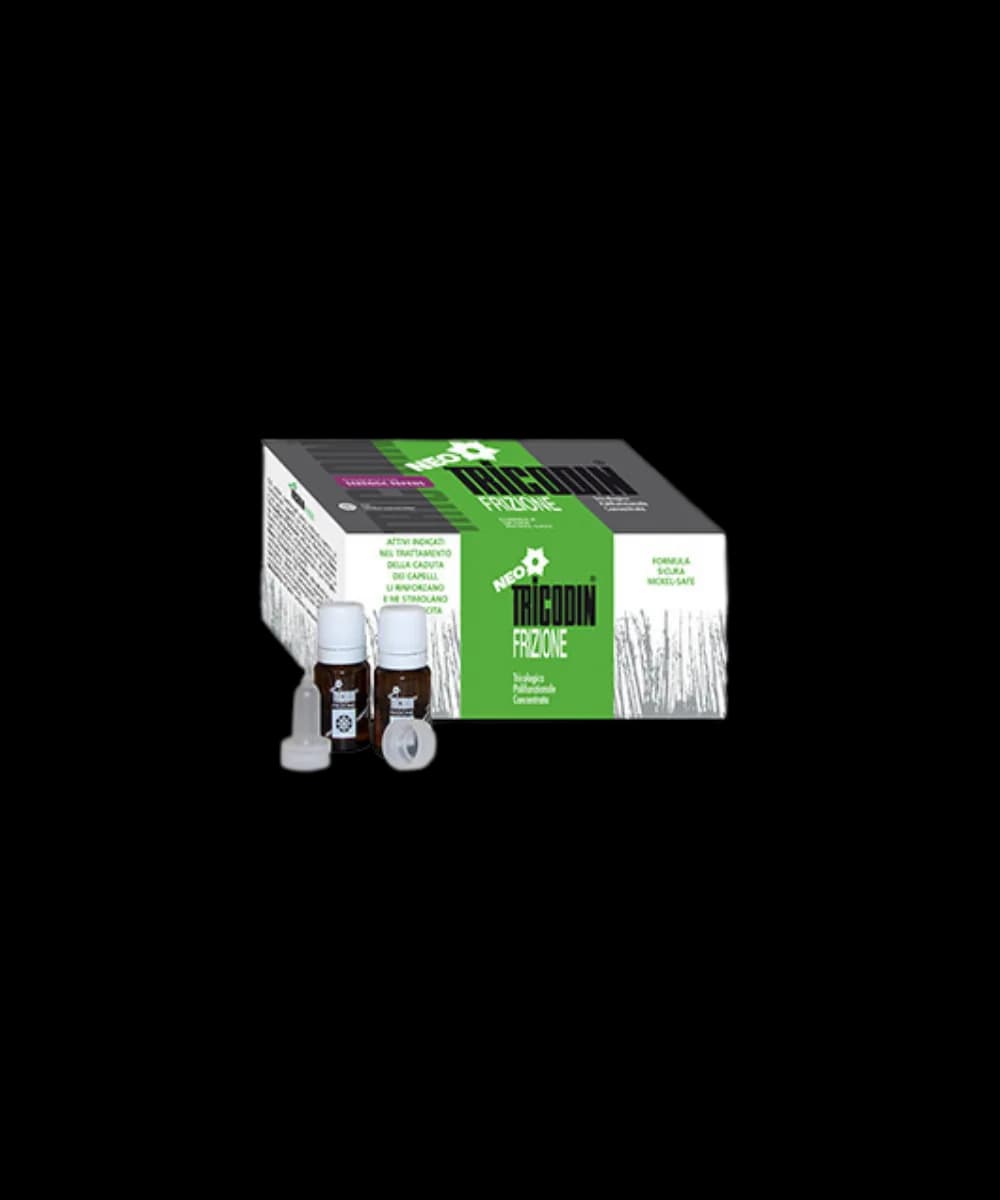
NEO TRICODIN FRIZIONE IDROALCOLICA
Neo Tricodin Frizione is the innovative anti-hair-loss treatment that literally goes to the root of the problem, making hair healthier, thicker and shinier. It is a concentrated hydroalcoholic lotion, designed to nourish and strengthen the hair, stimulating the hair bulbs so that they resume their normal life cycle. Its formulation is the result of a skilful blend of ingredients, carefully selected to give hair a burst of energy and to improve the microcirculation and the oxygenation of the tissues.
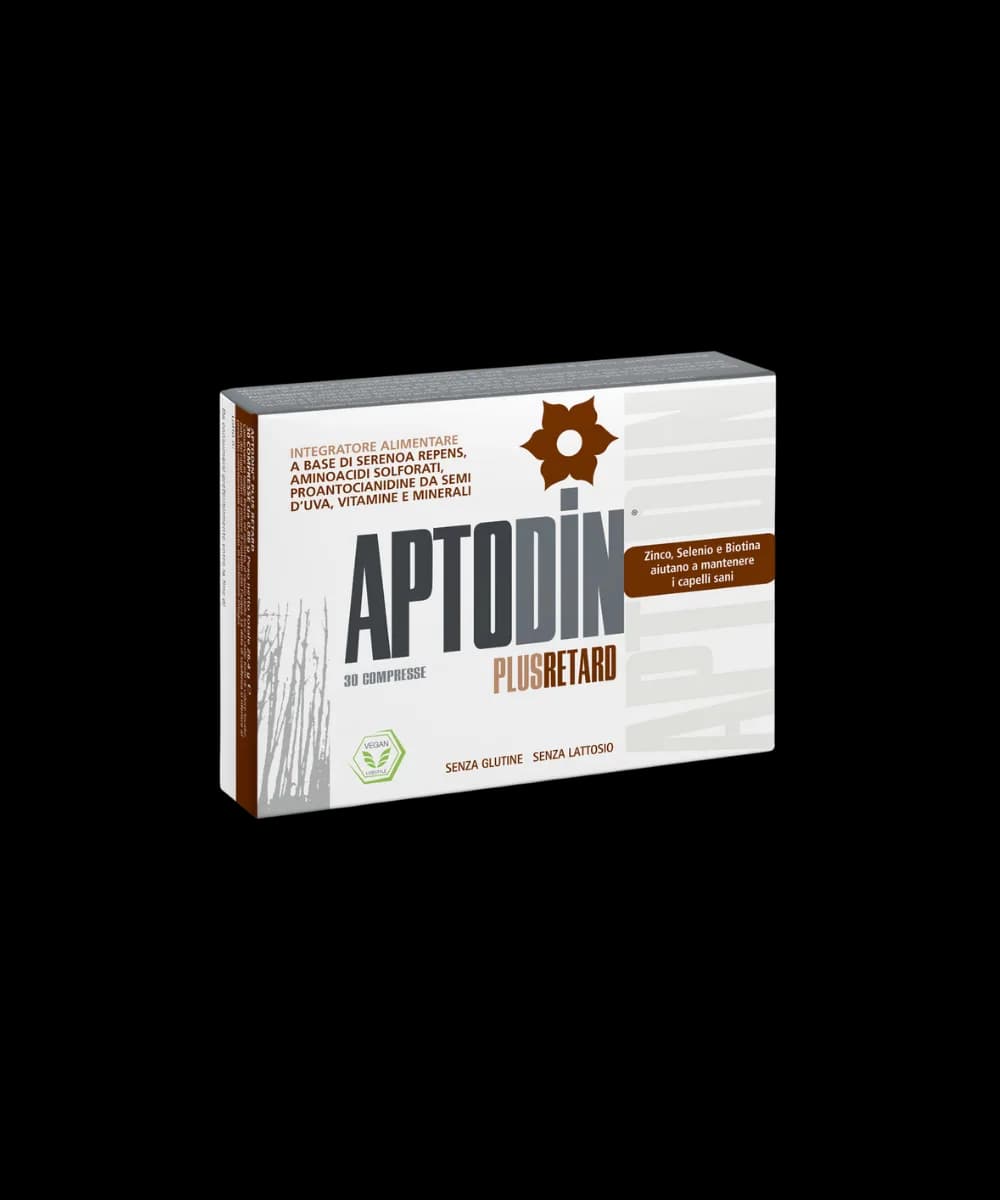
APTODIN PLUS RETARD
Aptodin Plus Retard is the food supplement of the GD Hair line, formulated to counteract hair loss and support the health of the hair from within. Its formulation contributes to the maintenance of normal hair and nails, supports normal cysteine synthesis and promotes the functionality of the microcirculation. For a complete action, we recommend combining it with Neo Tricodin Frizione and with the Shampoo and Conditioner of the Tricodin line.