Sportswear that smells of sweat: causes and remedies
If you notice a sweaty smell and skin irritation when you wear sportswear, there is a reason. Find out how to get rid of the problem
Every evening, the gym becomes your sacred space.
You arrive in the changing room, get ready, put your headphones on and head into the gym. After a whole day of work (or study), finally a moment all to yourself. Your muscles tense, your breathing changes and, rep after rep, you start to feel at home in your body again.
At the end of your workout, you feel tired. But it is mixed with a feeling of lightness and satisfaction.
A quick shower, clothes in the kit bag and then straight into the washing machine.
But the next day, when you put on your freshly washed T-shirt, you notice a bad smell on you. As if the sweat had stayed trapped in the fabric despite careful washing.
But there is more.
Sometimes, after doing your exercises, your skin stings or itches. In the shower, you notice it is red and perhaps you also spot small pimples in areas such as the inner thighs or shoulders.
At this point it is natural to wonder:
why does this happen?
Why is something that should make the body feel good sometimes accompanied by these skin problems?
Why do gym clothes smell of sweat even after washing?
Where the smell of sweat (really) comes from and why it stays on sportswear
Let's start with the persistent smell on sportswear: why do gym clothes smell of sweat even after washing?
The answer may surprise you but… the problem is not sweat itself.
Sweat is a completely odourless substance. This “cooling” liquid, produced by our body to regulate temperature, is made up mainly of water and mineral salts, along with small amounts of lactic acid and urea.
So what is that unpleasant smell we give off precisely when we sweat?
What we perceive as “the smell of sweat” actually develops afterwards, on our skin, which is home to thousands of bacteria, invisible to the naked eye.
These tiny colonists of our skin love the substances contained in sweat. When they metabolise them, they produce certain volatile compounds that are responsible for the smell we notice.
When we work out, the smell is amplified by the combination of two factors: on the one hand, the greater production of sweat due to physical effort; on the other, the warm, humid environment that forms in contact with the skin, partly because a lot of sportswear is made from synthetic fibres.
These conditions encourage the proliferation and activity of bacteria that turn the substances in sweat into foul-smelling compounds.
But that's not all.
Sweat and bacteria in fabrics: what really happens when you work out
During your workout, gym clothes absorb everything: sweat, sebum, dead skin cells.
This is especially true of technical fabrics, often made from synthetic fibres such as elastane. They are designed to be light, breathable and quick-drying, but precisely because of their structure they tend to trap residues between the fibres.
When you take them off at the end of your workout, those garments are damp, soaked in sweat and other organic substances. And if they stay shut in your gym bag or at the bottom of the laundry basket for hours, they become an ideal environment for bacteria to proliferate.
This is where washing comes in.
Even when you wash your sportswear, especially if you choose short or low-temperature programmes, you do not always manage to remove completely what has built up in the fabric.
So, when they come out of the washing machine, your sports clothes may look clean, but in reality they still retain something. Some of these residues remain trapped, wash after wash.
And they do not just sit there “quietly”.
When you put your favourite gym clothes on again and start to sweat, the moisture reactivates what has been left in the fibres.
Bacteria start to multiply again and the compounds responsible for the smell are released once more.
That is why the smell comes back so quickly, even when the laundry is fresh out of the machine.
Irritation, itching and pimples after the gym: the role of laundry
The problem is not just the smell of sweat, though.
After a workout, you may feel itchy or notice small pimples appearing on specific areas of the body.
Sometimes it is a mild sensation, at other times more persistent.
And it often comes just when you least expect it, in the shower or in the hours afterwards, when you are already back home from the gym.
In these cases, it is not unusual to think it is simply a matter of more sensitive skin or a temporary reaction to sweat.
The reality, however, is different.
During your workout, your skin is coming into contact with fabrics that are not really clean deep down.
As we have seen, sportswear tends to retain residues of sweat, sebum and microorganisms that are often not removed by a simple wash in lukewarm water.
As a result, when you wear those clothes to the gym again, everything that remained trapped between the fibres comes back into contact with your skin.
And not with “normal” skin, but with skin that is already vulnerable, stressed by sweat and by constant friction.
During a workout, in fact, conditions arise that “weaken” the skin:
- skin temperature rises,
- sweating is more intense,
- there is friction and rubbing against fabrics and the equipment and machines in the weights room
All this encourages rashes and irritation, as well as so-called sports acne, a form of mechanical acne linked precisely to rubbing and blocked pores.
On top of all this comes another factor that is often underestimated: residues of detergent and/or fabric softener.
If the wash is not properly set up, or if products that are too harsh are used, these substances can remain in the fibres and help irritate the skin further, especially when you sweat.
Change of season and sweat during workouts: why the skin reacts more
There is a particular time of year when all this becomes more noticeable for sports enthusiasts and gym-goers: the change of season.
When temperatures rise, our skin also goes through a period of adjustment to adapt to the new climatic conditions.
That is why, when spring arrives, the skin becomes more sensitive and reactive.
But that is not the only factor in this equation.
As temperatures rise, sweating also changes and can become more intense or more frequent, especially during workouts.
In transitional periods, moreover, we often tend to wear clothes that are not yet entirely suited to the season: heavier, less breathable or layered fabrics, which lead to greater occlusion and more friction against the skin.
How to wash sportswear to really protect your skin
To avoid bad smells or irritation, then, simply washing your sportswear is not enough.
You need to understand how to wash it properly, deep down.
What temperature to wash gym clothes at to eliminate bacteria and odours
The first essential step is setting the correct washing temperature. One of the most common mistakes is washing sportswear at temperatures that are too low.
Washes at 20° or 30°, especially quick ones, are not always enough to completely remove the organic residues and bacteria that lurk in the fabric.
Whenever possible, it is better to opt for 40°C washes, which are a good compromise between washing effectiveness and care for the fabric.
When putting technical fabrics in the washing machine, it is always best to check the instructions on the label first.
But in general, raising the temperature slightly helps to achieve a deeper clean.
Washing sportswear. Fabric softener: yes or no?
Fabric softener is one of the main culprits behind problems with sportswear.
Even though it gives a feeling of softness and fragrance, for gym clothes it is better to avoid it or greatly limit its use, as it tends to leave a film on the fibres that:
- reduces the breathability of the fabric
- more easily retains odours and residues
- can irritate the skin, especially during physical activity.
Why gym clothes smell even after washing and how to finally get rid of the smell of sweat
If the smell of sweat persists on sportswear even after washing, it means that some of the residues have remained trapped in the fabric.
To really get rid of it, we suggest first of all that you avoid leaving your gym clothes shut in your bag for too long. After a workout, it is important to hang sportswear out to dry as soon as possible, to minimise moisture and so limit the proliferation of bacteria.
Another useful tip is not to overload the washing machine.
Garments need space to be washed effectively, otherwise there is a risk that residues will not be completely removed.
Finally, it is essential to choose suitable detergents: effective on organic residues, but at the same time gentle on the skin and free from substances that can remain trapped in the fibres.
Alongside the detergent you use every day, adding a sanitiser such as Nevoxil really changes the result.
Because it is not just about washing your clothes but about wearing them without a second thought.
Without having to worry about smells that resurface as soon as you start to sweat.
Without that unpleasant feeling of skin that stings, feels tight or gets irritated.
NEVOXIL helps you rediscover the feeling of wearing something truly clean, fresh and safe.
How does it work?
Nevoxil uses the action of sodium percarbonate to sanitise fabrics deep down. This molecule, with disinfectant, antifungal and antibacterial properties, releases nascent oxygen that penetrates between the fibres and acts precisely where washing cannot reach, helping to eliminate what can cause odours and discomfort on the skin.
It is the detail you cannot see, but can feel.
And it lets you train more freely, without discomfort and without distractions.
How often to wash gym clothes to avoid bad smells and skin problems
The last mistake to avoid when it comes to sportswear, bad smells and skin problems: wearing gym clothes several times before putting them in the wash.
Even if they still seem “acceptable”, they have already absorbed sweat and bacteria.
Ideally, then, they should be washed after every use, avoiding the build-up effect of repeated workouts.
The complete strategy for avoiding irritation and bad smells (before, during and after your workout)
Really protecting your skin does not just mean acting after irritation or discomfort appears.
It means acting before, during and after your workout on everything that comes into contact with your body, whether sportswear or body care products.
Before your workout: choosing the right sportswear
When it comes to sport, choosing the right clothes is the first step to avoiding unpleasant surprises.
It is better to choose breathable fabrics suited to sport, avoiding clothes that are too tight or poorly ventilated, especially at the change of season, when the skin is more sensitive.
If you love a tracksuit but it does not meet these requirements, it is better to leave it on the shelf.
During your workout
While you exercise, prolonged contact between skin, sweat and fabric can encourage irritation.
That is why it is useful to:
- use clean towels during your workout, avoiding direct skin contact with machines and/or equipment
- avoid staying in sweat-dampened clothes for long
- pay attention to the areas most prone to rubbing
After your workout. Shower and cleanser to remove sweat, bad smells and bacteria
Once your workout is over, the most delicate moment for your skin arrives.
Prolonged sweating and moisture can, in fact, weaken the skin's barrier function, making it more prone not only to irritation and redness, but also to infections and fungal infections.
That is why it is important to shower as soon as possible, using a gentle cleanser that respects the skin's pH but is effective at the same time.
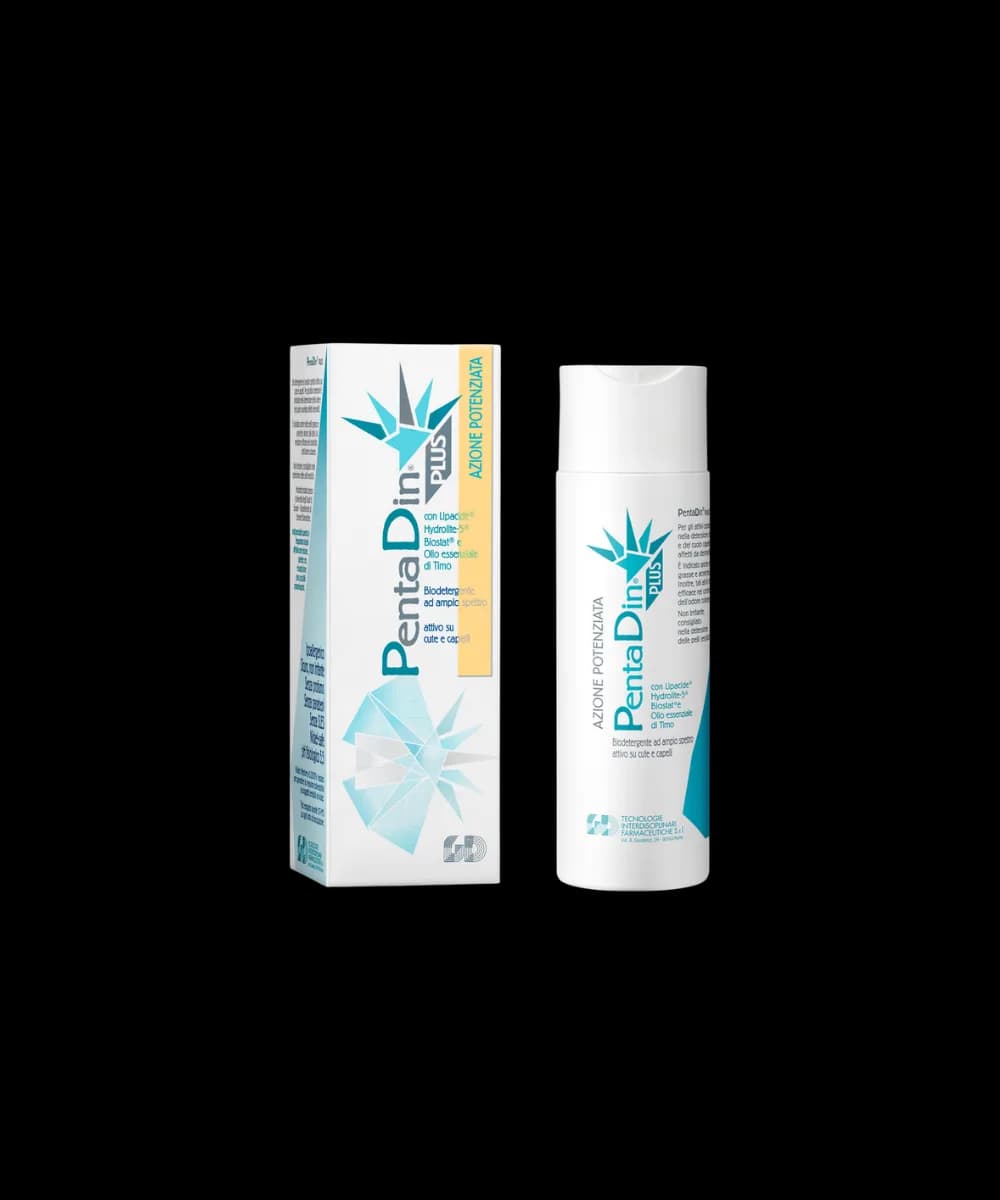
In these cases, a product such as PENTADIN PLUS can really make a difference.
Pentadin Plus is not an ordinary cleanser that simply removes sweat and surface impurities. It also helps counter the presence of bacteria, fungi and yeasts that can build up on the skin during a workout and contribute to odours, irritation and blemishes.
The result is skin that is cleaner but also better protected, less prone to itching, redness and small breakouts in the most critical areas.
You feel the difference straight away: cleansing that does not stop at the surface, but really helps restore the skin's balance.
When it comes to sweat, the gym and irritation, the problem is never just one thing.
It is a chain: it starts from the body, passes through the fabric and comes back to the skin.
Breaking it means acting on every link.
On how you train.
On what you wear.
On how you wash your clothes.
And on how you care for your skin afterwards.
For any reports or complaints, please contact the owner of this website at gdtif@gditalia.biz