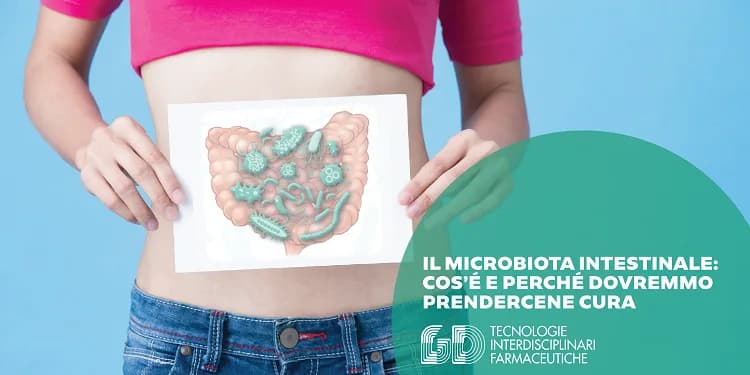
The gut microbiota: what it is and why we should look after it
Did you know we all have a second brain? It is the gut microbiota, and in this article we explain why it is so important.
When we hear about bacteria, we tend to think of something harmful that causes disease. This, however, is a prejudice worth dispelling. There are in fact various bacteria that we could call allies of our body's health.
They are the ones that live and multiply in our gut.
For a long time, we called them bacterial flora or intestinal flora. But these terms are incorrect from a medical point of view. Flora, in fact, refers to plant organisms, while bacteria belong to a completely different kingdom of living things. The most correct way to describe that particular community of microorganisms living in symbiosis with us is gut microbiota.
What the gut microbiota is and how it forms
The gut microbiota is one of the fundamental elements of our intestinal ecosystem and, to be more precise, it is not made up only of bacteria. In reality, this community of microorganisms that colonises our digestive tract, in close contact with the intestinal mucosa, is made up of bacteria, fungi, yeasts and viruses.
Bacteria make up almost 90% of the gut microbiota.
According to recent analyses and studies, our microbiota begins to form during pregnancy, while we are still in our mother's womb. Some bacterial species found in the gut microbiota have been identified in umbilical cord blood. Later, the newborn comes into contact with an enormous number of bacteria at birth, during breastfeeding and then through contact with other people. All these different “experiences” contribute to the formation of the microbiota.
Its composition changes during the very first years of life and is also influenced by our diet.
Functions of the gut microbiota
The gut microbiota performs functions that are essential for the survival and wellbeing of our body.
1) Gut microbiota and nutrient metabolism
During digestion, microorganisms in the gut are able to break down certain food components that would otherwise be indigestible, such as complex carbohydrates. This allows us to absorb specific nutrients that would not otherwise be available.
In addition, the microbiota is able to synthesise vitamin K and most of the B vitamins.
2) Gut microbiota and the intestinal barrier
Together with the intestinal epithelium, the microbiota forms a true barrier that acts as a filter. On the one hand, it lets through the nutrients that need to be absorbed; on the other, it blocks potentially harmful and dangerous substances passing through the digestive tract, preventing them from colonising the digestive system.
In short, the microbiota protects us.
3) Gut microbiota and the immune system
The gut microbiota is also essential for the development of a healthy immune system, our body's defence system. Just consider that our gut hosts roughly 60/70% of all immune cells.
It is no coincidence that the microbiota is also called the second brain.
We at GD really like this definition, and we will explain why.
The microbiota, almost a second brain
In recent years scientific research has made enormous progress in the study of the gut microbiota, showing that it plays a role in regulating almost all physiological systems, including our central nervous system.
The gut microbiota and the central nervous system are in constant communication along an axis that experts call microbiota-gut-brain.
Our gastrointestinal system contains millions of nerve cells and fibres that make up the enteric or intestinal nervous system, a true autonomous nervous system. Through it, the microbiota is able to send signals directly to our brain. But information is also exchanged indirectly, thanks to its ability to stimulate the release of certain hormones and to convert certain components of our diet into substances that influence our metabolism, as well as our immune system.
The health of the microbiota is therefore essential for the wellbeing of the whole body.
Intestinal dysbiosis: when the microbiota is disrupted
When there is an alteration of the bacterial population in the gut, with an imbalance between good and bad microorganisms, a whole range of disorders can arise, from mild to quite serious.
First of all, intestinal dysbiosis can cause a wide range of gastrointestinal disorders: acute gastroenteritis, intestinal inflammation, irritable bowel, diverticulitis, recurrent cystitis. But since the health of the microbiota influences that of the whole body, the consequences of damage to it can also be of other kinds.
It may seem strange, but an altered microbiota can also lead to skin conditions such as acne, rosacea, pityriasis versicolor, seborrhoeic, acne-prone skin.
Recently, researchers have also linked dysbiosis to various conditions and disorders of the urogynaecological system. Underlying problems such as urinary tract infections caused by the proliferation of Escherichia coli, recurrent cystitis, candidiasis, vaginitis, Trichomonas vaginalis there is often a state of chronic inflammation of the intestinal mucosa. The gut and the intimate areas are in contact, both through physical proximity and through chemical messages, so the health of one can influence the other.
Looking after your gut microbiota
Given its characteristics and functions, it is clear that we need to look after our gut microbiota in order to prevent the wide range of disorders we have just reviewed. It is above all our lifestyle that affects the composition and balance of the microbiota.
Here are some tips for keeping your microbiota healthy:
- Follow a balanced diet, eating plenty of fruit and vegetables and limiting refined foods;
- Avoid antibiotics unless strictly necessary. Prolonged use of antibiotics, in fact, causes alterations in the gut microbiome;
- Exercise. There is no need to join a gym and spend hours and hours training, but a little movement, perhaps a daily walk in the fresh air, helps keep you healthy
- Take probiotics
Years of research and studies have enabled GD to develop PLENUM INTEGRATORE, a specific product formulated to replenish, protect and preserve the gut microbiota.
The formulation of PLENUM INTEGRATORE includes:
• 9 billion tyndallised lactic ferments: 4.5 billion intact cells of the Lactobacillus plantarum strain and 4.5 billion intact cells of the Streptococcus thermophilus strain
• FOS (fructo-oligosaccharides), useful for the balance of the intestinal bacterial flora
• Zinc and Vitamin B6, which contribute to the normal function of the immune system
• Vitamin B6, which contributes to the regulation of hormonal activity
• Niacin and Riboflavin, which contribute to the maintenance of normal mucous membranes
• Biotin and Zinc, which contribute to the maintenance of normal skin
• In addition, Zinc, Riboflavin and Vitamin C, for their part, contribute to the protection of cells from oxidative stress; Riboflavin contributes to normal iron metabolism.
Please note
Information provided for informational purposes only, which cannot constitute a diagnosis, the prescription of a treatment, or a substitute for a direct relationship with your doctor or a specialist visit. We always recommend asking for the advice of your own doctor and/or specialists.
For any reports or complaints, please contact the owner of this website at the email address gdtif@gditalia.biz