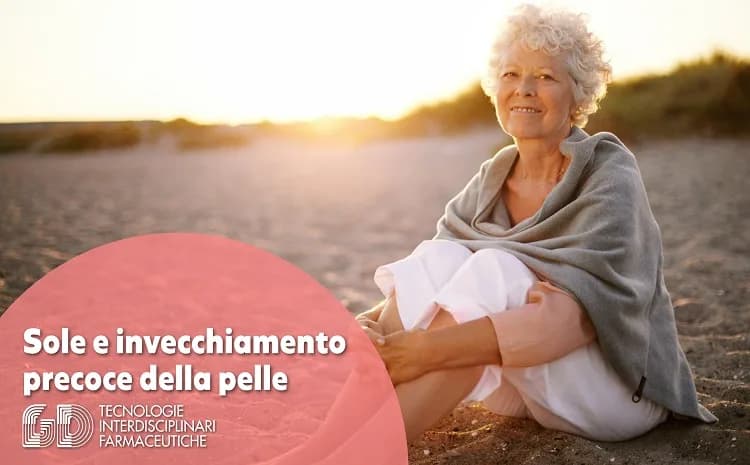
Premature skin ageing: beware of the sun!
Prolonged, unprotected sun exposure is the main cause of premature skin ageing. Find out how to protect yourself
Skin ageing is a natural, physiological phenomenon.
It is perfectly normal for the passing years to leave their mark on our body, even if we try to slow down time, using a range of tricks and strategies to look younger for longer.
There is, however, a silent enemy that threatens our radiant, youthful skin: it is photoaging or, as it is called in Italian, fotoinvecchiamento.
Have you heard of it?
Photoaging: the sun that damages skin and makes it age
Photoaging is a phenomenon caused by excessive exposure to solar radiation. Yes, the culprit behind premature skin ageing is that very sun we love to feel on our skin in summer.
UV rays, in fact, do not just give us a tan, giving our skin that lovely golden glow we are so keen to show off in summer.
They can also cause long-term damage.
The result is wrinkles that etch furrows into our face, neck and hands. But photoaging also brings the dreaded sun spots and we notice that the skin tends to lose elasticity and tone. In some cases, the damage is so severe that it can lead to the formation of actinic keratoses.
The causes of photoaging
As we have seen, what causes photoaging is the action of ultraviolet radiation, which can speed up the normal process of senescence in several ways.
Looking more closely at the effects of UVA and UVB rays on the skin, we can say that they:
- alter the activity of fibroblasts, the cells in connective tissue responsible for collagen synthesis, creating an imbalance that results in damaged fibres not being replaced
- increase oxidative processes caused by the build-up of free radicals
- damage the skin's DNA
This chronic damage caused by the sun, or by the tanning lamps that are increasingly common nowadays and used without much caution, builds up over time, making our skin look older than it really is, dull and dry, marked by deep wrinkles and blotchy in several places.
Other effects of photoaging are:
- loss of skin tone and elasticity
- thinning of the dermis
- loss of firmness
- Freckles
- Sun spots
- Actinic keratoses
- Dilation of blood vessels
The situation gets worse if we are exposed to air pollution or smoke too many cigarettes. Smog and smoke are two aggravating factors in premature skin ageing because both cause oxidative stress, the enemy of a fresh, youthful complexion.
On top of all this comes lifestyle.
If you eat irregularly and don't do any sport, your skin could be at greater risk of premature ageing.
Preventing photoaging: keep your skin young for longer by protecting yourself from the sun
Knowing the causes of photoaging is important for taking the right countermeasures and avoiding ending up with a face that looks many years older than you are.
The sooner you start taking care of your skin, the longer you will be able to enjoy a radiant appearance. The effects of prevention, of course, are seen in the long term.
Your first ally in this battle is effective protection, essential in every season and place. From the seaside to the mountains, by way of big cities, whenever you go outdoors you are always exposed to ultraviolet rays, whether it is summer or winter.
So it is best to get a good broad-spectrum sunscreen with a high protection factor, suited to your skin phototype.
People with fair skin, children, the elderly and anyone who spends many hours outdoors, perhaps for work, are those who should protect themselves most.
But this rule applies to everyone.
That is why GD has developed an innovative line of products dedicated to photoprotection and anti-ageing:
- TANNISOL CREMA SPF 25 URBAN PROTECTION
- TANNISOL CREMA SPF 50+ SUN INTOLERANCE
These are two creams specifically formulated to defend the skin from the damage caused by exposure to sunlight and other light sources, thus preventing skin ageing. At the heart of their formulation is the DNA REACTIVATOR COMPLEX®, a latest-generation complex patented by GD and obtained by combining powerful active ingredients such as Phytoplankton extract and Polygonum aviculare extract with other selected broad-spectrum filters, which make it able to provide protective, preventive and repairing activity against sun damage and oxidative stress.
Thanks to the DNA REACTIVATOR COMPLEX®, the products in the TANNISOL line:
- protect and repair damaged DNA
- offer total coverage across the entire spectrum, screening out UVA, UVB, infrared rays and higher-energy blue light, which is responsible for light intolerance reactions and skin hyperpigmentation
- have an antioxidant action, fighting the free radicals that accelerate skin ageing and encourage inflammatory conditions.
TANNISOL CREMA SPF 25 URBAN PROTECTION is a product for those who want to go out in the sun in complete safety, enjoying full protection from the sun's rays.
TANNISOL CREMA SPF 50+ SUN INTOLERANCE, on the other hand, is particularly suitable for protecting fair, sensitive and fragile skin and for people who suffer from sun intolerance.
You can also protect yourself through a healthy, balanced diet, rich in antioxidants that help you counteract damage from oxidative stress.
To make up for any deficiencies, you can also use food supplements such as Tannidin Plus, based on Polypodium, Lutein, Lycopene, Zeaxanthin, Vitamin E and Selenium, a mix of active ingredients able to neutralise the action of free radicals, harmful substances that attack cell structures, so as to prevent disorders linked to oxidative stress and premature skin ageing.
These active ingredients also make it possible to:
- Prevent sunburn and redness of fair, sensitive skin following first exposure to the sun's rays
- prevent dark spots from appearing on the skin
- make your tan last longer
This food supplement also protects your eyes, acting as a total screen against the sun's rays and the damage caused by blue light emitted by electronic devices.
To keep your skin in shape, remember also to include physical activity in your daily routine. Walking or playing a sport (not necessarily high-intensity) improves blood circulation and promotes the oxygenation of all tissues.
Your skin is reinvigorated too.
Treating photoaging. What to do if you notice signs of premature ageing
If you notice dark spots, deeper wrinkles or other worrying signs appearing, don't be afraid!
The first piece of advice we can give you is to see a dermatologist, the skin expert. A specialist doctor is the only person able to assess your case accurately and give you the most appropriate advice for treating the problem you are experiencing.
After a physical examination, they will recommend the right treatment for your skin type and its specific needs.
We advise against do-it-yourself solutions, as there is always a risk of making the situation worse rather than solving the problem.
The various treatments available for photoaging aim to reverse the oxidative processes that have damaged the skin's structures, in particular collagen, reducing the signs of time.
Treatments that may be suggested include:
- Use of topical tretinoin;
- Photodynamic therapy (PDT);
- Peels based on alpha and beta hydroxy acids;
- Collagen stimulation with the Needling technique.
If, when you look in the mirror, you notice that your skin shows premature photoaging and dark spots and you would like to protect it, you can ask your doctor whether the food supplement Pigmadin Plus could help you.
The PIGMADIN PLUS formulation contains ingredients with antioxidant properties that protect against oxidative stress, as well as substances that have a beneficial effect on the immune system.
These include:
- Lycopene
- Astaxanthin from Haematococcus pluvialis antioxidant
- Methionine
- Black pepper and Green tea with antioxidant properties
- Maca extract with tonic action and metabolic support
- Selenium and Riboflavin (Vit. B2) which contribute to the protection of cells from oxidative stress
- In addition, Riboflavin (Vit. B2) contributes to the maintenance of normal skin
- Vitamin D and Selenium which contribute to the normal function of the immune system
Please note
Information provided for informational purposes only, which cannot constitute a diagnosis, the prescription of a treatment, or a substitute for direct contact with a doctor or a specialist consultation. Always seek the advice of your own doctor and/or specialists.
For any reports or complaints, please contact the owner of this website at gdtif@gditalia.biz