Flu and winter ailments. Why do we get ill more in winter?
Why do we get ill more often in winter? And how can we strengthen our immune defences against seasonal ailments? Find out here.
Gloomy weather, sudden swings in temperature between morning and evening, fewer and fewer hours of daylight. The fine weather is now behind us. We are now in the depths of autumn, with its ever shorter days and falling temperatures.
For the real cold we will have to wait several more weeks.
The first ailments, however, are already on the doorstep. The classic seasonal flu has already begun to claim its victims, forcing many of us to take sick days while we wait for the fever to come down and the aching bones to fade.
Every year it is the same story.
But why do we get ill more in winter? And how can we prevent fever, sore throat, colds and other complaints by strengthening our immune defences?
We will look at this together in this article.
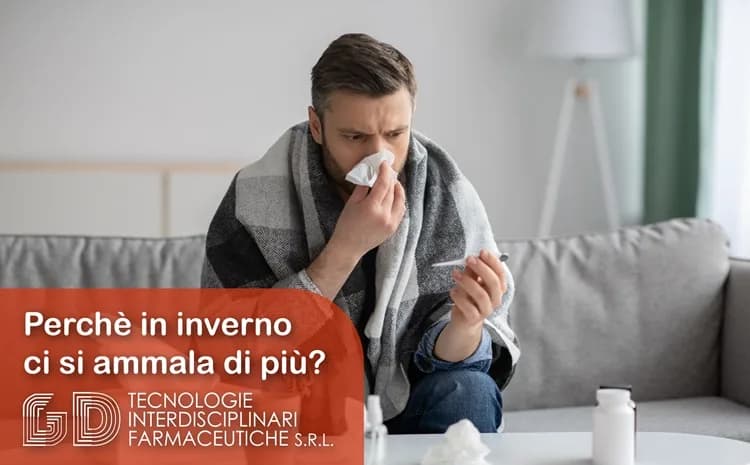
Why do we get ill more in winter?
“He must have caught a chill”, grandmothers often say when they find themselves looking after grandchildren stuck in bed with a raging fever.
But is it really all the weather's fault that we get ill more often in winter?
Winter cold does play a role, but a different one from what is commonly believed.
Cold air makes us ill, but not directly
Most seasonal illnesses, such as colds or throat infections, have a viral origin.
This means they depend on specific microorganisms, viruses, which behave like parasites, attacking the cells of other living beings in order to multiply.
If we expose ourselves to an icy wind during a snowfall, but do not come into contact with any virus, we do not risk getting ill at all.
But if, to shelter from the cold, we take refuge in a room with ten other people, the chances of catching a cold or flu rise sharply.
Enclosed, heated spaces, in fact, are places that offer the perfect conditions for the proliferation of viruses and bacteria, which love warmth but struggle to survive at low temperatures.
Heating also makes the air dry, dehydrating the nasal mucous membranes, which become less efficient.
Paradoxically, being outdoors in winter protects us from infection that can spread through contact with others or through the air, via the droplets of saliva released when we sneeze, cough or simply talk.
The closer you are to an infected person, perhaps in a space with no air circulation, the more likely you are to be affected.
Cold air, then, does not make us ill directly.
But it can push us into risky situations.
Winter and low immune defences
There is also another reason why, especially in autumn and winter, we more often tend to catch respiratory illnesses, which confine us to bed, sneezing and coughing.
Cold can contribute to weakening our immune defences, which are then unable to protect us from the onslaught of viruses.
What happens in practice?
What happens is that low temperatures inhibit the activity of ciliated cells, which line the mucous membranes of the nose and trachea and have the function of repelling infectious agents that enter the body through the air we breathe, helping to expel mucus.
In the cold, this super-efficient filter does not work properly: as a result, mucus, with its load of harmful substances, stagnates in the upper airways, causing inflammation and infection.
How can you tell if your immune defences are low?
Some groups of people are more exposed to seasonal ailments.
We are talking, of course, about children and the elderly.
The former, especially newborns and infants, have an immature immune system, not yet fully formed and responsive, which has to learn how to react to pathogens. Their defences have yet to develop fully, through the stimuli they receive from the outside environment.
For the elderly, it is a different story. Their lower resistance to attack by pathogens depends on systemic ageing, which also affects the body's natural defences, which become greatly weakened and slowed down.
The immune system of older people is less effective in several respects:
- its ability to distinguish between what is endogenous (that is, internal) and what is exogenous (that is, coming from outside) is reduced, with a greater risk of developing autoimmune diseases
- The cells whose job is to destroy bacteria and substances foreign to the body (macrophages) are slower to carry out this “cleaning” operation;
- T lymphocytes, white blood cells capable of memorising antigens and recognising them when they meet them again, respond less quickly;
- the number of white blood cells decreases
- the ability of antibodies to bind to foreign agents and destroy them decreases
But in general, how can you tell that your immune defences are low?
You need to pay attention to a series of signals from your body and act accordingly. You may suspect a drop in your defences when, during the change of season or in the colder months, you repeatedly experience episodes of fever, cough, sore throat due to infections, or colds.
Other signs of a weakened immune system are a feeling of weakness and persistent fatigue, dehydrated skin, anaemia and muscle pain.
These, however, are very general symptoms that can be associated with various health conditions and problems of different kinds.
For this reason, when you feel unwell, it is always best to get the opinion of your own doctor, who can examine you, assess the case and prescribe the most appropriate therapy.
How to strengthen your immune system naturally in winter
At this point you will be wondering what steps to take in winter to strengthen your body, so as to avoid getting ill too often.
Below we give you some useful tips for stimulating your immune system and keeping it working perfectly even during the cold season.
There are 3 main causes of a drop in defences between autumn and winter: stress, a poor diet and poor-quality sleep.
Stress and the immune system: to feel better, you need to rest
Several studies have shown that stress, especially chronic stress, can compromise our health. Prolonged stress puts our body under strain, overloading it with cortisol.
We sleep less because of worries and nervousness, we rest badly and we have neither the energy nor the clarity to carry out our daily activities.
Meanwhile, the body reacts to the substances released into the bloodstream: the number and type of white blood cells in the blood and tissues change, and so do the substances they produce.
Stress also causes a change in the composition of the gut microbiota and of the populations of microorganisms that colonise the various mucous membranes of our body.
The “good” bacteria that make up the protective bacterial flora decrease, the pathogenic ones increase and, at the same time, the gut becomes more permeable, unable to filter toxins and pathogens properly, which then have free access to the bloodstream.
To prevent all this, then, we need to limit stress and learn to manage it, allowing ourselves moments of rest that restore body and mind.
Diet and the immune system: eating well and supplementing for efficient defences in winter
As we often say, diet plays a central role.
Eating badly, irregularly and without balancing nutrients can seriously compromise our health, exposing us to all kinds of illness.
For this reason, we need to adopt a healthy diet suited to our lifestyle and to how much exercise we take.
An athlete who spends many hours training will have different nutritional needs from an office worker who sits at a desk all day or from someone who has chosen to follow a vegan diet (based solely on plant foods, with no food of animal origin).
The general principles, however, are always the same for everyone: limit foods rich in saturated fats and cholesterol and instead favour foods rich in valuable nutrients, vitamins and minerals.
All pro-inflammatory foods, which overload and tire the body and the immune system, such as packaged foods high in fat and sugar, should be avoided or at least always eaten in moderation.
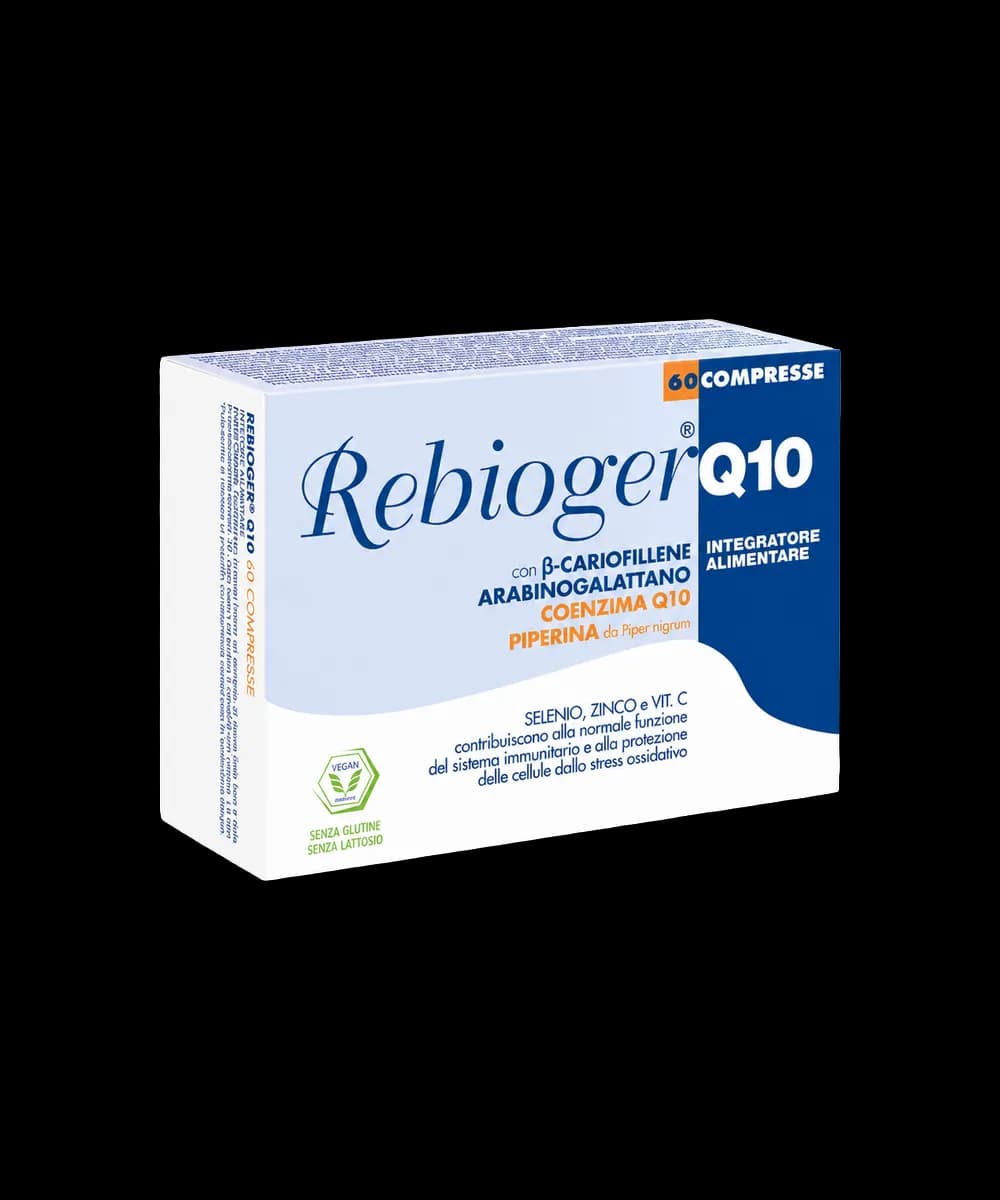
To help your defences stay in perfect working order, you may also consider taking specific food supplements such as Rebioger Q10 in its new formulation enhanced with b-caryophyllene derived from hemp.
Thanks to its specific composition, this 100% vegan and gluten-free food supplement is extraordinarily useful when immune defences are low.
Arabinogalactan and echinacea have an immunostimulating action: together, these two substances can improve the general functioning of the immune system, boosting its response against infectious agents and viral invasions and, in effect, increasing the body's resistance to disease.
The antioxidant action of Rebioger Q10, on the other hand, comes from the combination of piperine and Coenzyme Q10, an elixir of health and youth, which helps counteract the effects of free radicals, responsible for the general ageing of the body.
The novelty, however, is an additional ingredient that makes Rebioger Q10 even more complete and effective.
This is beta-caryophyllene, a natural phytocannabinoid with anti-inflammatory, antimicrobial and analgesic properties, used in the treatment of inflammatory states and for pain management.
Adequate rest and physical activity to improve immune defences before winter
To keep your immune defences fully efficient, adequate rest is also important.
Restful sleep is not just for recharging your batteries to face a new day!
According to some studies, the quantity and above all the quality of our sleep directly affects the efficiency of our immune system.
Proper rest should also be combined with a good dose of physical activity, in all its many forms.
Moving makes it possible to counteract the effects of today's widespread sedentary lifestyle, to keep weight and various values such as cholesterol and triglycerides under control and to improve general health, also strengthening the immune system.
Be careful, though, not to overdo it.
Activity that is too intense and prolonged over time can have the opposite effect, weakening us and exposing us more to the risk of infection.
In short, a healthy lifestyle and the right supplementation can help us a great deal in avoiding seasonal ailments.
Please note
Information provided for informational purposes only, which cannot constitute a diagnosis, the prescription of a treatment, or a substitute for direct contact with a doctor or a specialist consultation. Always seek the advice of your own doctor and/or specialists.
For any reports or complaints, please contact the owner of this website at gdtif@gditalia.biz