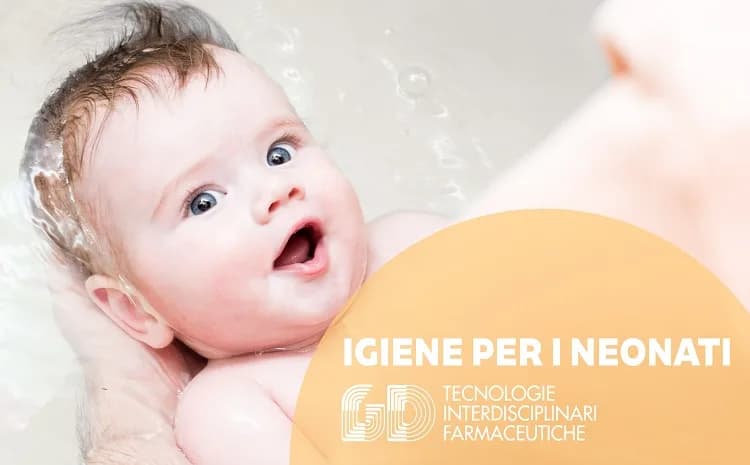
Newborn hygiene: the ABC for new parents
When a baby is born, your routine is sweetly turned upside down, between baths and nappy changes. How can you best look after your newborn's hygiene?
Becoming a parent is an immense joy, a life-changing event. However much you prepare, the birth of your first child brings with it a great many changes, both psychological and practical, in your daily routine.
You have to look after a defenceless little creature, who needs everything and depends completely on you for their survival and wellbeing. It is an enormous responsibility that brings doubts and worries, feelings that are completely normal in the face of all this.
Among the many things you have to take care of is your newborn's hygiene, between baths and nappy changes. How do you do it? Which products should you choose to respect your baby's skin? What should you use for nappy rash?
All the answers are in our little guide for new parents: simple practical rules and tips for mums and dads who want to look after their child with peace of mind.
The importance of bath time
Bath time is a very important habit for little ones and should be done every day, on a regular basis. Not only for hygiene reasons, since it drastically reduces the presence of germs and bacteria, but also because it brings great wellbeing to the newborn baby. During this small daily ritual, in fact, the baby relaxes and receives multisensory stimulation that supports their development.
How?
Because, during bath time, different elements come into play: the skin-to-skin contact with the parent, who strokes, cleans and massages the baby (tactile stimulation); eye contact (visual stimulation); mum's or dad's voice, which entertains the baby, reassures them and plays with them (auditory stimulation).
In short, bath time is not just a hygiene routine, it is much more.
It is an intimate experience that helps to strengthen the bond between child and parent (mum or dad) and helps the child grow up calm and content. It is best, then, for it all to happen calmly, without rushing and without noise or distractions that could take mum's or dad's attention away from the baby.
The first bath
You should give the first bath once the umbilical stump has fallen off. Before that happens, you can wash your newborn with sponge baths using a terry towel soaked in lukewarm water.
Always pay particular attention to the most delicate areas of the body: face, neck and genitals. It is important never to use sponges, because they would need sterilising after every use, as they can become a real breeding ground for germs and bacteria.
The room where the bath takes place should be prepared in advance. It is best that the temperature in the room does not exceed 24/26° and that there are no draughts. Get everything you need ready beforehand, so that you do not have to step away to fetch that bottle or towel you left in the bedroom.
How to wash your newborn
You can wash your baby directly in the sink or in a small basin, remembering to place a mat on the bottom to prevent slipping. The water temperature must not exceed 37°. You can measure it with a special thermometer.
Fill the sink or baby bath with a little lukewarm water, then add the product you have chosen for your newborn's hygiene. Little ones' skin is very delicate, so it is best to choose a cleanser with a physiological pH.
Among the GD products dedicated to little ones' hygiene, we suggest using Isoderma, a balanced, soap-free neutral cleanser, which turns daily hygiene into a little moment of pampering. Isoderma respects the skin's natural pH, cleanses extremely gently, moisturises deeply and, thanks to collagen and coconut oil, rebuilds the skin's protective mantle.
At this point, undress your baby, always very gently, paying attention to the position of the head and shoulders while you take their clothes off.
Lower your baby into the water slowly.
The best way to wash them is by holding the little one in a sitting position, with their head resting on your forearm so as to support them and have a secure grip, a bit as if you were cradling them in your arms. This way, you will prevent your child from slipping and you will have one hand free to soap and rinse them.
Start with the head, then move on to the face and body, always slowly and gently. The hair can be washed with the same gentle cleanser you use for the skin or with Tricodin Shampoo delicato HF, formulated to cleanse deeply without causing irritation. It is a nourishing, moisturising and protective shampoo that releases all the beneficial power of vitamins H and F, which support the health of skin and hair and help against erythema and scaling.
Once you have washed your baby thoroughly, you can lift them out of the baby bath. Be careful not to pick them up by the arms, as you could hurt them. Wrap them well in a clean, soft towel or a small bathrobe and dry them.
To dry their hair, there is no need to use a hairdryer. Gently rubbing it with the same towel will be enough.
After the bath: talcum powder or not?
When we were little, our grandmothers and mothers used to sprinkle us with talcum powder after bath time. This product, in fact, helps to keep the skin dry and fragrant in some of the most delicate areas of the body that are prone to irritation, especially the genitals.
Recently, however, the trend has been to advise against using talc on newborns, because of the risk that little ones inhale the powder and also because, if not used correctly, it builds up in the skin folds, clogging pores and making normal skin transpiration more difficult.
If you do want to use it, then, it is best to avoid the face and make sure your baby does not play with the container.
On the other hand, go ahead with moisturising products such as creams and oils, which can be applied to the skin with a pleasant massage.
Changing nappies and cleaning the intimate areas
One of the things you absolutely have to learn when a baby arrives home is how to change their nappy. It is essential for the baby's hygiene and should be done several times a day, whenever needed, to avoid moisture building up and the onset of irritation or infection.
Whether you use traditional ones or washable ones (which help limit the impact on the environment), changing a nappy is quite a simple and quick operation.
Before doing so, make sure the room you are in is at a suitable temperature. The temperature regulation mechanism of newborns, in fact, is not yet as efficient as ours as adults. You must avoid them getting cold or being exposed to draughts.
The changing table or surface on which you place your baby should be large enough for you to move easily and to have all the products you need within reach.
As with bath time, it is important never to take your eyes off your child, not even for a few seconds.
Your baby could in fact move, roll over and fall off the changing table.
Wash your hands well before changing your newborn's nappy. Then lay them carefully on the changing table, on their back, so that you can free their little legs from the bodysuit and babygrow, which should be pushed upwards so they do not get dirty.
Now it is time to open the dirty nappy, without removing it. Before sliding it off, lift your baby's legs upwards so they do not get dirty.
Attention, mums and dads of baby boys!
During a nappy change, baby boys may pee like a little fountain. Unsuspecting new parents often get “sweetly” sprinkled by their newborns. If you want to avoid this little mishap, you can place a terry towel over the baby's penis.
At this point, fold the nappy and slide it out from under their bottom.
Before putting on a clean one, you will need to wash your baby carefully. What you need to do differs depending on the baby's sex:
- if it is a baby girl, take care to remove all the dirt that collects between the labia minora and labia majora, where traces of faeces can often get in. When cleaning the intimate areas, always move from the genitals towards the anus. Never move in the opposite direction, as this could carry germs from the baby's faeces towards the urinary tract, causing infections.
- if it is a baby boy, washing the intimate areas must be just as thorough and careful. Avoid, however, pulling back the foreskin. This manoeuvre, known as “retraction”, can be very painful and traumatic for the baby and is not at all necessary to ensure the little one's intimate hygiene.
To clean your baby, you can use a clean sponge dipped in a basin of lukewarm water. If they are only wet with urine, water is enough. Otherwise, it is best to use a cleansing product.
Always choose an extremely gentle intimate cleanser such as Isoderma. Do not use products containing fragrance, an extremely irritating substance. Disposable wipes are only recommended when you are away from home.
If your baby has nappy rash or nappy dermatitis, apply a small amount of Eutrodin soothing and protective cream with anti-inflammatory action, specifically formulated to care for chronically irritated skin.
After thorough cleansing, you can apply a nappy paste that helps moisturise the skin, keeping it soft and protecting it from the irritants contained in urine and faeces.
Finally, you can open the clean nappy, slide it under your baby's back and fasten it, making sure it is not too tight.
Hygiene of your newborn's clothes
Now that your little one is washed and changed, we can dress them again. There are a few simple guidelines for choosing the most suitable clothes for your baby.
A small rule to keep in mind: always buy clothes slightly bigger than your child's actual size, so that they are also easy to put on and take off.
Remember to remove the labels from the clothes. Babies' skin is extremely delicate and gets irritated easily on contact with foreign objects.
Before your child wears a new item of clothing, whether it is a babygrow, a bodysuit or perhaps a little hat, put the garment in the washing machine for a preventive wash. On the fabric, among the fibres and invisible at first glance, there could be residues of substances that are toxic or irritating to their skin.
So it is better to sanitise the clothes before putting them on your baby.
In another article we have also talked about the rules to follow when doing little ones' laundry. You can find it by clicking here.
For deep, safe hygiene of little ones' clothes and linen, we suggest using Nevoxil. It is our sanitiser based on sodium percarbonate, a molecule that releases nascent oxygen on contact with water, able to act deep into the fabric fibres. It sanitises all garments, eliminating spores, fungi, cocci and bacteria.
It can be used in the washing machine, in addition to your normal detergent, or for hand washing, and it is effective even in water at 30° (or at low temperatures).
For any reports or complaints, please contact the owner of this website at the email address gdtif@gditalia.biz