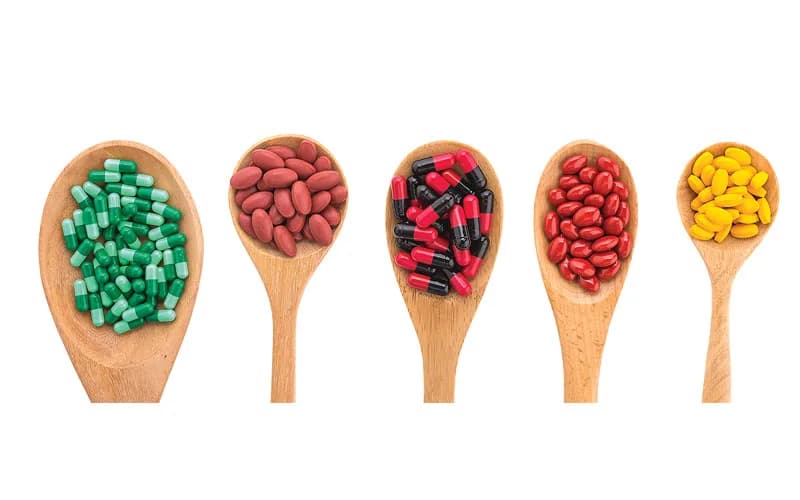
Medicines and food interactions
Medicines and food interactions
This study aims to provide information on possible interactions between medicines, and the substances they contain, and food, alcohol and caffeine; however, it must not replace the advice of your doctor or pharmacist.
Medicines can treat and cure many conditions, and therefore improve your general state of health. However, they should only be taken after making sure that they are safe and effective. Many medicines contain substances that interact with the human body in different ways; diet and lifestyle can significantly affect how effective a medicine is. Some foods, drinks, alcohol, caffeine and cigarettes can interact with the substances contained in medicines. This can cause dangerous effects or other serious problems. When you take a medicine, make sure you follow your doctor's instructions carefully to obtain the maximum benefit with the minimum risk. The effect on a medicine of an interaction with food, alcohol or caffeine can be significant and is governed by many individual factors such as dose, age, weight, sex and general state of health. This study aims to provide all the information on possible interactions between medicines, and the substances they contain, and food, alcohol and caffeine; however, it must not replace the advice of your doctor or pharmacist. If you have any doubts about the information in this study, consult your doctor or pharmacist. Make sure your doctor and pharmacist know about every medicine you are taking, including non-prescription medicines and dietary supplements such as vitamins, minerals and herbal products. It is also important to remember that many medicines interact with other medicines and can cause serious harm.
ALLERGIES
Antihistamines are used to relieve or prevent the symptoms of colds, hay fever and allergies. They work by limiting or blocking the histamine released by the body in response to exposure to substances that cause allergic reactions. Antihistamines are available with or without a prescription. These products can cause drowsiness of varying intensity.ANTIHISTAMINESExamples are:
- CHLORPHENAMINE MALEATE
- DIPHENHYDRAMINE HYDROCHLORIDE
- LORATADINE
- CETIRIZINE HYDROCHLORIDE
- ASTEMIZOLE
InteractionFood: it is best to take antihistamines on an empty stomach to increase their effectiveness.Alcohol: Some antihistamines can increase drowsiness. Take care when driving or operating machinery.
ARTHRITIS AND PAIN
ANALGESICS/ANTIPYRETICSThey treat moderate pain and fever. Examples are:
- PARACETAMOL
InteractionFood: For rapid relief, take the medicine on an empty stomach, because food slows the absorption of paracetamol into the body.Alcohol: Avoid or limit alcohol, because it can increase the risk of liver damage or stomach bleeding. Talk to your doctor or pharmacist before taking these medicines.
NON-STEROIDAL ANTI-INFLAMMATORY DRUGS (NSAIDs)
They reduce fever, pain and inflammation. Examples are:
- ACETYLSALICYLIC ACID
- IBUPROFEN
- NAPROXEN SODIUM
- KETOPROFEN SODIUM
- NABUMETONE
InteractionFood: Because these medicines can irritate the stomach, it is preferable to take them with food or milk.Alcohol: Avoid or limit alcohol, because chronic alcohol use can increase the risk of liver damage or stomach bleeding. Talk to your doctor or pharmacist before taking these medicines. Buffered or coated aspirin may be preferable to regular aspirin, as it is less likely to cause stomach bleeding.
CORTICOSTEROIDS
Corticosteroids reduce swelling and itching, and help resolve allergic, rheumatic and other conditions. Examples are:
- METHYLPREDNISOLONE
- PREDNISONE
- PREDNISOLONE ACETATE
InteractionFood: Take with food or milk to prevent stomach damage.
NARCOTIC ANALGESICS
Narcotic analgesics are available on prescription only. They act moderately on forms of acute pain. Codeine can also be used to relieve coughs. Some of these medicines are sold in combination with non-narcotic ingredients such as paracetamol and aspirin, or as ingredients of cough syrups. They should be taken with caution and only on the advice of a doctor or pharmacist, because they can be addictive and cause serious side effects when used improperly. Examples are:
- CODEINE with PARACETAMOL
- MORPHINE SULPHATE
InteractionAlcohol: Avoid alcohol, because it increases the sedative effects of these medicines. Take care when driving.
ASTHMA: BRONCHODILATORS
Bronchodilators are used to treat the symptoms of bronchial asthma, chronic bronchitis and emphysema. These medicines work by improving the flow of air to the lungs, thereby improving breathing. Examples are:
- THEOPHYLLINE
- SALBUTAMOL
- EPINEPHRINE (ADRENALINE)
InteractionsFood: The effect of food on theophylline-based medicines can vary. Very fatty meals can increase the concentration of theophylline in the body, while meals high in carbohydrates can decrease it. It is important to check with your pharmacist the pharmaceutical form you are taking, because food can have different effects depending on the dosage form.Caffeine: Avoid drinks and foods containing caffeine (chocolate, cola, coffee, tea), because oral bronchodilators and caffeine both stimulate the central nervous system.Alcohol: Avoid alcohol if you are taking theophylline-based medicines, because it can increase nausea, vomiting, headache and irritability.
CARDIOVASCULAR DISORDERS
There are numerous medicines that treat cardiovascular disorders such as blood pressure, angina, irregular heart rhythm and high cholesterol. These medicines are used in combination to improve their effectiveness. For example, beta blockers can be used to treat hypertension, angina and arrhythmias. Some of the classes of cardiovascular drugs are:
- DIURETICS
Diuretics help eliminate water, sodium and other salts from the body. There are different types of diuretics. Examples are:
- FUROSEMIDE
- TRIAMTERENE AND HYDROCHLOROTHIAZIDE
- HYDROCHLOROTHIAZIDE
- TRIAMTERENE HYDROCHLORIDE
- BUMETANIDE
- METOLAZONE
InteractionsFood: Diuretics have various interactions with food. Some diuretics cause loss of potassium, calcium and magnesium. Triamterene, on the other hand, impairs the renal excretion of potassium, thus causing hyperkalaemia (raised potassium). Excess potassium can lead to an irregular heartbeat and palpitations. When taking triamterene, avoid eating foods rich in potassium such as bananas, oranges and vegetables, or salt substitutes containing potassium.
BETA BLOCKERS
Beta blockers decrease nerve impulses to the heart and blood vessels. This lowers the output and workload of the heart. Examples are:
- ATENOLOL
- METOPROLOL TARTRATE
- PROPRANOLOL HYDROCHLORIDE
- NADOLOL
InteractionAlcohol: Avoid alcohol with PROPRANOLOL HYDROCHLORIDE: the combination lowers blood pressure.
NITRATES
Nitrates relax the blood vessels and lower the heart's demand for oxygen. Examples are:
- ISOSORBIDE NITRATE
- NITROGLYCERIN
InteractionsAlcohol: Avoid alcohol, because it can enhance the vasodilating effect of nitrates, leading to dangerously low blood pressure.
ANGIOTENSIN-CONVERTING ENZYME
These relax the blood vessels by preventing the formation of a vasoconstrictor (angiotensin II). Examples are:
- CAPTOPRIL
- ENALAPRIL MALEATE
- LISINOPRIL DIHYDRATE
- QUINAPRIL HYDROCHLORIDE
- MOEXIPRIL HYDROCHLORIDE
InteractionsFood: Food can reduce the absorption of CAPTOPRIL and MOEXIPRIL HYDROCHLORIDE. Take captopril and moexipril one hour before or two hours after meals. ACE inhibitors can increase the concentration of potassium in the body. Too much potassium can be harmful. Avoid eating foods with a high potassium content such as bananas, vegetables and oranges.
HMG-CoA REDUCTASE INHIBITORS
Otherwise known as "statins", these medicines are used to lower cholesterol: they reduce the rate of production of LDL (bad cholesterol). Some of these medicines also lower triglycerides. Recent studies have shown that pravastatin can reduce the risk of heart attack. Examples are:
- ATORVASTATIN CALCIUM
- CERIVASTATIN SODIUM
- FLUVASTATIN SODIUM
- PRAVASTATIN SODIUM
- SIMVASTATIN
InteractionsAlcohol: Avoid drinking large amounts of alcohol so as not to increase the risk of liver damage.Food: Statins should be taken with the evening meal to improve their absorption.
ANTICOAGULANTS
Anticoagulants help prevent the formation of blood clots. An example:WARFARIN SODIUM InteractionsFood: Vitamin K produces substances that interfere with blood clotting, reducing the effectiveness of anticoagulants. So limit your intake of foods rich in vitamin K (such as broccoli, spinach, turnip greens and cauliflower). High doses of vitamin E (400 IU or more) can prolong clotting time and increase the risk of bleeding. Consult your doctor before taking vitamin E.
INFECTIONS: ANTIBIOTICS AND ANTIFUNGALS
Different types of medicine are used to treat infections caused by bacteria and fungi. Some general advice:
- Tell your doctor if you have had skin rashes with antibiotics. A rash can be a symptom of an allergic reaction, which can also be very serious.
- Tell your doctor if you suffer from diarrhoea.
- Tell your doctor if you use contraceptives, because some products can become less effective if taken with antibiotics.
- Make sure you finish the whole course even if you feel well.
- Take them with plenty of water.
ANTIBACTERIALS
PENICILLINExamples are:
- AMOXICILLIN TRIHYDRATE
- AMPICILLIN TRIHYDRATE
InteractionsFood: Take the medicine on an empty stomach, but if you have stomach problems, take it with food.
QUINOLONES
Examples are:
- CIPROFLOXACIN HYDROCHLORIDE
- LEVOFLOXACIN
- OFLOXACIN
InteractionsFood: Take them on an empty stomach one hour before or two hours after meals. If you have stomach problems, take them with food. In any case, avoid products containing calcium such as milk and yoghurt, vitamins or minerals containing iron, and antacids, which significantly lower the concentration of the medicine.Caffeine: Taking these medicines with caffeine or products containing it (coffee, cola, tea and chocolate) can increase caffeine levels.
CEPHALOSPORINS
Examples are:
- CEFACLOR MONOHYDRATE
- CEFADROXIL MONOHYDRATE
- CEFIXIME
- CEFPROZIL MONOHYDRATE
- CEFALEXIN LYSINE SALT
InteractionsFood: Take the medicine on an empty stomach one hour before or two hours after meals. Take it with food if you have stomach problems.
MACROLIDES
Examples are:
- AZITHROMYCIN DIHYDRATE
- CLARITHROMYCIN
- ERYTHROMYCIN
InteractionFood: Take the medicine on an empty stomach one hour before or two hours after meals. Take it with food if you have stomach problems.
SULPHONAMIDES
An example is: SULFAMETHOXAZOLE AND TRIMETHOPRIM (CO-TRIMOXAZOLE)InteractionsFood: Take the medicine on an empty stomach one hour before or two hours after meals. Take it with food if you have stomach problems.
TETRACYCLINES
Examples are:
- TETRACYCLINE HYDROCHLORIDE
- DOXYCYCLINE HYDROCHLORIDE
- MINOCYCLINE DIHYDROCHLORIDE
InteractionFood: Take the medicine on an empty stomach one hour before or two hours after meals. Take it with food if you have stomach problems. However, it is important to avoid taking tetracyclines together with dairy products, antacids and vitamins containing iron, because these can interfere with the effectiveness of the medicine.
NITROIMIDAZOLES
An example:
- METRONIDAZOLE
InteractionAlcohol: Avoid drinking alcohol, using medicines that contain alcohol or eating foods prepared with alcohol while you are taking metronidazole and for at least three days after you finish the course. Alcohol can cause nausea, abdominal cramps, vomiting and headache.
ANTIFUNGALS
Examples are:
- FLUCONAZOLE
- GRISEOFULVIN
- KETOCONAZOLE
- ITRACONAZOLE
InteractionFood: It is important to avoid taking these medicines with dairy products (milk, cheese, yoghurt and ice cream) or antacids.Alcohol: Avoid drinking alcohol, using medicines that contain alcohol or eating foods prepared with alcohol while you are taking ketoconazole/NIZORAL and for at least three days after you finish the medicine. Alcohol can cause nausea, abdominal cramps, vomiting and headache.
MOOD DISORDERS: DEPRESSION, MOOD DISORDERS, ANXIETY
Depression, panic and anxiety are some examples of mood disorders. When using medicines to treat mood, it is important to follow your doctor's instructions. Remember to take your dose even if you are feeling well, and do not stop unless your doctor tells you to. In some cases you need to wait many weeks to see an improvement in symptoms.
MONOAMINE OXIDASE INHIBITORS (MAOIs)
Examples are:
- TRANYLCYPROMINE AND TRIFLUOPERAZINE
InteractionsMAO inhibitors have many dietary restrictions, and people who take them need to follow dietary guidelines and their doctor's instructions very carefully. A rapid, potentially fatal rise in blood pressure can occur if foods or alcoholic drinks containing tyramine are consumed while taking MAO inhibitors.Alcohol: Do not drink beer, red wine or other alcoholic drinks.Food: Foods high in tyramine should be avoided, including:
- mozzarella, cheese, yoghurt, sour cream.
- beef or chicken liver; sausage and salami; ready-to-eat meat; caviar; dried fish.
- bananas, yeast extracts, raisins, soy sauce
- beans, ginseng, products containing caffeine (cola, coffee, chocolate and tea).
ANTI-ANXIETY MEDICINES
Examples are:
- LORAZEPAM
- DIAZEPAM
- ALPRAZOLAM
InteractionsAlcohol: Can impair driving and activities that require concentration.Caffeine: Causes excitability, nervousness and hyperactivity and reduces the anti-anxiety effects of the medicines.
ANTIDEPRESSANT MEDICINES
Examples are:
- PAROXETINE HYDROCHLORIDE
- SERTRALINE HYDROCHLORIDE
- FLUOXETINE HYDROCHLORIDE
InteractionsAlcohol: Although alcohol does not interact significantly with these medicines, it can still impair concentration and reflexes. In any case, people who are depressed should not drink alcohol.Food: These medicines can be taken with or without food.
ANTACIDS
Reflux of gastric juices, heartburn, digestive problems and wind are very common. Treatment prevents pain and the causes that increase hyperacidity. Lifestyle and dietary habits can play an important role in determining the symptoms of these conditions. For example, smoking cigarettes and consuming caffeine-based products can worsen symptoms.
ANTIHISTAMINES
Examples are:
- CIMETIDINE HYDROCHLORIDE
- FAMOTIDINE
- RANITIDINE HYDROCHLORIDE
- NIZATIDINE
InteractionsAlcohol: Avoid alcohol with these medicines. Alcohol can irritate the stomach.Food: They can be taken with or between meals. Caffeine: Caffeine-based products (cola, chocolate, tea, coffee) can irritate the stomach.
"This article has been freely extracted from the GioFil database. For any reports or complaints, please contact the owner of this website via our contact page"