Hair loss in autumn. Causes and remedies
In autumn the leaves fall, and so does your hair. If you have noticed heavier hair loss, this article will answer your questions.
Autumn arrives, the season of chestnuts. The trees shed their leaves, which fall to the ground.
But hair falls out too, more often than usual.
We find it on the brush when we comb our hair. Or in the shower tray after washing. Sometimes, simply running a hand through your locks is enough to end up with a few hairs between your fingers.
In general, losing hair is a normal, everyday occurrence.
Hair has a life cycle divided into three phases:
- anagen, or growth phase
- catagen, or regression phase
- telogen, or resting phase
When the telogen phase arrives, the hair has reached the end of its life.
It has by now ceased all activity and vital function. So even a slight pull is enough for it to detach from the scalp and fall out.
On average, a hair “lives” between 2 and 7 years. When it falls out, the hair bulb gets ready to start again, producing a new hair that replaces the previous one.
Why do we lose more hair in autumn?
But if hair has its own life cycle, why do we lose more of it in autumn?
Let's start by saying that the reference to the chestnut season (or to the leaves) falling from the trees is just a way of indicating the time of year when we see this phenomenon.
Obviously, there is no real correlation between hair, chestnuts and leaves.
Do you think the drop in temperature is to blame?
In truth, that is a myth, one of many about hair.
It seems the real culprit is the sun.
First of all, because during the summer we are more exposed to solar radiation and this puts the scalp under greater stress, weakening the hair.
So heavier hair loss in autumn is a “delayed effect” of what happened during the summer months.
However, studies also seem to suggest that the sharp fall in the number of daylight hours also affects hair loss.
With the arrival of autumn, the days get shorter and it starts getting dark earlier. Our body has to deal with this change by adjusting its “biological clock”.
To do so, it triggers a process that leads to increased production of melatonin.
This hormone, which regulates the sleep-wake cycle, also affects the life cycle of the hair, speeding up hair fall to promote the growth of new hairs.
Seasonal hair loss: how long does it last
So hair loss in autumn is an entirely natural and physiological occurrence.
And it is also temporary.
To the question “How long does seasonal hair loss last?”, we can answer: not long.
Hair loss usually resolves on its own within a few weeks.
A little patience and everything goes back to normal.
When should you worry about hair loss?
There is no need to tear your hair out.
At least as long as we lose around a hundred hairs a day on average.
If this number increases, then concern is legitimate.
If you notice that your hair is thinning, the first thing to do is see an experienced dermatologist for a trichological examination.
Through direct observation and a series of tests, the doctor will be able to assess the situation and suggest the appropriate therapy to halt incipient baldness.
There could be many reasons why you have started losing hair.
It could be androgenetic alopecia, linked to hormonal factors.
It could be the beginnings of alopecia areata, which probably has an autoimmune origin.
But it could also be the result of severe stress.
Stress and hair loss: stress-related alopecia
Perhaps you are going through a particularly stressful period in your life, or you have experienced a traumatic event that had a very strong emotional impact on you.
What we go through affects our health.
Some people visibly lose weight, some suffer from emotional eating and some start losing a lot of hair.
This is so-called stress alopecia or psychogenic alopecia.
A phenomenon that affects men and women following physical stress (think, for example, of a car accident or a particularly difficult operation) or psychological stress.
The signs that may raise suspicion vary. Common symptoms of stress alopecia include:
- more pronounced seborrhoea, which shows up as oily, greasy hair due to abnormal sebum production by the glands. This condition could also lead to seborrhoeic dermatitis
- inflammation of the hair follicles, caused by the seborrhoea itself
- pain at the hair roots
- a feeling of itching and burning
- more fragile nails, which tend to break and split on their own
How to tell if your hair is stressed
The word stress used in relation to hair can also have another meaning.
When we talk about stressed hair, we mean a condition in which the hair is subjected to strain that damages it.
Hair is visibly stressed when it looks dry, rough and brittle, with open cuticles.
The opposite of how healthy hair looks.
What stresses hair?
Certainly, as we saw earlier, summer with its sunbathing, salt water and wind. Then excessive use of hairdryers and straighteners, and chemical treatments such as dyes and perms.
All this only overloads the hair, making it more fragile and prone to falling out.
How to fight hair loss in autumn
Now that we understand the causes, let's get to what interests us most: how to prevent and counteract hair loss in autumn. Here are some practical tips for looking after your hair before and during this somewhat critical period.
1) A healthy diet for healthy, strong hair
The health of our hair is also built at the table, through what we eat.
Choosing the right foods means nourishing our hair.
There are no magic foods, of course.
The soundest advice is always to follow a varied diet, rich in fresh, seasonal fruit and vegetables, limiting junk food, which brings no benefit to our body.
It is important to include foods such as Orange, Lemon, Kiwi and Broccoli, natural sources of antioxidants and iron that can strengthen hair and stimulate its growth.
Eat cereals such as Oats, Rye, Wheat and Spelt, because their insoluble fibres contain Folic Acid and Vitamin B6, which stimulate blood oxygenation in the hair follicles.
And then foods rich in protein, omega 3 and trace elements (magnesium, zinc and iron).
2) Less stress for your hair
As we have seen, hair is constantly subjected to various kinds of stress, even if we don't notice it.
To look after it, we should avoid as much as possible, or at least keep to the bare minimum:
- straightening
- perms
- overly aggressive or frequent dyes
- bleaching
It would also be better not to use straighteners and curling irons.
3) Monitor your hair loss
Heavier hair loss in autumn should not send us rushing for a remedy straight away.
There is a certain threshold beyond which the alarm goes off: 100 hairs a day, that is, 700 a week.
The advice, then, is to check how much hair you lose every day so that you can take the necessary steps as soon as you realise there is a problem.
4) Use a shampoo and conditioner suited to your hair type
Looking after your hair in autumn (and during the rest of the year) also means choosing the products best suited to your needs.
Not so much shampoo for curly or straight hair as shampoos specifically for oily or dry hair, or for hair affected by particular conditions such as dermatitis, psoriasis etc.
For several years, GD has been working on an integrated trichological system. A true protocol for the overall wellbeing and health of hair and scalp, which need to be treated, nourished and protected.
Our hair protocol includes:
- Aptodin Plus Retard, a vegan food supplement that prevents hair weakening and loss and counteracts androgenetic alopecia and defluvium capillorum
- NeoTricodin Frizione Idroalcolica, which slows hair loss and stimulates regrowth
- Tricodin Shampoo al Catrame, designed for hair with dermatitis or psoriasis
- Tricodin Antiforfora, which eliminates all types of dandruff, oily and dry, normalising sebum levels and leaving hair clean and hydrated
- Tricodin Capelli Grassi, which reduces and normalises sebum production, soothing irritation, redness and inflammation
- Tricodin Capelli Secchi e Sfibrati, restructuring, nourishing, moisturising and protective, suitable for stressed and damaged hair
- Tricodin Shampoo Delicato HF, for daily use
Autumn hair loss: supplements to use
In autumn, supplements based on vitamins, amino acids, antioxidants and minerals are usually recommended.
We want to offer you something different: a food supplement and a treatment lotion which, used together, achieve excellent results against hair loss.
These are Aptodin Plus Retard and NeoTricodin Frizione Idroalcolica, products whose effectiveness is based on a special formulation containing Serenoa Repens.
Studies and tests carried out by the University of Sassari on volunteer subjects show that after just 60 days of treatment with Aptodin Plus Retard and NeoTricodin Frizione, hair is stronger and more abundant.
It is not just about stopping hair loss.
The combined action of Aptodin Plus Retard and NeoTricodin Frizione also stimulates hair regrowth, leaving it visibly thicker.
For any reports or complaints, please contact the owner of this website at the email address gdtif@gditalia.biz
RECOMMENDED PRODUCTS
Stay updated
Recommended products
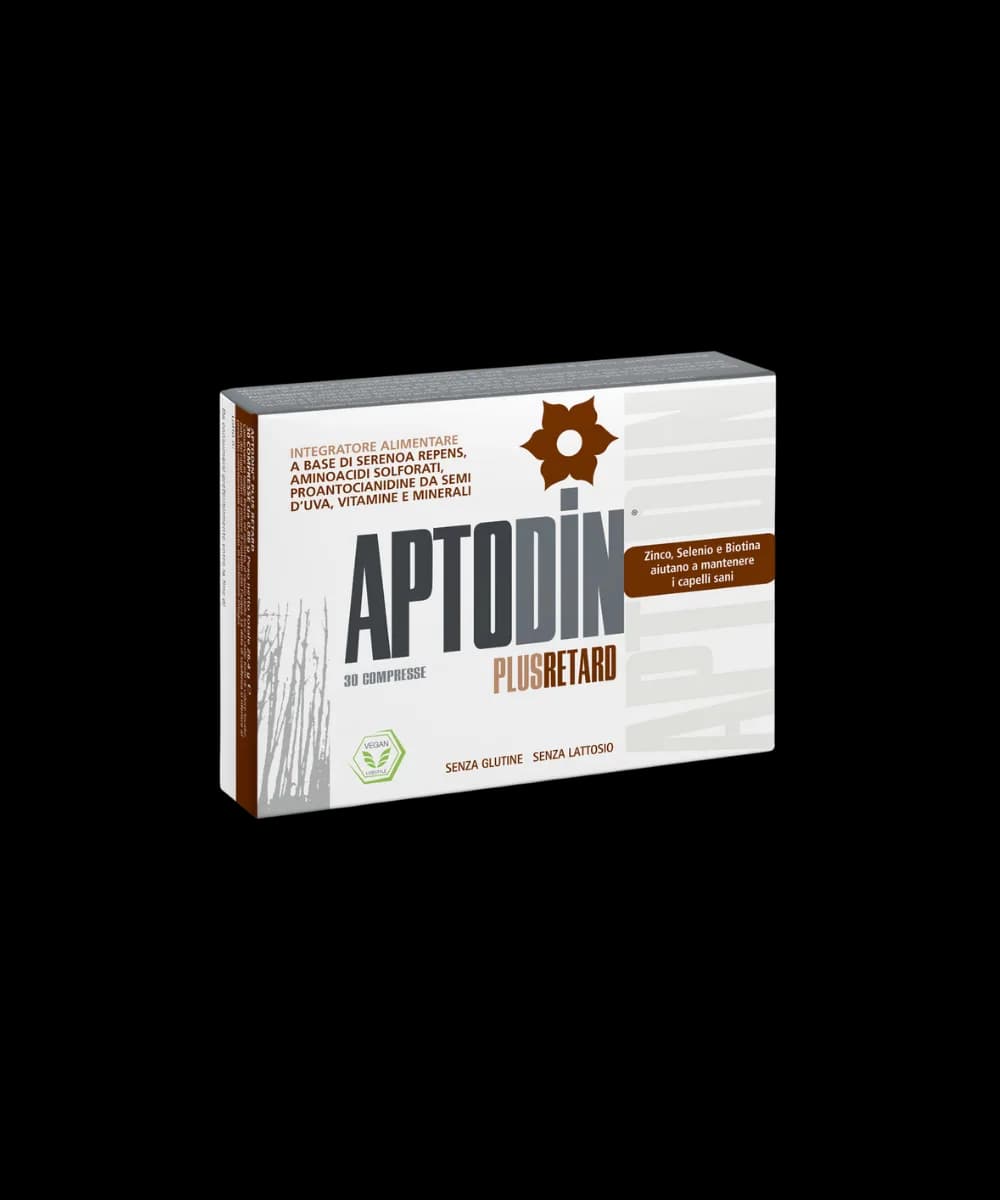
APTODIN PLUS RETARD
Aptodin Plus Retard is the food supplement of the GD Hair line, formulated to counteract hair loss and support the health of the hair from within. Its formulation contributes to the maintenance of normal hair and nails, supports normal cysteine synthesis and promotes the functionality of the microcirculation. For a complete action, we recommend combining it with Neo Tricodin Frizione and with the Shampoo and Conditioner of the Tricodin line.
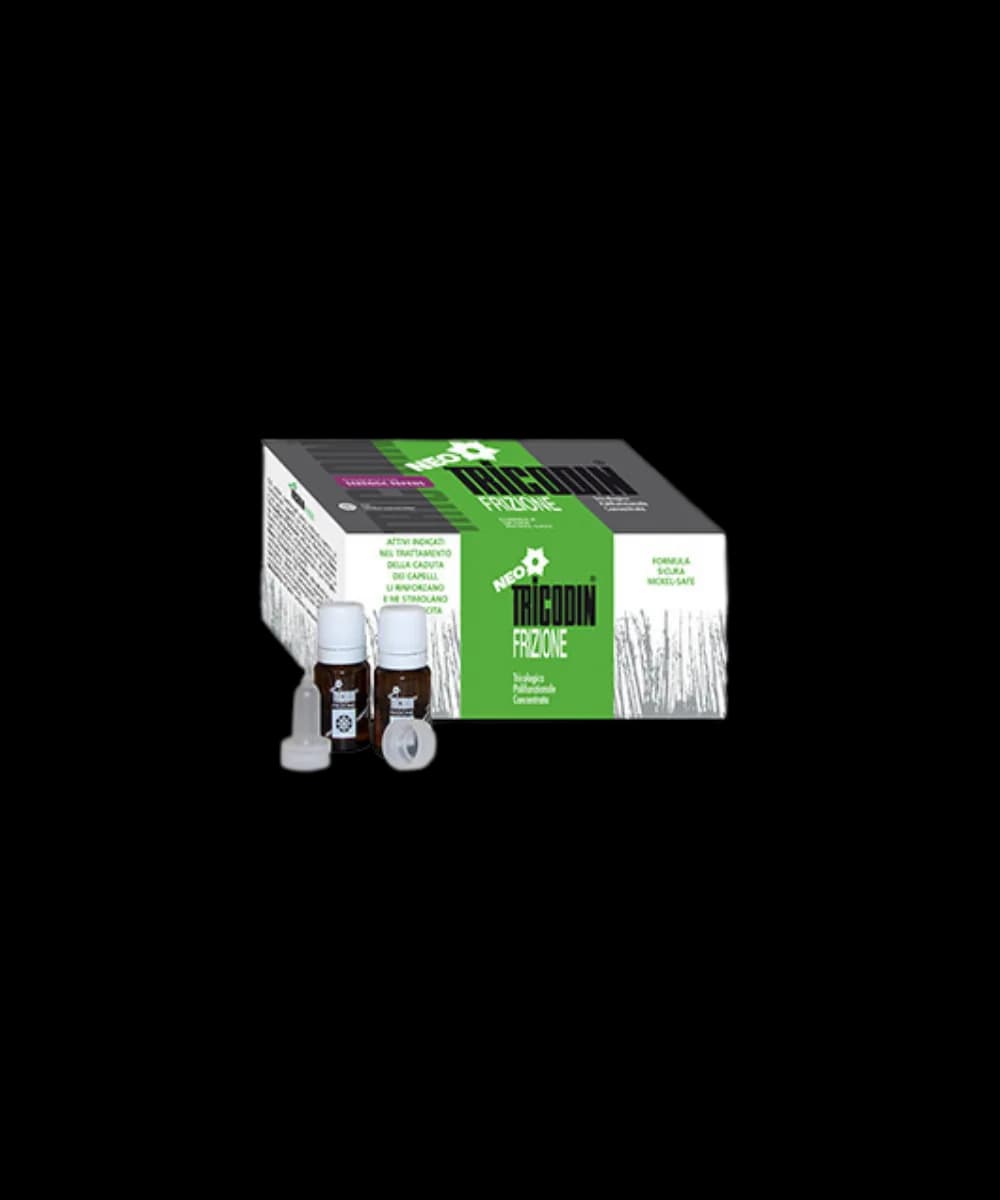
NEO TRICODIN FRIZIONE IDROALCOLICA
Neo Tricodin Frizione is the innovative anti-hair-loss treatment that literally goes to the root of the problem, making hair healthier, thicker and shinier. It is a concentrated hydroalcoholic lotion, designed to nourish and strengthen the hair, stimulating the hair bulbs so that they resume their normal life cycle. Its formulation is the result of a skilful blend of ingredients, carefully selected to give hair a burst of energy and to improve the microcirculation and the oxygenation of the tissues.