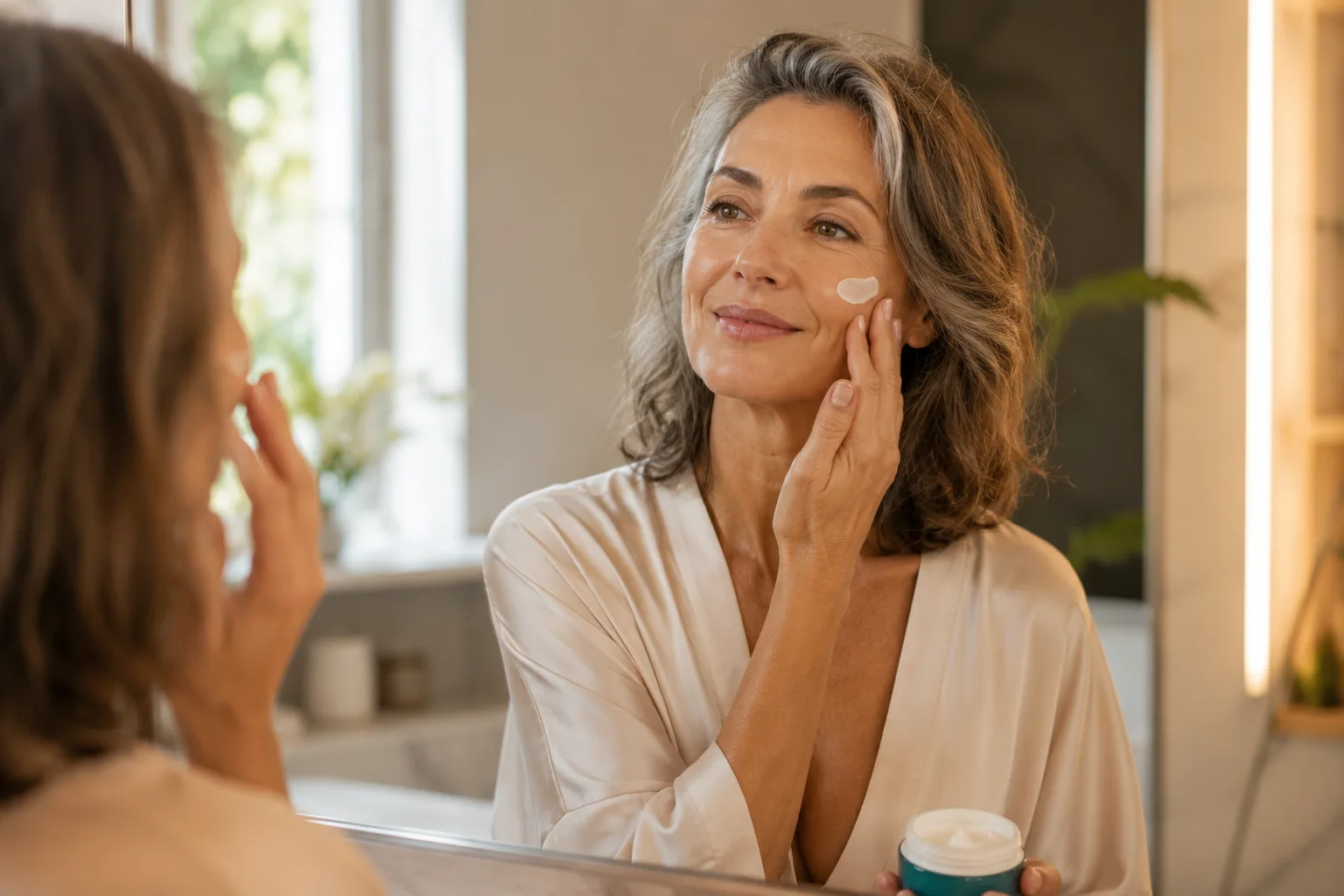
Menopause and skin: how it changes and how to care for it
During menopause the skin loses elasticity and hydration. Discover the most suitable treatments.
One day you realise that your usual cream is no longer enough. Your skin is drier, it feels tight, it seems to have lost the firmness you were used to. It is not just an impression: it is the menopause, and the changes it brings with it also affect the skin.
Understanding what happens on a physiological level helps you choose the right steps, without chasing impossible promises and without experiencing this phase as a loss. The skin changes, but it can continue to be healthy, protected and well cared for.
Why the skin changes during menopause
The drop in oestrogen is the main driver of these changes. Oestrogens support the production of collagen and elastin, regulate skin hydration and keep the microcirculation active. When their levels decrease, the skin progressively feels the effects.
In the first years after menopause, collagen loss can be quite rapid: the skin becomes thinner, less elastic, and the signs of time tend to become more evident. It is a natural physiological process, common to all women, although with different timing and intensity from person to person.
The main signs to know
Recognizing these changes helps to adapt the routine in a targeted way, instead of continuing to use the same products as always and expecting the same results.
- More marked skin dryness, even in areas that were not previously problematic
- Loss of elasticity and tone, with a less firm skin texture
- More visible wrinkles and fine lines, especially around the eyes and mouth
- Thinner, more reactive skin, sometimes more prone to redness
- Possible appearance or worsening of skin blemishes
- Hot flushes that can cause transient redness of the face
How to adapt your skincare
Deep hydration, first of all
The priority at this stage is to restore what the skin struggles to retain on its own. Ingredients such as hyaluronic acid of different molecular weights, glycerin and squalane help to draw in and retain water in the skin layers, contributing to a feeling of immediate comfort.
Supporting the skin barrier
Thinner skin is also skin with a more fragile protective barrier. Ceramides, essential fatty acids and shea butter help to strengthen this barrier, reducing the feeling of tightness and the reactivity to external agents.
Actives to support tone and elasticity
Peptides, vitamin C and, if the skin tolerates it, retinol at low concentrations are among the most studied cosmetic actives for visibly contributing to the maintenance of skin tone and elasticity over time. It is advisable to introduce them gradually, one at a time, observing how the skin responds.
The role of lifestyle
Diet, hydration and sleep quality remain important allies at this stage too, as does moderate daily sun exposure with adequate protection. Some women find benefit in food supplementation, for example with phytoestrogens, omega-3 or vitamin E: this is, in any case, nutritional support and not a substitute for a varied and balanced diet. Before starting to take any supplement, especially if you are following other therapies, it is always advisable to ask your doctor's opinion.
When to talk to a specialist about it
If the symptoms of menopause — whether skin-related or general — are particularly intense or significantly affect quality of life, it is worth discussing them with your gynaecologist or a dermatologist. Personalised pathways exist, including from a medical point of view, that go beyond daily skincare alone.
Conclusion: a phase to be accompanied, not endured
Menopause changes the skin, but it does not take away the possibility of caring for it and enhancing it. With a routine focused on hydration, the skin barrier and supporting actives, and with the right attention to lifestyle, it is possible to go through this phase taking care of yourself with awareness.