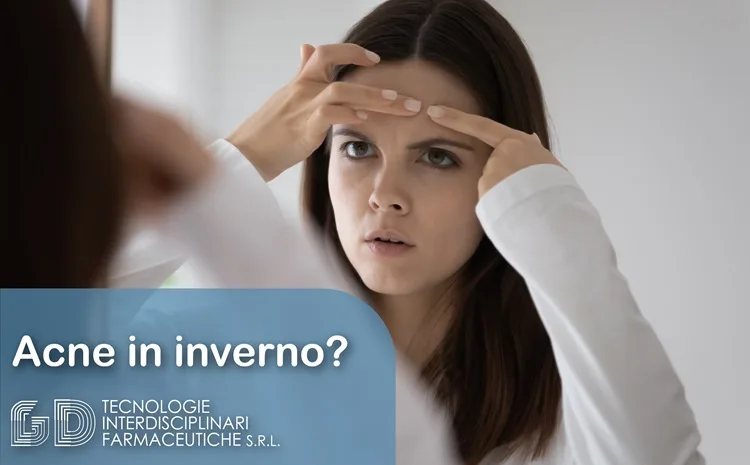
Acne in winter: the complete guide to caring for acne-prone skin during the cold season
During winter, acne gets noticeably worse, with pimples and blackheads appearing. Find out how to care for your skin, click here
Winter has now begun and your skin was the first to notice. If you suffer from acne, your face probably always breaks out in pimples and blackheads at this time of year…
Perhaps you have tried everything to keep the situation in check, but you have not yet found a definitive solution to this skin problem which becomes even more evident during the cold season, causing you considerable stress.
All those breakouts that appear on your skin probably make you feel uncomfortable.
With this article, we would like to help you understand what causes winter acne (that is, the causes behind the worsening of your skin’s condition at precisely this time of year); we would then like to give you some tips on how to care for acne-prone skin in winter and suggest the products best suited to an oily skin skincare routine when temperatures drop.
Take a few minutes for yourself.
Winter acne: what makes pimples worse during the cold season
Each season has different effects on acne-prone skin.
People living with this skin blemish often notice an improvement in their acne during the summer, due to exposure to sunlight, which can inhibit sebum production and relieve skin inflammation.
However, if you do not follow a correct skin cleansing and care routine, you risk undoing the benefits gained from the sun, with a boomerang effect, or rather a rebound effect, which shows up in autumn as a flare-up of acne with all its typical symptoms: pimples, blackheads and comedones.
In winter, acne-prone skin gets even worse, due to a wide range of environmental factors typical of the cold season.
Cold and winter acne
The first weather factor to blame is the cold, which in general is good neither for normal skin nor, even less so, for oily and/or acne-prone skin.
Let us explain.
When temperatures fall, our body reacts by setting off a series of thermoregulation mechanisms, which serve to produce and above all to retain heat, preventing it from being lost as far as possible, so as to protect the body.
One of the key mechanisms is vasoconstriction, which consists of a narrowing of the small veins and arteries that run beneath the surface of our skin.
What are the consequences of all this?
The skin suffers a “cut in supplies”.
The blood flow reaching the skin is drastically reduced and so the skin receives less nourishment, slowing down its processes.
This is why, in winter, the skin looks greyer, paler and duller.
The effect is not only cosmetic. All this also makes the skin thinner and more fragile, less able to defend itself against attack from the elements, first and foremost the cold itself, which stimulates greater sebum production and accentuates the skin inflammation that lies at the root of acne.
Dehydrated skin and winter acne
In winter, the skin is also more prone to dehydration due to a combination of two factors:
- low humidity levels in the air
- indoor heating
Besides being cold, winter air is characterised by very low humidity levels.
This encourages and speeds up water loss from the skin tissues.
Dehydration immediately results in a weakening of the skin caused by damage to the hydrolipidic film that acts as a barrier and a consequent greater susceptibility to irritation and inflammation.
But there is more.
The skin may react to dryness by triggering a defence response that leads to an increase in sebum production!
If you think that simply avoiding being outdoors is enough to protect yourself from this, we are sorry to disappoint you.
Spending too long in a room with the radiators on can also create the “perfect” conditions for an acne flare-up: indoors, heating systems make the air drier, which in turn dries out the skin.
Sun and winter acne
Among the “ingredients” of “winter acne” we also find the sun, our skin’s friend and foe.
Unfortunately, many people still believe that sun protection should only be used in summer, when you go to the beach to tan.
Nothing could be further from the truth.
Because of the plummeting temperatures, we do not notice it. But even when it is less visible because it is hidden by clouds, the sun is there and the effect of its rays is felt, causing short- and long-term damage.
This is even more evident when it comes to acne-prone skin.
Some treatments and medicines used to treat acne can make the skin more susceptible to the effects of ultraviolet rays.
Think, for example, of treatments based on salicylic acid, a substance with an exfoliating action, often used for peels to reduce the marks of acne.
Anyone undergoing sessions of this kind must carefully avoid sun exposure to prevent unpleasant side effects on their skin.
Sunlight can also contribute to the pigmentation of acne scars, making them more visible. Applying sun protection reduces this risk, helping to keep skin tone even.
Diet and winter acne
It is not only what is outside, in the environment around us, that makes acne worse during the winter months.
Also, what we take into our body through our diet plays a fundamental role in the onset of this skin disorder: acne is often associated with a condition of intestinal dysbiosis (that is, an imbalance of the microbiota).
Let us think about it.
What time of year do we most often break our resolution to follow a healthy, balanced diet, allowing ourselves the odd indulgence?
Yes, winter is the season of Christmas feasts, of Epiphany (Befana) sweets and Carnival treats, of hearty dishes that bring pleasure to the palate and make us feel pampered.
It is comfort food, food to which we attach not only nutritional value but also sentimental, “consoling” value.
We know that at this time of year it is normal to feel hungrier and therefore to eat a little more: our body needs more calories to keep its temperature constant, counteracting the harshness of winter.
However, you should never overdo it when you sit down at the table.
Beyond the health problems that a poor diet can cause in the long term, such as metabolic syndrome, several studies on the subject have highlighted a correlation between acne and a diet rich in high glycaemic index foods, which can cause an increase in blood insulin levels.
Insulin stimulates androgens, which in turn promote excess sebum production and hyperkeratosis, an uncontrolled proliferation of skin cells that leads to thickening and hardening of the skin, with consequent blockage of the sebaceous glands.
Milk and dairy products (yoghurt, cheese, butter, etc.) should also be consumed in moderation, because the hormones present in milk and dairy products have an effect similar to that of insulin and can cause acne to flare up again.
Tackling acne in winter: effective strategies for blemish-proof skin
Knowing the factors that affect the health of our skin in winter, it is easier to understand what measures to take to try to keep the situation under control.
In the next few lines we will give you some practical tips and point you to the products best suited to winter skincare for oily, blemish-prone skin.
1. Keeping acne-prone skin hydrated in winter
As we have seen, when temperatures drop sharply and the air becomes drier, our skin tends to lose water more easily, becoming dry.
This predisposes it to greater inflammation and increased sebum production, the precursor of pimples and comedones.
How can you avoid this?
You will need to change your skincare routine, adapting it to the winter climate and adding specific products for acne-prone skin.
Before applying any product, we have to start with cleansing, which must be thorough but gentle.
The best product in this case, suitable for use all year round, is Rebioger Detergente, highly effective for cleansing blemish-prone, oily and acne-prone skin.
Thanks to the action of the specific active ingredients in its formulation, Rebioger Detergente ensures deep yet gentle cleansing: it removes dead cells and toxins, dirt residues, traces of make-up, and impurities from smog and fine dust, letting your skin breathe without affecting its hydrolipidic film and without dehydrating it.
Once you have cleansed, you can move on to the moisturising stage.
Be careful, though: not all moisturisers are suitable when it comes to acne.
It is better not to follow the motto “one is as good as another”, because you risk making the condition of your skin worse.
You need to choose a product with a light texture, but above all one that is non-comedogenic, meaning it does not contain ingredients that encourage the appearance of blemishes and imperfections.
Your choice could fall on Glucodin, a restructuring cream with high moisturising power, suitable for treating acne-prone skin, whether inflamed or normal, even when blackheads (comedones) are present.
Glucodin works like a daily soft peel: gluconolactone helps remove dead cells, revitalising the tissues and facilitating cell renewal. Betaine, on the other hand, can stimulate the production of collagen, the protein that gives skin tone, elasticity and resilience. Glucodin Crema also contains allantoin, which stimulates the repair processes of skin tissue and protects the skin, shielding it from the elements and the many stresses it is subjected to every day.
During winter, it is advisable to apply moisturiser more often, especially if it is a light product.
This will help keep the skin hydrated and protected without weighing it down too much.
2. Protecting acne-prone skin from UV rays with sunscreen
Once you have completed your beauty ritual, you cannot skip applying sun protection to your face, neck and décolleté, as well as to other areas of skin exposed to sunlight.
Using a product that shields against UV rays is truly necessary, even and especially in winter.
How do you choose the right protection?
Here too, we need to watch out for any comedogenic substances in the formulation, which could clog pores and inflame acne again.
A look at the label will help us avoid unpleasant contraindications.
Pay attention also to the SPF, that is, the sun protection factor, which indicates how well the product can protect us against solar radiation and the harmful effects of sun exposure.
The higher this value, the greater the effectiveness.
For everyday use in the winter months, we suggest using a product with an SPF of at least 25, with broad-spectrum protection, such as our new TANNISOL urban protection, with DNA REACTIVATOR COMPLEX®, an innovative screening system that protects you from damage caused by UVA, UVB and infrared rays and blue light, while reactivating the repair processes of damaged skin cell DNA.
3. Adopting an anti-acne winter diet
A few tips also on what to eat and what not to eat in the cold months to cleanse ourselves and have healthier skin. Bearing in mind that, in general, we should all follow a varied and balanced diet, we suggest you:
- increase your intake of fresh fruit and vegetables, preferably seasonal, to stock up on nutrients and antioxidants, beneficial substances that counteract the action of free radicals and inflammation, neutralising toxins. Among the most suitable foods are citrus fruits, carrots, spinach and berries which, according to studies, may also help regulate insulin;
- replace bread and pasta with their equivalents made with wholemeal flours to keep blood sugar levels stable. Refined carbohydrates have a higher glycaemic index, are absorbed more quickly and create blood sugar spikes. It is better to opt for wholemeal, so as to reduce the insulin impact;
- limit your intake of sugars and dairy products
- preserve the balance of your gut microbiota through the regular intake of probiotics such as Plenum Integratore based on:
• 9 billion tyndallised lactic ferments: 4.5 billion intact cells of the Lactobacillus plantarum strain and 4.5 billion intact cells of the Streptococcus thermophilus strain
• FOS (fructooligosaccharides), useful for the balance of the intestinal bacterial flora
• Zinc and Vitamin B6, which contribute to the normal function of the immune system
• Vitamin B6, which contributes to the regulation of hormonal activity
• Niacin and Riboflavin, which contribute to the maintenance of normal mucous membranes
• Biotin and Zinc, which contribute to the maintenance of normal skin
• In addition, Zinc, Riboflavin and Vitamin C contribute to the protection of cells from oxidative stress; Riboflavin contributes to normal iron metabolism.
Warning
Information provided for informational purposes only, which cannot constitute a diagnosis, the prescription of a treatment, or a substitute for direct consultation with a doctor or a specialist visit. Always ask for the advice of your doctor and/or specialists.
For any reports or complaints, please contact the owner of this website at the email address gdtif@gditalia.biz